
A. O. Smith · Sized and installed by McCowin Water
A.O. Smith Specialized Water Solutions
Here's the honest part most sites skip. There's no single "best" water system, because there's no single kind of bad water. This is A. O. Smith's whole family of softeners and conditioners, and our job is to read your water and hand you the exact one that solves it. The right tool, not the biggest box.
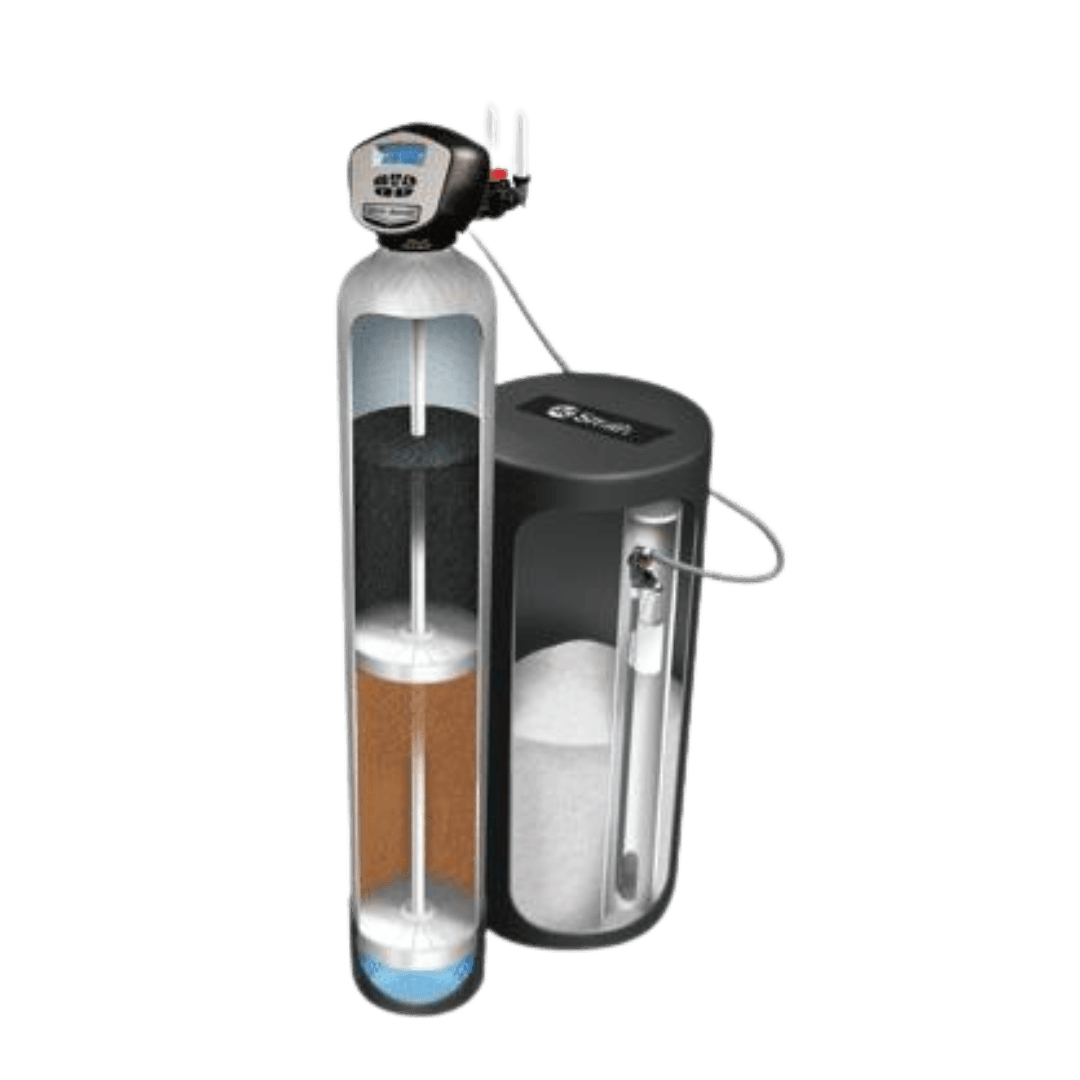
Tap the image to view it full size
Why a line, not a box
There's no single "best" water system. There's the right one for your water.
Every water company wants to sell you the one thing they carry. The trouble is, water problems don't come in one flavor. One Orange County home has plain hard water. The next has hard water plus a chlorine taste. A house on a well in the canyons has iron staining the sinks and acidic water quietly eating the copper pipe. Sell all three the same box and two of them stay unhappy.
A. O. Smith Specialized Water Solutions is built the other way. It's a full family of softeners and conditioners, and we carry the line so we can match the machine to your actual water. Efficiency-rated softeners for hardness. Resin and carbon combos that soften and filter chlorine in one tank. Specialty conditioners for iron, manganese, and low pH. Compact cabinet units when space is tight.
That's why the free water test comes first, always. We read your hardness, your chlorine, your iron, your pH and your flow, then recommend the smallest system that fully solves your water. It's the difference between being sold a system and being fitted for one.
The family
Four kinds of system, one job each
Here's the whole line in plain English, so you can see roughly where your water probably lands before we even test.
Softeners (AOE, AOP)
The specialists for hard water. Efficiency-rated single-media softeners that remove calcium and magnesium, sized from about 13,700 up to 69,800 grains. These are the models that carry the WQA certification to NSF/ANSI 44 for hardness reduction. If hardness is your whole story, this is the answer.
Resin and carbon combos (AOERC, AOPRC)
Two jobs, one tank. High-performance resin softens while activated carbon knocks down the chlorine taste and smell from city water, all in a single unit. Handles hardness up to 75 or 100 grains per gallon depending on size. The go-to when your city water is hard and tastes of the pool.
Conditioners (AOC1, AOC2)
The well-water problem solvers. Built for iron and manganese staining and, in the AOC1, acidic low-pH water that corrodes pipe. The AOC1 even raises low pH back toward neutral. The AOC2 handles higher hardness alongside iron and manganese. This is conditioner territory, well beyond what a plain softener can do.
Cabinet models (AOEC, AOPC)
Everything in one compact cabinet, media and brine together, for homes where garage or closet space is tight. Smaller capacity, same programmable valve and efficiency. When the footprint is the constraint, this is how you still get treated water.
How it actually works
Softening, filtering, conditioning. Three different jobs.
Once you get the difference, choosing gets easy, and almost nobody explains it. So here it is.
Softening is about hardness, the dissolved calcium and magnesium that crash out as limescale on your showerhead and glasses. A softener fixes it by ion exchange: a bed of resin beads trades that hardness for a little sodium, hard water in, soft water out, then rinses clean and reloads when it regenerates. Like wringing out a sponge so it can soak again.
Filtering is about what you can taste and smell, mostly the chlorine city water carries. Activated carbon works like a sponge for it, which is why the AOERC combo pairs carbon with the softening resin in one tank, so the water comes out soft and cleaner tasting in a single pass.
Conditioning is the broadest job, for water that has more going on. The AOC1 and AOC2 tackle iron and manganese, the culprits behind rust-colored stains, and the AOC1 also raises acidic low-pH water back toward neutral so it stops corroding your copper. That is not something a standard softener does.
All of it runs through one smart valve. It meters your actual water use and regenerates only when the capacity is spent, not on a blind timer, so it saves salt and water. It shows your flow rate and capacity remaining, has a Vacation Mode, a built-in bypass for service, and runs downflow or upflow. On applicable models a self-cleaning chlorine generator keeps the bed sanitized on its own.
Room by room
What actually changes in the house, once the water's right
Bad water never sends you a bill. It just quietly wears down expensive things while you wonder why the dishes never look clean. Here's where you feel the difference.
The water heater
Scale settles on the heating element like a blanket, so it burns more energy for the same heat. Hard water is why plenty of water heaters die years early, and it ages every appliance the water touches.
Dishwasher and washer
Scale builds inside the dishwasher and washing machine where you can't see it. Soft water means detergent finally rinses, so glasses come out without spotting and towels feel soft.
Taste and smell
The chlorine tang from city water, or the rotten-egg whiff from a well, get handled by carbon or the right conditioner media. You notice it on the first glass you pour.
Skin, hair and soap
Hard water stops soap lathering and leaves a film. That's a big reason skin feels tight or dry after a shower. Soft water means you use noticeably less shampoo and detergent.
Stains and fixtures
White scale on the showerhead, rust-colored staining from iron, the ring on the faucet. Different problems, same look of fixtures aged a decade early. The right system stops it.
The pipes you can't see
Scale, and acidic water, quietly attack the inside of your pipes over the years, chipping away at flow and at the efficiency of everything downstream. Nobody notices until a plumber is quoting a repipe.
Inside the valve
The features that carry across the line
Straight from A. O. Smith's manual, with a plain note on why each one matters once it's in your garage.
Programmable control valve
The brain of the system. Fully programmable, with hardness set anywhere from 1 to 150 grains per gallon in single-grain steps, so it's dialed to your exact water rather than a factory guess.
Metered regeneration
It counts your actual water use and regenerates only when the capacity is spent, not on a blind calendar timer. That is the difference between a system that saves salt and water and one that wastes both.
Clear displays
The screen shows time of day, your current flow rate in gallons per minute, and the treated-water capacity remaining before the next regeneration. Nothing about the system is a mystery.
Vacation Mode
Going away? Vacation Mode keeps the unit from running needless regenerations while nobody's home, so you don't come back to wasted salt and water.
Built-in bypass valve
An off ramp for your water. It lets a technician isolate the valve for service while still feeding untreated water to the house, so a service call doesn't mean a dry faucet.
Self-cleaning chlorine generator
On applicable models, the unit makes a small amount of chlorine during its cycle to sanitize the media bed and monitors every cleaning, so the inside stays fresh with no chemicals to add by hand.
The published numbers
Straight from A. O. Smith, so you can compare apples to apples
Most water company sites won't show you this. Here are the real figures from the A. O. Smith owner's manual for the softeners and the specialty conditioners.
| Model | Max capacity (grains) | Resin (cu ft) | Max service flow (GPM) | Media tank |
|---|---|---|---|---|
| AOE / AOP-844 | 18,800 | 0.75 | 11.7 | 8″W x 52″H |
| AOE / AOP-948 | 28,000 | 1.0 | 13.1 | 9″W x 56″H |
| AOE / AOP-1044 | 28,000 | 1.0 | 16.0 | 10″W x 52″H |
| AOE / AOP-1054 | 42,000 | 1.5 | 13.3 | 10″W x 62″H |
| AOE / AOP-1248 | 56,100 | 2.0 | 16.4 | 12″W x 56″H |
| AOE / AOP-1354 | 69,800 | 2.5 | 17.1 | 13″W x 62″H |
Softeners share these: brine tank 18″W x 33″H (to 40″H on larger units), working pressure 30 to 100 PSI, temperature 33 to 100 F, 110 V, 1″ pipe. Efficiency-rated models deliver not less than 3,350 grains of hardness exchange per pound of salt.
| Model | Max capacity (grains) | Media (cu ft) | Max hardness (GPG) | Max iron + manganese (PPM) | pH adjust |
|---|---|---|---|---|---|
| AOC1-1044 | 11,800 | 1.0 | 20 | 8.0 | Yes (min pH 6.5) |
| AOC1-1054 | 22,600 | 1.5 | 30 | 10.0 | Yes (min pH 6.0) |
| AOC1-1354 | 36,900 | 2.5 | 40 | 15.0 | Yes (min pH 6.0) |
| AOC2-1044 | 20,300 | 1.0 | 40 | 8.0 | No |
| AOC2-1054 | 34,800 | 1.5 | 60 | 10.0 | No |
| AOC2-1354 | 60,300 | 2.5 | 80 | 15.0 | No |
Conditioners share these: pressure 25 to 100 PSI, temperature 33 to 100 F, 110 V, 1″ pipe, media tank 10″ to 13″W x 52″ to 62″H, brine tank 18″W x 33″ to 40″H. The AOC1 needs influent water of at least 3 grains hardness and 80 total dissolved solids to work correctly. Iron and manganese removal varies with the form of the metal, pH and local conditions.
Also available: the AOERC and AOPRC resin-and-carbon combo softeners (soften plus chlorine reduction in one tank, up to 32,000 or 48,800 grains, hardness up to 75 or 100 GPG), and compact AOEC and AOPC cabinet models. We'll pull the exact sheet for whichever system fits your water at the test.
What backs it
One of the strongest warranties in water treatment
This is where A. O. Smith stands out, and it's a big reason we carry the line. Straight from the manufacturer's warranty, to the original owner.
Sensible exclusions apply: the lifetime media tank coverage does not include damage from freezing, high pressure at or above 120 PSI, extreme temperature at or above 100 degrees, or a vacuum on the system. Terms are set by A. O. Smith and provided in writing before you buy.
From A. O. Smith
The manufacturer's tiered limited warranty above, and systems designed and made in the USA. We walk you through the actual document before purchase, not after.
From us, the installer
Your install is covered under The McCowin Guarantee, separate from the manufacturer warranty. And when a manufacturer claim ever comes up, we file it for you rather than handing you a phone number.
The McCowin Guarantee on your install
If the system we size and install doesn't do what we said it would:
- We come out and fix it. No charge.
- If we can't fix it, we make it right, up to replacing the system with one that does the job.
Our installation workmanship guarantee runs one year from your installation date, and our service support doesn't expire. Where this page and a signed agreement ever differ, the signed agreement controls.
Local context
Fitted to the water we've actually got in Orange County
We work one county on purpose, so we can be specific about this instead of hand-wavy.
Most of our city water wants a softener or a combo. Orange County tap water tends to run hard, often around 12 to 23 grains per gallon, and it's chlorinated. For plain hardness an efficiency-rated AOE or AOP softener is the fit. When the chlorine taste bothers you too, the AOERC combo handles both in one tank.
The canyons and wells are a different animal. Some homes out past the developments run on private wells, and wells bring iron, manganese, and acidic water that city water never does. That's when the AOC1 or AOC2 conditioner earns its place, and why we always test a well first and talk second.
Tight garage? There's a cabinet for that. A 1970s tract-home garage is already full. The cabinet models put media and brine in one small footprint when a two-tank setup won't fit, and we look at the real spot before we promise anything.
We stay in Orange County for a reason. One county means our crew already knows how the water behaves from Irvine to the coast, and our trucks are in these towns most weeks, so service is a short drive.
Our shop is at 222 Goddard in Irvine and our trucks run daily, so most appointments land the same week.
The honest part
Who this suits, and who it doesn't
It's probably right for you if you want the system matched to your water instead of guessed at, whether that's plain hardness, hardness plus chlorine, or a well with iron and low pH. If you own the home and want a manufacturer warranty this strong behind it, this line is hard to beat.
It might be more than you need if all you want is better drinking water at one tap. A reverse osmosis unit under the kitchen sink does that for less, and we'll say so.
It's also not for you if you rent, since this is permanent plumbing work, or if you're after something under a hundred dollars from a marketplace. Fair thing to want. Just not this.
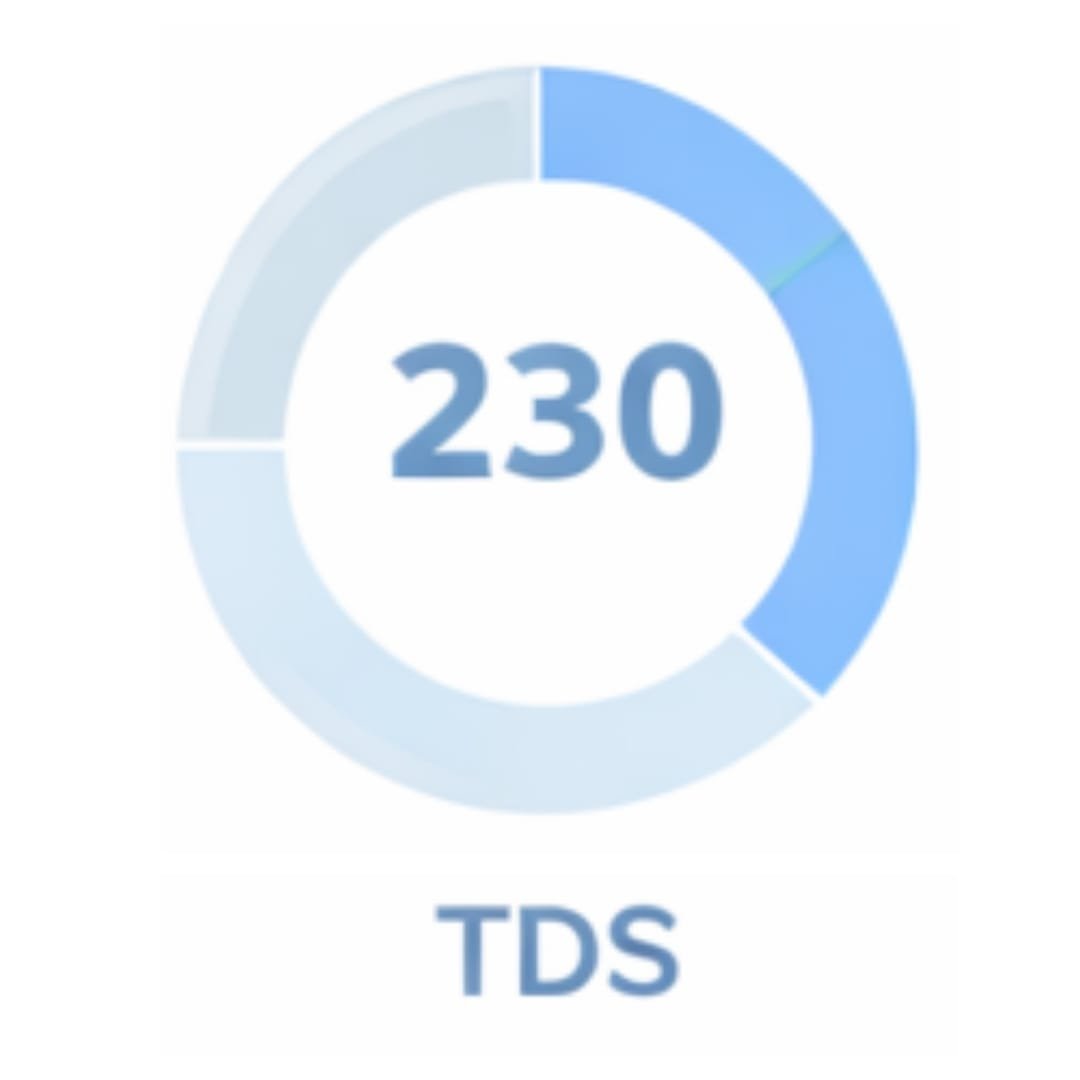
Thirty minutes at your kitchen sink settles all of it. Hardness, chlorine, iron, total dissolved solids, pH, plus pressure and flow. We write the numbers down and hand them to you, whether you buy anything or not. Think of it as a blood panel for your plumbing.
From Orange County homeowners
People who had us put a system in
Installs, plus a few on how the service has gone since. That second part is what a lifetime warranty really rests on.
“They carry many different manufacturers and can recommend the one best suited for your needs.”
Anita, Laguna Niguel. She wanted an efficient system with the least waste, and wrote that is what she got.
“We were completely pleased with the installation of a water softener system.”
Ronald and Cindi, Tustin. They wrote that Brian and Alan answered every question and fit the system perfectly in their garage.
“Meticulous, and complete in every detail. They do not cut any corners.”
Mike Michino, on a service visit years into ownership.
“We have been with McCowin Water for 7 years and only encountered positive results.”
Ethan Blair. Seven years of quoting, scheduling, service and follow up.
Questions
What people ask about A.O. Smith Specialized Water Solutions
What is A.O. Smith Specialized Water Solutions, exactly?
It is A. O. Smith's full line of whole house water softeners and conditioners, not a single machine. Think of it less like one product and more like a family of tools. There are efficiency-rated softeners for plain hard water, combination units that soften and filter chlorine in one tank, and specialty conditioners built for wells with iron, manganese, or acidic low-pH water. We carry the line so we can match the exact system to whatever your water test turns up, instead of forcing one box to fit every house.
What is the difference between a softener and a conditioner?
A softener has one job: it removes the calcium and magnesium that make water hard, using ion exchange in a resin bed. A conditioner is the broader problem-solver. The A. O. Smith AOC1 and AOC2 conditioners are built for water that has more going on than hardness, iron and manganese that stain, or acidic low-pH water that eats copper pipe. The AOC1 even adjusts low pH back up. So if your only issue is hard water, you want a softener. If your water also stains or corrodes, that is conditioner territory. The water test tells us which.
Which A.O. Smith model is right for my home?
That depends entirely on your water, which is exactly why we test first. If hardness is the whole story, an efficiency-rated AOE or AOP softener sized to your grains and flow does it, and those are WQA certified for hardness reduction. If you have hardness plus chlorine taste and smell from the city, the AOERC resin and carbon model handles both in one tank. If you are on a well with iron, manganese, or acidic water, an AOC1 or AOC2 conditioner is the right tool. And if space is tight, a cabinet model puts everything in one compact unit. We read your numbers, then recommend the smallest system that fully solves your water.
How does the softener actually make water soft?
Through ion exchange, and a coat check is the easiest way to picture it. Inside sits a bed of resin beads, each holding a harmless sodium ion. Hard water flows through, the beads grab the calcium and magnesium and hand back sodium in the swap. Hard goes in, soft comes out. When the beads fill up, the system regenerates, rinsing the hardness down the drain and reloading with fresh sodium, like wringing out a sponge so it can soak up again. A. O. Smith's efficiency-rated models are built to do this using as little salt and water as possible.
What can the AOC1 and AOC2 conditioners handle that a softener can't?
Iron, manganese, and low pH, the trouble that usually comes with well water. The AOC1 is rated for hardness up to 20 to 40 grains per gallon depending on size, iron and manganese up to 8 to 15 parts per million, and it actually raises acidic low-pH water back toward neutral so it stops eating your copper pipe. The AOC2 is built for higher hardness, up to 40 to 80 grains per gallon, along with iron and manganese. One note from the manual: the AOC1 needs the incoming water to be at least 3 grains of hardness and 80 total dissolved solids to work right, and some waters need a calcite unit added. That is exactly the kind of detail we sort out at the test.
How efficient is it with salt and water?
The efficiency-rated softeners are built to sip. A. O. Smith's efficiency-rated models carry a rated capacity of not less than 3,350 grains of hardness exchange per pound of salt, and several are rated around 4,040 grains per pound at the one-pound setting, which is genuinely efficient. The control valve meters your actual water use and only regenerates when the capacity is used up, rather than on a blind timer, and it has a Vacation Mode so it does not waste a regeneration while you are away. The manufacturer recommends coarse solar salt in these units. You feel all of this on the salt bill over the years.
What features are on the control valve?
The valve is the brain, and it is built to be simple to live with. It is fully programmable, with hardness adjustable from 1 to 150 grains per gallon in single-grain steps. The display shows you the time of day, your current flow rate in gallons per minute, and the treated-water capacity remaining before the next regeneration, so nothing is a mystery. It meters your water so it regenerates on real use, has a Vacation Mode, a built-in bypass valve for service, and runs in either downflow or upflow. On applicable models a self-cleaning chlorine generator keeps the media bed sanitized on its own.
What warranty comes with it?
A. O. Smith backs these systems with a strong limited warranty to the original owner: the media tank is warranted for the lifetime of the original owner, the brine tank for 10 years, the complete valve for 5 years, and all other parts and components for 1 year. There are sensible exclusions, the lifetime media tank warranty does not cover damage from freezing, high pressure at or above 120 PSI, extreme temperature at or above 100 degrees, or a vacuum on the system. Our own installation work is covered separately under The McCowin Guarantee, and when a manufacturer claim ever comes up, we file it for you.
Are these systems certified?
The efficiency-rated softeners, the AOE, AOP, AOEC and AOPC models, are WQA Tested and Certified against NSF/ANSI Standard 44 for the reduction of hardness, verified by test data. It is worth being precise here: the AOERC and AOPRC resin-and-carbon models and the AOC1 and AOC2 conditioners are not WQA certified. That does not mean they do not work, it means the third-party certification specifically covers the hardness-reduction softeners. We will tell you exactly which certification applies to whichever system fits your water, in writing.
Will it fit, and who installs it?
It almost always fits, and the range of sizes is part of why. Media tanks run from about 8 inches wide up to 13 inches wide and 52 to 62 inches tall, with a separate brine tank, or a compact all-in-one cabinet model when floor space is tight. We never guess at fit. McCowin Water has designed, installed and serviced water systems across Orange County since 1972, so when our technician comes out for the free water test we look at the real spot, the plumbing, and the drain, size the right system, install it to code, and keep it running afterward. You call a local shop whose trucks are already in your area.
Find out what your water needs before you buy anything.
Thirty minutes at your kitchen sink tells us your hardness, chlorine, iron, pH and flow, so we can fit the right A. O. Smith system to your home instead of guessing. The test is free, the numbers are yours to keep, and there's nothing to buy.
Or come see one in person at the showroom. 222 Goddard, Irvine, CA 92618. (949) 569-5736. Monday through Friday, 9 to 5.