
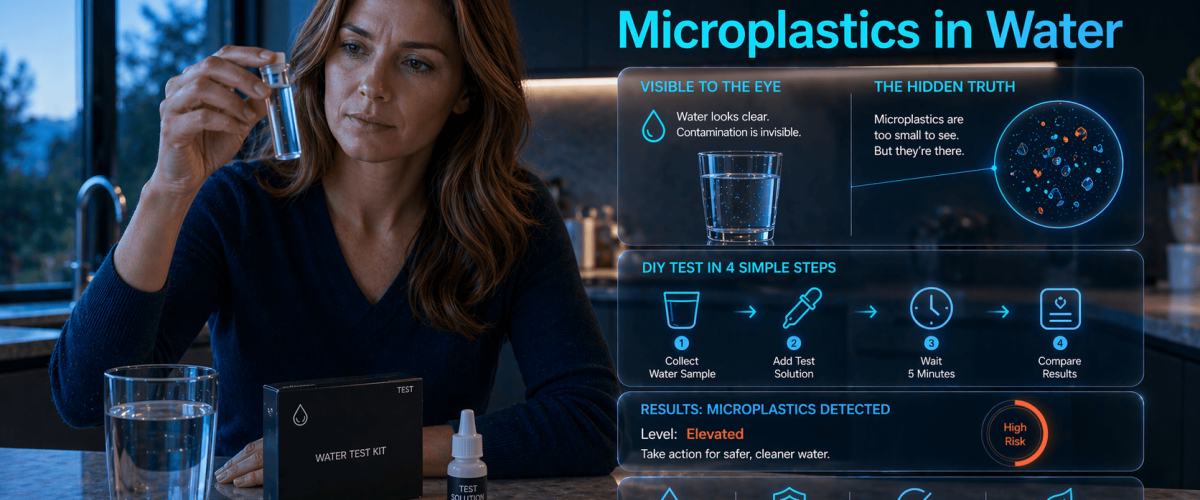

You cannot reliably test for microplastic in water at home using DIY kits. Microplastics are too small to detect with standard lab equipment. The best approach is a professional on-site water evaluation combined with proper filtration design. If you want real answers, you need expert testing and interpretation, not guesswork.
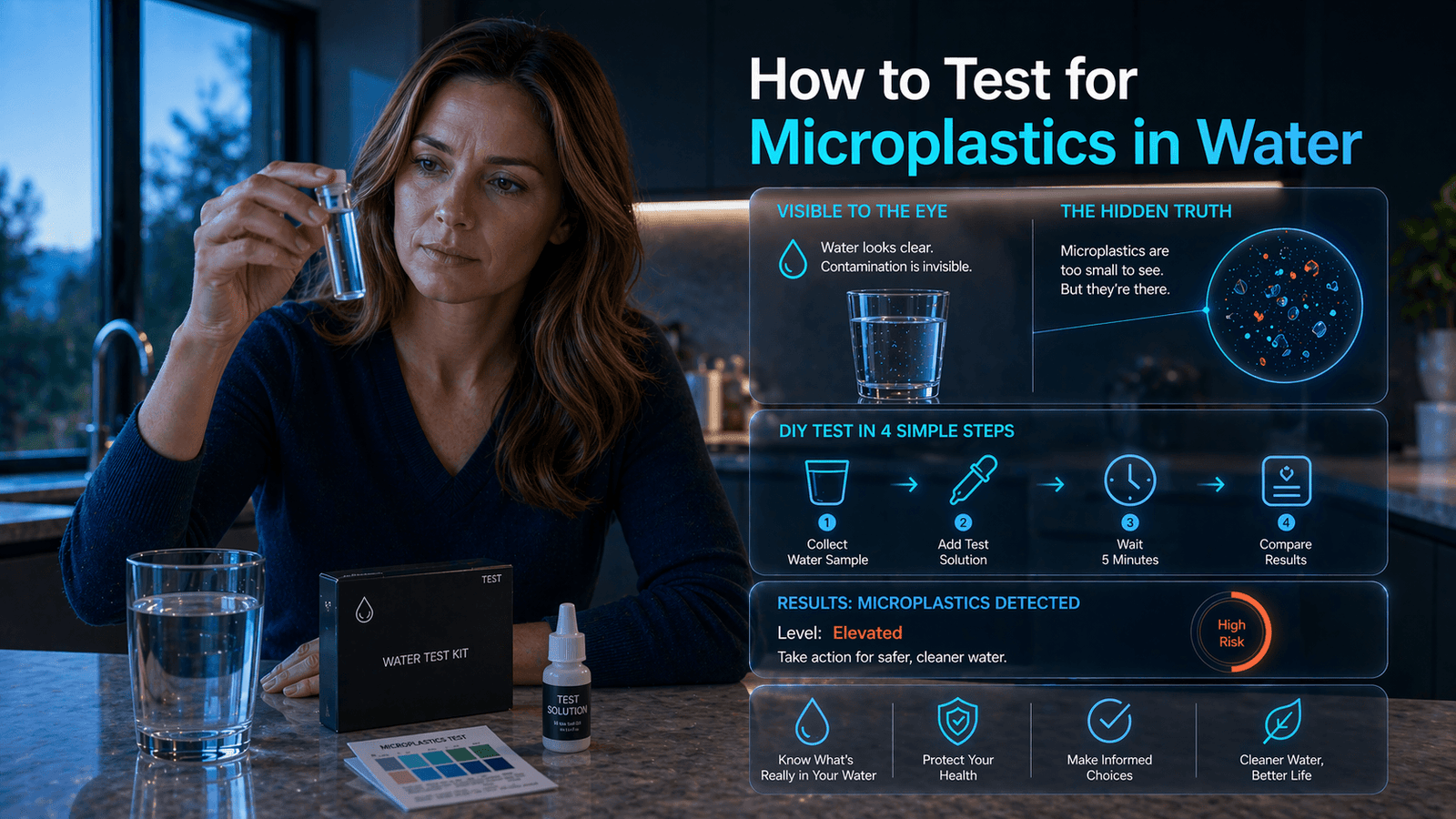
What’s the uncomfortable truth about testing your water at home?
Most at-home water tests give you confidence, not truth. They make you feel informed.
But when it comes to microplastics in water, they leave out the most important part.
You can test your water and still have no idea what you are actually drinking.
I have been doing this since 1972. I have seen every type of test kit come and go. The gap between what they promise and what they deliver is bigger than most people realize.
Can you actually test for microplastic in water at home?
No. You cannot accurately detect microplastic in water at home with consumer tools.
Here is why:
- Microplastics are often smaller than a human hair
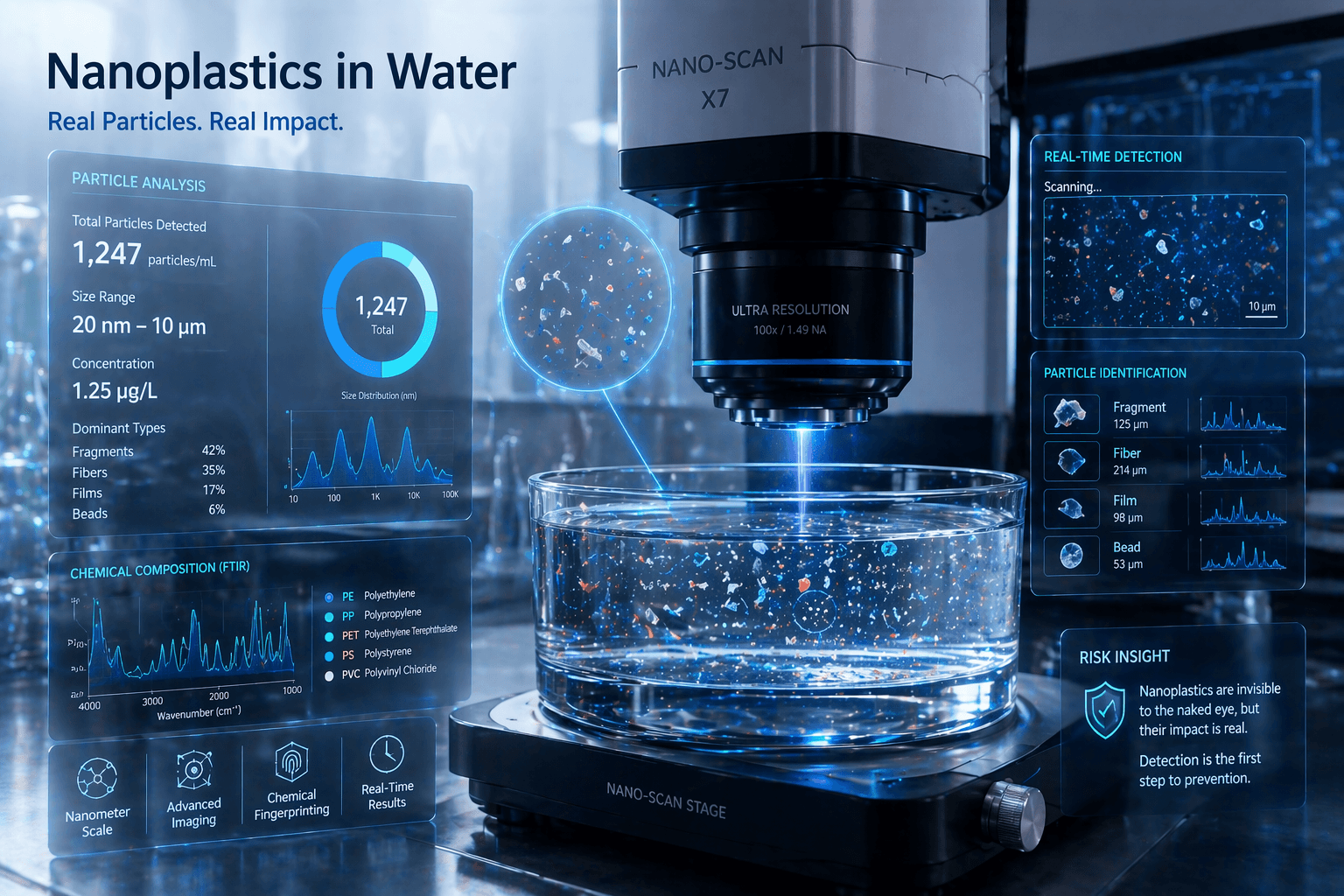
- Many are nanoplastics, invisible even under basic microscopes
- Detection requires advanced tools like spectroscopy and electron microscopy In simple terms:
Trying to test for microplastics at home is like trying to see bacteria with your naked eye. It is just not possible.
Why do at-home water test kits miss microplastic in water?
Because they are not designed for it. They test what is easy, not what matters most. What most kits actually test:
- pH levels
- Chlorine
- Hardness
- Basic contaminants
What they do not test:
- Microplastics
- Nanoplastics
- Complex chemical carriers attached to plastics. This is where homeowners get misled.
You get a “good” result and assume your water is clean.
That is like getting a perfect blood pressure reading while ignoring everything else happening in your body.
What is the right way to test for microplastic in water?
The truth is simple. You do not test for microplastics directly at home. You assess risk and remove it at the source.
Here is how professionals approach it:
Step 1: Evaluate Your Water Source
We look at:
- Municipal supply characteristics
- Coastal and environmental exposure
- Infrastructure and plumbing
Step 2: Identify Risk Factors
We assess:
- Particle presence
- Filtration gaps
- Water age and storage
Step 3: Design a Solution
We do not chase the particle. We eliminate the pathway.
That is how you properly solve this problem.
Are lab tests better for detecting microplastics in water?
Yes, but they are not practical for homeowners.
Lab testing can detect microplastics using advanced methods, but:
- It is expensive
- It takes time
- Results are often hard to interpret
- It still does not solve the problem Here is the key point most people miss.
Knowing you have microplastics does not remove them.
Action matters more than data.
What should homeowners in Orange County do instead?
Focus on control, not detection.
In areas like Irvine, Newport Beach, and Huntington Beach, water quality is generally good, but microplastic contamination persists due to environmental factors.
Here is the smarter approach:
What actually works:
- Install reverse osmosis systems
- Use multi-stage filtration
- Protect both drinking and whole-home water, because the goal is not to measure the problem. The goal is to remove it completely.
What mistakes do people make when trying to test their water?
I see the same patterns over and over.
Common mistakes:
- Relying on cheap test kits
- Trusting online results without context
- Chasing numbers instead of solutions
- Delaying action while waiting for “perfect data” All of this keeps you stuck.
How is McCowin Water different when it comes to testing?
We do not treat testing as a product. We treat it as a diagnostic process.
We offer a Free, In-Home Water Test where:
- We test your water on-site
- You see results immediately
- We explain everything clearly
- There is zero sales pressure
We do not send your water to a lab and disappear for days. We stand there with you and walk through it.
Because you deserve clarity, not confusion.
Why does system design matter more than testing?
Because the wrong system solves nothing. This is where most companies fail you.
They sell one system to everyone.
We do not.
We are the Auto Mall of water treatment. We look at your water, your home, and your needs. Then we build the right solution.
Not the easiest one to sell.
What guarantee do you have that it will actually work?
We back everything with our promise.
“If the system we install doesn’t perform the way we promised… If your water doesn’t taste, feel, or behave the way we said it would… We’ll pull the whole system out. And either replace it or fix it. No fine print. Because your trust is worth more than the sale.”
That is how we have done business for over 50 years.
What should you do next if you are concerned about microplastic in water?
Stop trying to test this on your own.
Start by understanding your water properly with McCowin Water
Call us at (949) 569-5736 or Schedule a Free, In-Home Water Test Today.
Here is what you get:
- Real-time results at your home
- Clear explanations
- No pressure to buy anything
Because when it comes to your water, guessing is not a strategy.
Final Thought
You cannot fix what you cannot see.
And you cannot see microplastics in water without the right approach. So stop chasing test kits.
Fix the source.
McCowin Water Solutions
222 Goddard, Irvine, CA 92618
(949) 569-5736
CSLB Licensed C-55 #1022717
Three generations of McCowin Water. Trusted Orange County water expertise since 1972.