


Measuring microplastic in water is not something most homeowners can do accurately at home. Microplastics are often too small to see and require specialized testing methods like filtration analysis, spectroscopy, or microscopy. The practical path for homeowners is professional water evaluation and source-level filtration, not DIY measurement.
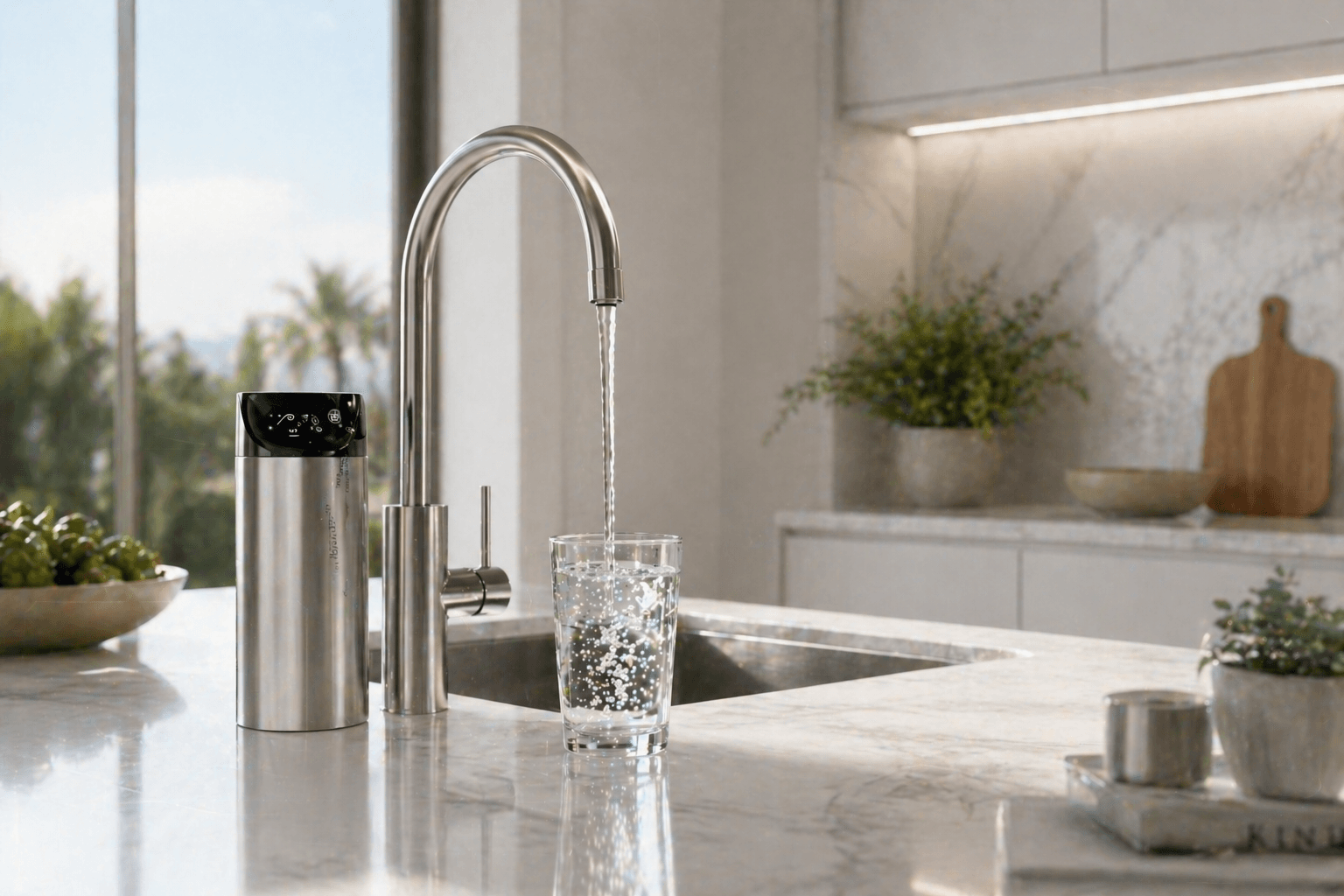
What’s the hard truth about measuring microplastics?
Most people asking how to measure microplastics are really asking:
Is my water safe?
And those are not the same question.
I have been in water treatment since 1972, and here is something I tell people all the time:
Chasing measurements without solving the problem can become a distraction.
Knowing there may be plastic in your water matters. Removing it matters more.
Still, let’s talk about how it is actually measured.
Can you measure microplastic in water at home?
Not accurately. Consumer tools do not reliably measure microplastic in water.
That surprises people. But it is true.
Most microplastics are:
- Too small to see
- Too small for DIY tests
- Sometimes smaller than many bacteria, and nanoplastics are even smaller.
Trying to measure them with home tools is like trying to count smoke particles with a flashlight.
It does not work.
How do scientists measure microplastic in water?
They use specialized methods.
Common methods include:
1. Filtration and Particle Counting
Water is passed through very fine filters. Captured particles are analyzed.
This helps estimate:
- Particle counts
- Sizes
- Shapes
2. Microscopy
Scientists use advanced microscopes to inspect particles. This can help identify:
- Fibers
- Fragments
- Beads
But appearance alone is not enough. Which leads to the next step.
3. Spectroscopy
This is where science gets serious. Methods like:
- Raman spectroscopy
- FTIR spectroscopy
Help identify whether a particle is actually plastic.
Not dust.
Not mineral.
Plastic.
This is where real confirmation happens.
What units are used to measure microplastic in water?
Usually one of these:
- Particles per liter
- Particles per gallon
- Particle size ranges
- Sometimes, concentration by mass
You may hear studies mention:
- Hundreds of particles per liter
- Thousands
- Sometimes much higher, depending on the source
One thousand large particles is very different from one thousand ultrafine particles.
Size matters. A lot.
Why is measuring microplastic in water so difficult?
Because plastics come in many forms. Different:
- Sizes
- Shapes
- Materials
- Densities
And some are nearly invisible.
Challenges include:
- Tiny particles escape detection
- Methods vary by study
Can water test kits measure microplastic in water?
Usually no.
Most home kits test:
- pH
- Chlorine
- Hardness
- Basic contaminants, not microplastics.
This is one of the biggest misconceptions I see. People use a home test strip…
And think they tested for everything. They did not.
Is measuring microplastics more important than removing them?
Honestly? No.
This is where experience matters.
If you suspect risk, focus on reduction. Not just detection.
You do not need to count every ember to know you should put out the fire.
That is how I see it.
What actually reduces microplastics in water?
This is where solutions matter.
Effective approaches:
- Reverse osmosis
- Multi-stage filtration
- Whole-home water treatment Here is a quick comparison:
| Method | Measures Microplastics | Removes Microplastics |
| ➤ Home Test Kit | No | No |
| ➤ Laboratory Analysis | Yes | No |
| ➤ Reverse Osmosis | No | Yes |
| ➤ Multi-Stage Filtration | No | Yes |
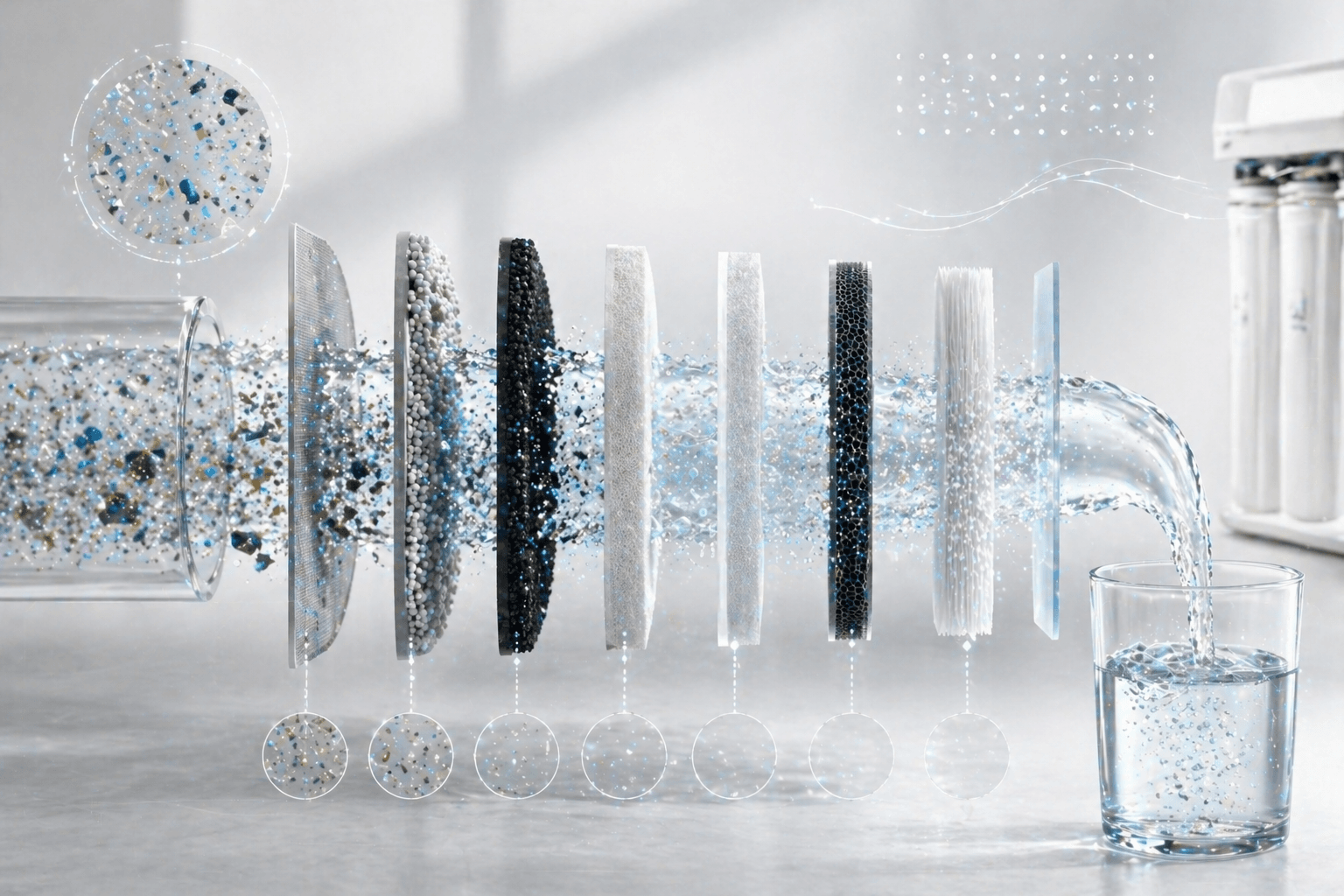
Notice something?
Measurement alone does not solve exposure. Treatment does.
How do we approach this at McCowin Water?
We start with the bigger question. Not “How do we count particles?” But:
“How do we protect your home?”
That is why I say we are the Auto Mall of water treatment.
We do not push one captive-brand solution.
We carry multiple options and match the right system to your water. Because the water in Irvine is different from that in Newport Beach or Laguna Niguel. And cookie-cutter systems often fail.
How do you know what your water needs?
Start with a Free, In-Home Water Test. And we do not send samples off to a lab. We test on-site.
In real time.
With zero sales pressure. You get answers immediately.
Why trust McCowin Water?
Because we stand behind what we install.
“If the system we install doesn’t perform the way we promised… If your water doesn’t taste, feel, or behave the way we said it would… We’ll pull the whole system out. And either replace it or make it right. No fine print. Because your trust is worth more than the sale.”
That is how we have done business for over 50 years.
What should you do next?
If you are worried about microplastic in water, do not get stuck chasing measurements. Start by protecting your water.
Call us at (949) 569-5736 or Schedule a Free, In-Home Water Test Today.
No pressure. Just clarity.
Final Thought
Measuring microplastics is complicated.
Reducing exposure does not have to be. Focus on the fix.
McCowin Water Solutions
222 Goddard, Irvine, CA 92618
(949) 569-5736
CSLB Licensed C-55 #1022717
Three generations of McCowin Water. Trusted Orange County water expertise since 1972.