
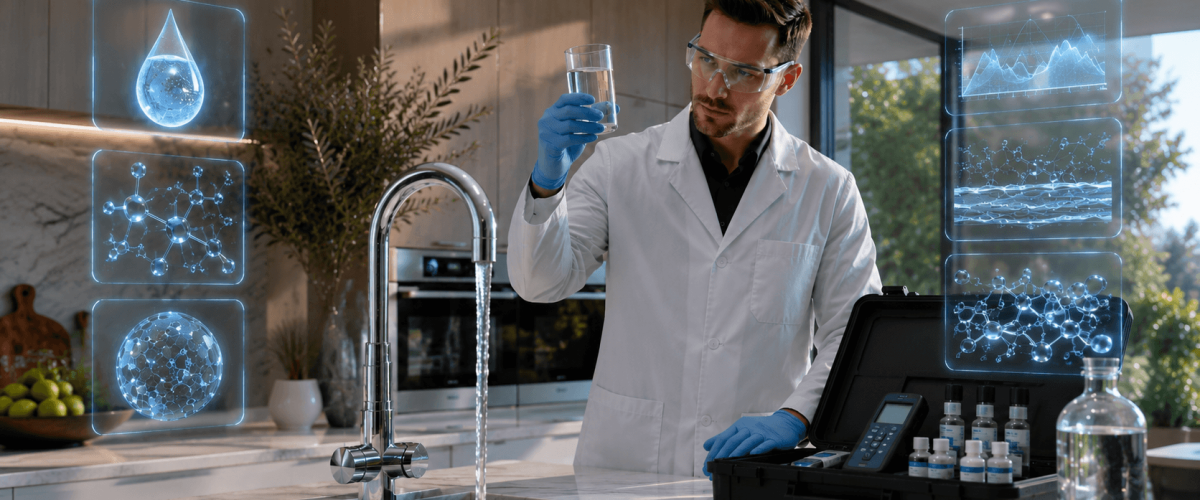

A proper Irvine free in-home water test should tell you exactly what is in your water, what is damaging your plumbing or skin, and whether you actually need treatment at all. During the visit, ask what contaminants are being tested, whether the equipment is customized to your home, how long the system will last, and what happens if it fails. At McCowin Water, we test your water on-site, explain everything, and never use fear tactics or high-pressure sales.
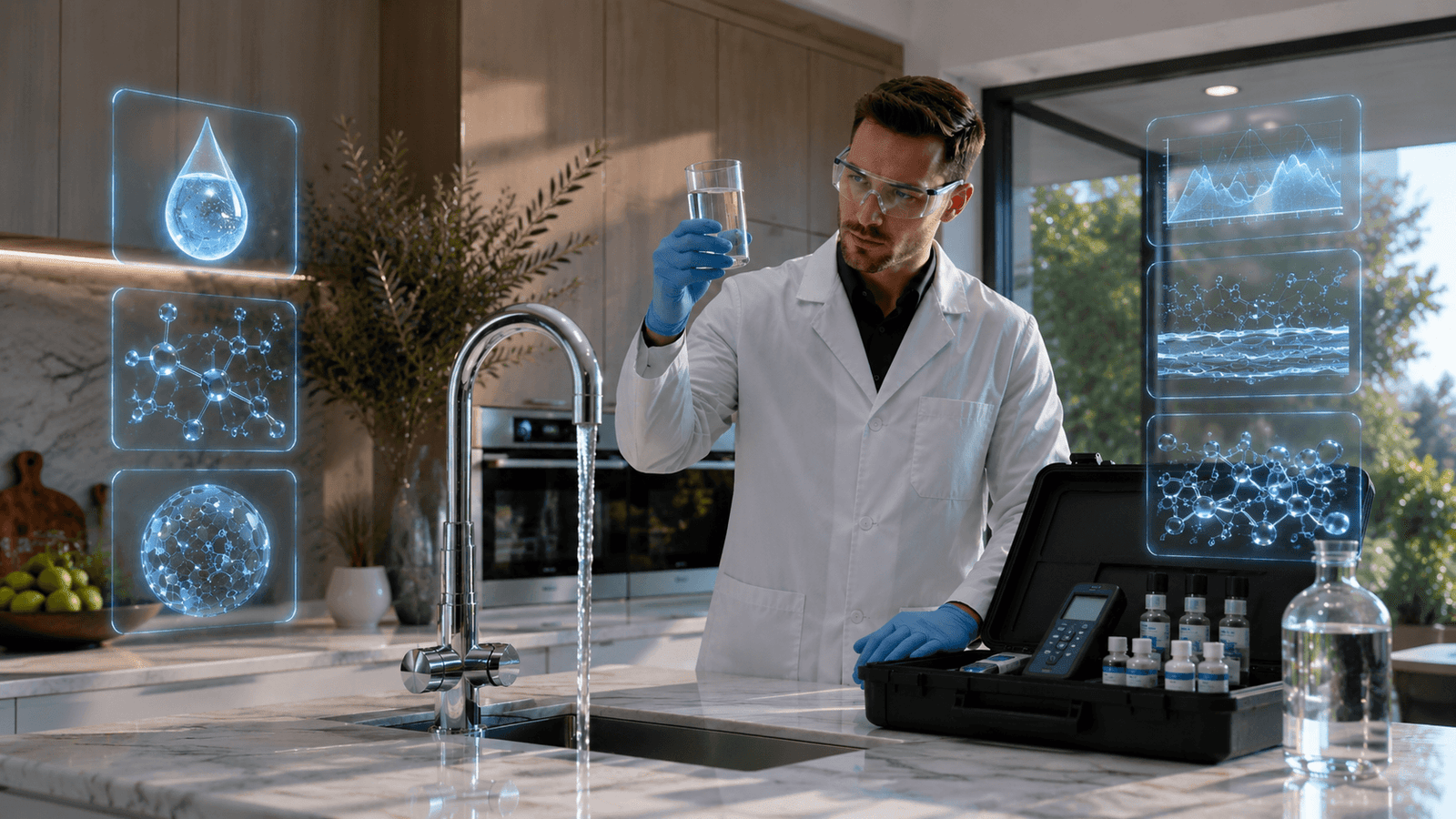
Why do so many “free in-home water tests” feel like a trap?
Because many of them are.
Here’s the ugly truth most homeowners do not hear until it is too late: a lot of water companies walk into your house already knowing what they plan to sell you before they even touch your tap water.
That is backwards.
A real water expert starts with the water. A salesman starts with inventory.
I’m Brian McCowin. My family has been fixing water in Orange County since 1972. I have watched companies turn water treatment into a traveling magic show. Dramatic color tests. Scare tactics. Fake urgency. “Today only” discounts. Systems shoved into homes that never needed them.
Meanwhile, families in places like Newport Beach, Laguna Niguel, and Huntington Beach are dealing with hard water, chlorine byproducts, aging pipes, PFAS concerns, and rising TDS levels without getting straight answers.
That is the wound in this industry. And homeowners are tired of it.
What should a real free in-home water test include?
A real free in-home water test should test for hardness, chlorine, TDS (total dissolved solids), pH balance, and signs of contamination or system stress right there in your home.
At McCowin Water, we do not send your water off to a mystery lab and disappear for two weeks. We test it professionally on-site so you can actually see what is happening in real time.
A proper in-home test should answer questions like:
- Is your water damaging your pipes or appliances?
- Why does your skin feel dry after showering?
- Why are there white spots on your dishes?
- Is chlorine affecting the taste or smell?
- Could contaminants be getting through aging infrastructure?
- Is your current filter even doing anything anymore?
And here is the key:
A good water test should sometimes end with, “You do not need a system.”
Most companies will never say that. We will.
That is the difference between a water consultant and a commissioned closer.
What contaminants should I ask about during a water test?

You should ask specifically about hardness minerals, chlorine, chloramines, PFAS, TDS, sediment, and pH imbalance.
Southern California water is complicated. Different neighborhoods can have very different water characteristics depending on supply blending, pipe age, infrastructure, and seasonal changes.
From 2023 through 2025, growing attention has been placed on PFAS compounds, sometimes called “forever chemicals,” due to increasing federal and state scrutiny. These contaminants are measured in tiny amounts, but the concern is long-term exposure over time.
Here is how I explain it to homeowners:
Think of your plumbing like your arteries. Hard water is plaque buildup. Chlorine is constant chemical stress. Sediment is sandpaper. And contaminants are the things you cannot see slowly adding wear and tear year after year.
How do I know if the water company is trying to sell me the wrong system?
Ask them one simple question:
“Why is this system specifically right for my home?”
If they cannot explain that clearly, walk away.
At McCowin Water, we built our business to be the “Auto Mall” of water treatment.
A Ford dealer sells Fords.
A Toyota dealer sells Toyotas.
But an auto mall gives you options.
That is how we operate. We carry and customize multiple proven solutions so we can fit the system to the water and the family, not the other way around.
Here are a few warning signs you are dealing with a scripted sales operation:
| Red Flag | What It Usually Means |
|---|---|
| ➤ They test only one thing | They already planned the sale |
| ➤ They push “today only” pricing | Pressure is part of the business model |
| ➤ They refuse to explain maintenance | Future costs are being hidden |
| ➤ They claim one system fixes everything | Oversimplification usually means overselling |
| ➤ They avoid talking about warranties | They expect future problems |
Can hard water really damage my home?
Yes. Hard water quietly destroys expensive things over time.
It is like cholesterol for your plumbing.
Every time water heats up inside your water heater, dishwasher, or pipes, minerals get left behind. Layer after layer. Year after year.
That buildup can lead to:
- Reduced appliance lifespan
- Higher energy bills
- Clogged showerheads
- Stiff laundry
- Dry skin and hair
- Spotty glassware
- Lower water pressure
Many homeowners do not notice how bad their water feels until they finally experience properly treated water.
Then suddenly:
- Soap lathers better
- Skin feels softer
- Water tastes cleaner
- Towels feel fluffier
- Fixtures stop crusting over
Your house feels healthier.
Why do some water systems fail after only a few years?
Because many systems are designed to win the sale, not survive the long haul.
This is another uncomfortable truth in the industry.
Some companies install undersized equipment because smaller systems are cheaper to quote. Others use low-grade imported components that look shiny on day one but break down fast.
A water treatment system should be engineered like a truck, not marketed like a toaster.
That means:
- Correct sizing
- Proper flow rates
- Real filtration media
- Reliable valves
- Easy maintenance access
- Long-term support
We have seen systems fail in 3 years that should have lasted 15.
That is unacceptable.
What guarantee should a trustworthy water company offer?
A trustworthy company should stand behind performance, not just parts.
Here is our philosophy at McCowin Water:
“If the system we install doesn’t perform the way we promised… If your water doesn’t taste, feel, or behave the way we said it would… We’ll pull the whole system out. And either replace it or make it right. No fine print. Because your trust is worth more than the sale.”
That is not marketing fluff.
That is how family businesses survive for over 50 years.
Is a free in-home water test really free?
Yes, it should be completely free with no pressure attached.
At McCowin Water, we perform professional, on-site testing in your home because we believe homeowners deserve clarity before they make decisions.
No gimmicks.
No fake urgency.
No disappearing acts.
Just real answers from people who have spent decades solving water problems across Orange County.
Final Thoughts
If you want real answers without pressure, schedule a professional, on-site water evaluation with McCowin Water.
Call us at (949) 569-5736 or Schedule a Free, In-Home Water Test Today.
CSLB: C-55 #1022717