


By Brian McCowin, McCowin Water. Serving Irvine and Orange County since 1972.
The first glass of water in the morning often tells you more than you expect. You fill the kettle, pour a glass, or rinse a few berries under the faucet. The water looks clear, but it may carry a faint chlorine smell. You notice a different taste in your coffee, or you find yourself wiping white marks from the kitchen faucet again.
None of these things necessarily means something is wrong with your municipal water. They do, however, raise a reasonable question: what happens to the water between the treatment plant and your kitchen sink?
For homeowners in Irvine and across Orange County, municipal water is an important part of daily life. It supports everything from drinking and cooking to bathing and laundry. Understanding how municipal water is treated, what it addresses, and where municipal water filtration can provide an additional layer of treatment can make it easier to choose the right solution for your home.
Municipal Water Travels a Long Way Before It Reaches Your Glass
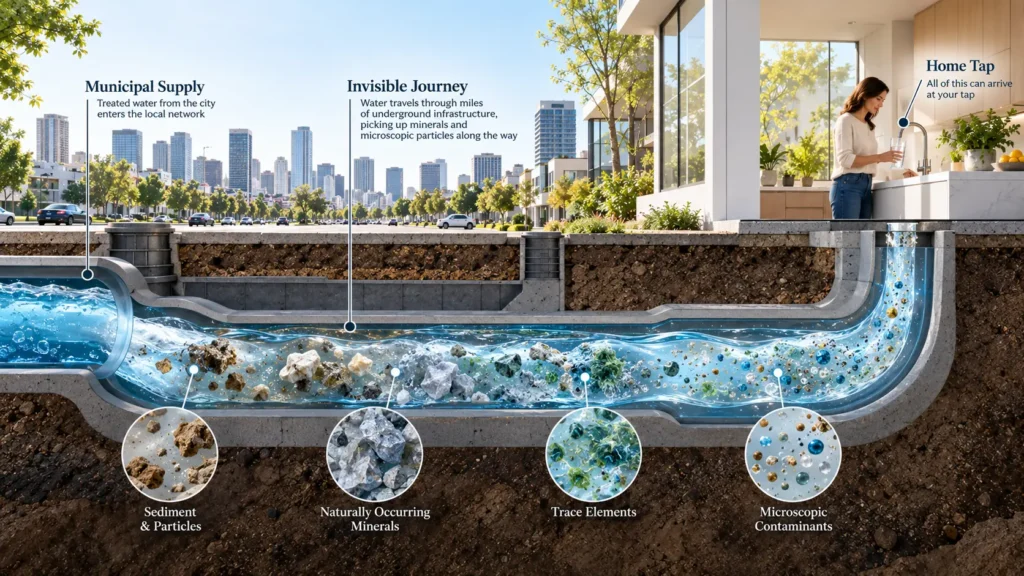
Municipal water treatment prepares water for public distribution. Treatment processes may address microorganisms, suspended particles, and other water quality concerns. Disinfection also plays an important role in protecting water as it moves through the distribution network. Chlorine, for example, may remain in the water after treatment to help maintain protection during its journey through public pipes.
This can explain the familiar smell some homeowners notice when they fill a glass. It may remind you of walking into a swimming pool, although the intensity and character of the smell can vary depending on the water and the conditions in the distribution system. The water then continues through storage facilities, public mains, service connections, and the plumbing inside your property. By the time it reaches your faucet, it has traveled through a system that extends well beyond the treatment facility.
Imagine ordering a meal from a restaurant. The kitchen prepares the food carefully, but the final experience can still depend on how the meal is transported, stored, and served. Water follows a different process, but the comparison helps explain why the journey matters as much as the starting point.
Clear Water Does Not Tell The Whole Story
One of the most misleading things about water is how ordinary it can look. A glass of water may appear completely clear even when it contains dissolved minerals or substances that affect its taste, smell, or performance inside the home. You cannot always identify a water quality concern by looking at the water in a glass.
A homeowner may notice the issue while making coffee. Another may see it on the shower door. Someone else may become aware of it when the dishwasher leaves spots on otherwise clean glasses.
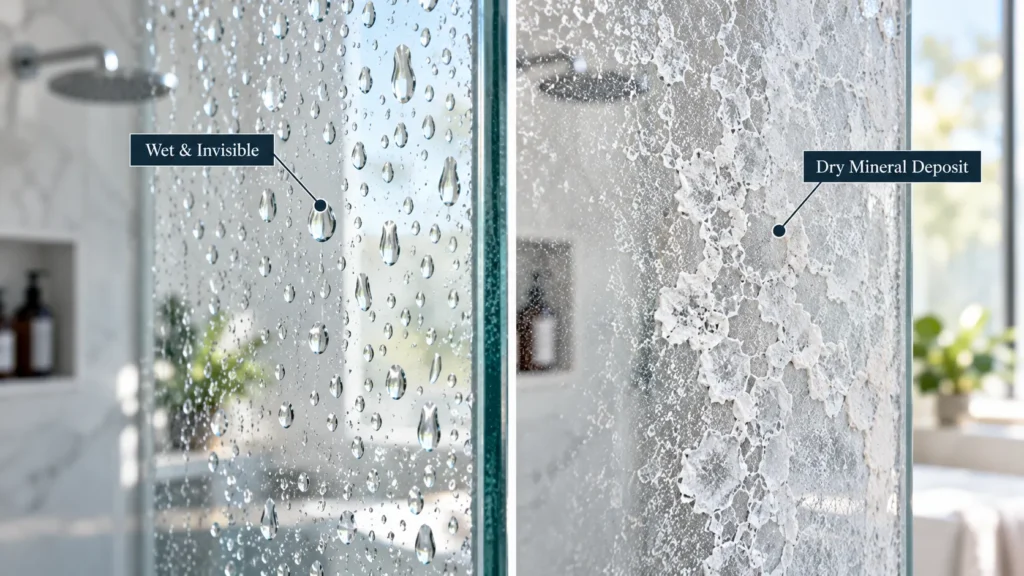
Consider a clean window after a rainy day. The glass may look clear while it is still wet, but once the water evaporates, it can leave behind visible marks. Hard water can create a similar experience on faucets, shower doors, and other surfaces. These deposits do not automatically mean that municipal treatment has failed. They may indicate that the water contains minerals that affect the way it behaves inside your home. The important step is to identify what is actually causing the problem.
Municipal Treatment And Home Filtration Serve Different Purposes
Municipal water treatment is designed to serve an entire community. A home filtration system is selected for the conditions and priorities of one household. Some home filtration systems focus on chlorine taste and odor. Others are designed to reduce sediment or target particular contaminants. Whole-home systems treat water as it enters the property, while point-of-use systems focus on selected taps, such as the kitchen faucet. The right system depends on what you want to improve.
For example, a family that wants better-tasting water for drinking and cooking may consider an under-sink filtration system. A homeowner who wants to address a concern throughout the house may need whole-home filtration. A property experiencing mineral scale may require a water softener or another treatment method rather than a standard filter.
Choosing a system without identifying the problem is similar to taking a toolbox to a repair and reaching for the first tool you see. A screwdriver may be useful, but it cannot do the job of a wrench. Water treatment equipment works in much the same way. The technology must match the concern.
A Filter Does Not Automatically Solve Hard Water
Homeowners sometimes assume that installing a filtration system will resolve every water-related issue. In practice, different systems are designed to perform different tasks. A filter intended to improve taste and odor does not necessarily remove calcium and magnesium, the minerals associated with hard water. If the main concern is white buildup around faucets, cloudy shower glass, or mineral deposits inside water-using appliances, a water softener or another suitable treatment system may be more appropriate.
Think about a coffee maker that develops a chalky layer inside its water chamber. Cleaning it once may improve its performance, but the buildup can return if the water continues to introduce the same minerals. Your water heater and other water-using appliances can face a similar pattern over time. A home filtration system should therefore be chosen based on the actual water conditions and the result you want to achieve. Better taste, reduced sediment, scale control, and hardness reduction are not interchangeable goals.
The Right Solution Begins With Testing, Not Guesswork
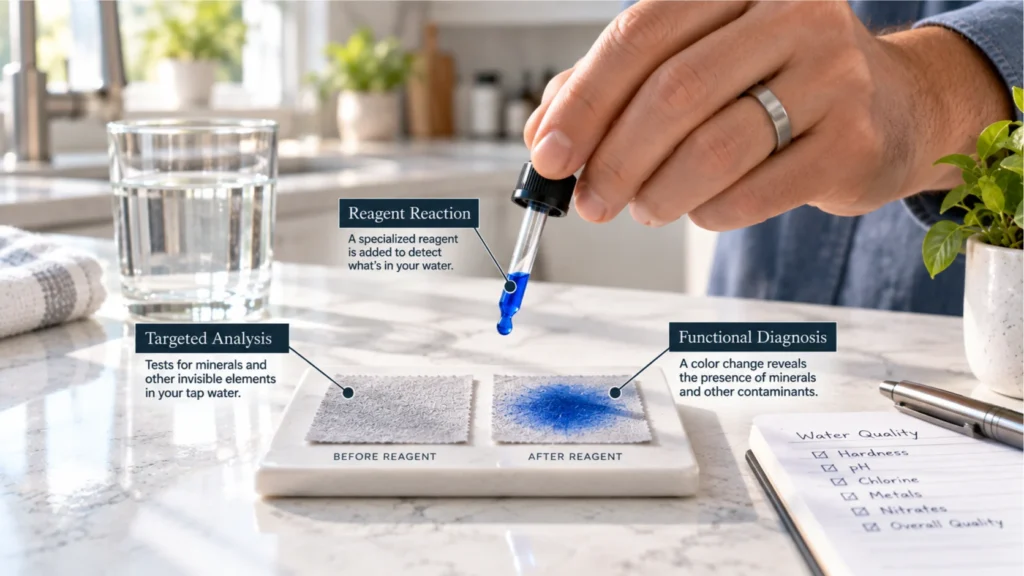
Water treatment decisions become much easier when homeowners know what they are dealing with. A professional in-home water test can help identify relevant water characteristics and clarify whether filtration, softening, or another treatment approach makes sense. It also creates an opportunity to review the home’s plumbing, existing equipment, household size, and daily water usage.
A family of two may use water very differently from a household of six. A home with older plumbing may require different attention from a recently constructed property. A homeowner who is mainly concerned about drinking water may need a different solution from someone who wants to improve water throughout the house. There is no reason to pay for equipment that does not address the concern you actually have. The goal is to find a system that fits the home and performs a clear function.
Why Irvine Homeowners Have Trusted The McCowin Family Since 1972
I’m Brian McCowin. My family has been solving water problems in Orange County since 1972, one home and one honest answer at a time. That experience begins with listening to homeowners and understanding what they notice in their everyday water.
We’re a licensed California water treatment contractor (CSLB C-55 #1022717), serving Irvine and the surrounding communities: Tustin, Santa Ana, Newport Beach, Costa Mesa, Lake Forest, Mission Viejo, Orange, Anaheim, Huntington Beach, Fountain Valley, Yorba Linda, Laguna Niguel, Laguna Hills, Aliso Viejo, Rancho Santa Margarita, San Juan Capistrano, and San Clemente.
A thoughtful water treatment process does not begin with a sales pitch. It begins with understanding the water and determining what your home actually needs.
The McCowin Promise
For more than fifty years, we’ve helped Orange County homeowners understand their water through professional testing, honest recommendations, and solutions built around their actual needs. And we stand behind what we install:
If the system we install doesn’t perform the way we promised, we’ll make it right. No fine print, no finger-pointing. Because your trust is worth more than the sale.
What the right municipal water filtration system should provide
The right system should address a specific concern and make everyday water use more comfortable and convenient. You may notice an improvement in the taste of your drinking water, less chlorine odor, reduced sediment, or fewer concerns about the water used for cooking. If your home needs treatment for hardness or scale, the appropriate solution should be selected separately or as part of a broader water treatment plan.
Maintenance also matters. Filters need to be replaced according to their requirements, and treatment equipment should be checked to ensure it continues to perform as intended.
If you want to understand what your municipal water contains and which treatment options suit your Irvine or Orange County home:
Book your free, in-home water test today, or call (949) 569-5736.
The first step is simple. Test the water, understand the concern, and choose a solution that fits your home.
Frequently Asked Questions
What is municipal water filtration?
Municipal water filtration can refer to filtration performed as part of public water treatment or to additional filtration installed inside a home that receives municipal water. The purpose depends on the system and the water quality concern being addressed.
Is municipal water safe to drink in Irvine?
Municipal water is treated and regulated according to applicable public drinking water requirements. Homeowners who have concerns about taste, odor, plumbing, or specific contaminants can arrange additional testing and explore targeted filtration.
Why does my municipal water smell like chlorine?
Chlorine or another disinfectant may be used to help protect water as it travels through the distribution system. A chlorine smell does not automatically indicate unsafe water. A suitable filtration system may improve taste and odor, depending on its design.
Do I need a home filtration system if I use municipal water?
Not every home needs the same type of filtration. The decision depends on the water entering the property, the condition of the plumbing, and the concerns you want to address. A professional water test can help clarify your options.
Does municipal water filtration remove hard water minerals?
A standard filtration system does not necessarily remove calcium and magnesium. If hard water is the main concern, a water softener or another system designed to address mineral-related problems may be more suitable.
Is whole-home filtration better than an under-sink filter?
The right choice depends on your goals. Whole-home filtration treats water as it enters the property, while an under-sink system focuses on selected drinking and cooking water. A water assessment can help determine which option fits your household.