


By Brian McCowin, McCowin Water. Serving Irvine and Orange County since 1972.
You turn on the shower, fill a glass at the kitchen sink, and start the washing machine. Water moves through your home so often that you rarely stop to think about where it goes or what it carries along the way. Then the little signs begin to appear. Your shower glass develops cloudy marks. Your tap water has a noticeable smell. The laundry does not feel as fresh as expected, or you find yourself buying bottled water for everyday drinking.
These experiences often lead homeowners to ask a simple question: “What is whole-home water filtration, and could it help my home?” Whole-home water filtration is designed to treat water as it enters your property, rather than filtering water at only one faucet. The system works across the house, providing treated water to the showers, sinks, appliances, and other water outlets connected to the plumbing. The important part is understanding what the system treats and whether it matches the problem your home actually has.
What is Whole-Home Water Filtration?

Whole-home water filtration is a water treatment system installed at the main water entry point of a property. Water passes through the filtration equipment before it travels into the home’s plumbing. Instead of filtering only the water you drink from the kitchen tap, the system treats water throughout the house. This means the water used for bathing, washing dishes, doing laundry, and cleaning can also pass through the treatment system.
Think of it like placing a filter at the entrance of a building instead of putting a small filter in just one room. Every room that receives water can benefit from the treatment, provided the system is designed to address the relevant water concerns. The exact results depend on the filter technology. Some systems are designed to reduce chlorine taste and odor. Others target sediment or specific contaminants. A whole-home filter is not automatically designed to remove every substance found in water.
Why Filtering One Tap May Not Be Enough
An under-sink filter can be useful when your main goal is improving the taste of drinking and cooking water. It focuses on one area of the home and can be a practical choice for a household with limited filtration needs. Your shower, washing machine, and bathroom faucets, however, continue to receive water from the main plumbing system.
Consider a home where the kitchen tap produces pleasant-tasting water, but the homeowner still notices a chlorine smell while showering. The under-sink filter may be doing its job, but it is not designed to treat water throughout the property. Whole-home filtration takes a different approach. It treats the water before it branches off to different rooms, so the system can address the water used across the household. The right choice depends on how much of your home you want to cover and what you want the treatment to accomplish.

What Can a Whole-Home Filtration System Improve?
The benefits depend on the water conditions and the type of filtration equipment installed. Some systems help reduce chlorine taste and odor. Others are designed to reduce sediment, improve water clarity, or target specific contaminants. A properly selected system can make everyday water use more comfortable and may help address concerns that affect multiple areas of the home. For example, a homeowner may notice a strong smell when running the shower. Another may see sediment collecting in a filter or notice that the water has an unpleasant taste when preparing coffee.
Imagine making coffee with beans you love but water that has a strong, unwanted taste. The coffee may still be drinkable, but the water affects the final result. The same principle applies to cooking, drinking, and other daily activities. Whole-home filtration can help when the system is selected to address the specific issue.
Whole-Home Filtration Does Not Always Solve Hard Water
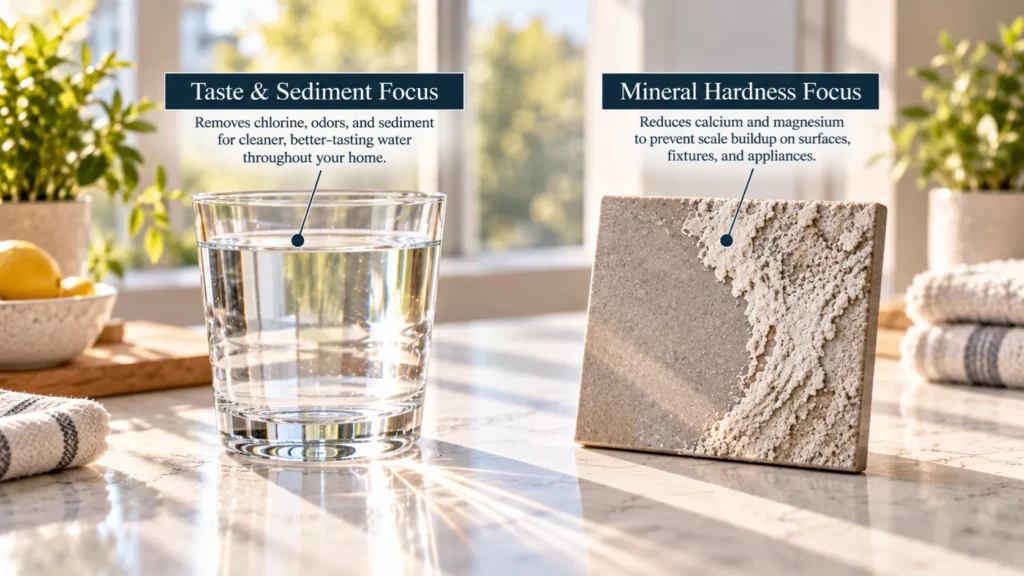
A common mistake is assuming that filtration and softening are the same thing. They are not. Many filtration systems are designed to reduce substances such as chlorine, sediment, or certain contaminants. They do not necessarily remove calcium and magnesium, the minerals that cause hard water.
If your main concern is white buildup around faucets, cloudy shower doors, or mineral deposits inside water-using appliances, you may need a water softener or another treatment system designed for hardness and scale. Think about a kettle that develops a chalky layer after repeated use. A filter designed to improve taste may not prevent that mineral buildup. The treatment method needs to match the source of the problem. A professional water test helps clarify whether your home needs filtration, softening, or a combination of solutions.
Does Every Home Need Whole-Home Water Filtration?
Not every home in Irvine needs the same water treatment system. Some homeowners mainly want better-tasting drinking water. Others want to address water concerns throughout the house. Household size, plumbing conditions, water usage, and existing equipment can all influence the decision.
A family that uses large amounts of water every day may have different requirements from a couple living in a smaller property. A home with older plumbing may also need a different assessment from a recently built house. The best place to begin is with the water itself. A professional in-home water test can help identify relevant water characteristics and determine whether whole-home filtration is appropriate for your property.
Why Irvine homeowners have trusted the McCowin family since 1972
I’m Brian McCowin. My family has been solving water problems in Orange County since 1972, one home and one honest answer at a time. The process begins by listening to homeowners, understanding their concerns, and identifying the water conditions inside their homes.
We’re a licensed California water treatment contractor (CSLB C-55 #1022717), serving Irvine and the surrounding communities: Tustin, Santa Ana, Newport Beach, Costa Mesa, Lake Forest, Mission Viejo, Orange, Anaheim, Huntington Beach, Fountain Valley, Yorba Linda, Laguna Niguel, Laguna Hills, Aliso Viejo, Rancho Santa Margarita, San Juan Capistrano, and San Clemente.
A water treatment system should address a clear concern instead of adding unnecessary equipment to your home.
The McCowin Promise
For more than fifty years, we’ve helped Orange County homeowners understand their water through professional testing, honest recommendations, and solutions built around their actual needs. And we stand behind what we install:
If the system we install doesn’t perform the way we promised, we’ll make it right. No fine print, no finger-pointing. Because your trust is worth more than the sale.
What the Right Whole-Home Filtration System Should Provide
The right system should treat the water concerns that matter most to your household. You may want to improve taste and odor, reduce sediment, or address a specific contaminant. You may also need a separate solution for hard water or mineral scale. The equipment should be properly sized for your home and installed in a way that works with your plumbing. Filters also require regular replacement or maintenance to continue performing as intended.
If you’re unsure whether whole-home water filtration is right for your Irvine or Orange County home:
Book your free, in-home water test today, or call (949) 569-5736.
The first step is to understand your water and choose a system that fits your needs.
Frequently Asked Questions
What is whole-home water filtration?
Whole-home water filtration is a system installed at the main water entry point of a property. It treats water before it reaches different fixtures and appliances throughout the home.
How is whole-home filtration different from an under-sink filter?
An under-sink filter treats water at one selected location, usually the kitchen sink. Whole-home filtration treats water as it enters the property, allowing multiple water outlets to receive filtered water.
Does whole-home water filtration remove hard water?
Not always. Many filtration systems target chlorine, sediment, or specific contaminants but do not remove calcium and magnesium. Homes with hard water may need a water softener or another suitable treatment system.
Is whole-home water filtration worth it?
It may be useful when homeowners want to address specific water concerns throughout the property. A water test can help determine whether the benefits justify installing a whole-home system.
How often does a whole-home water filter need maintenance?
Maintenance depends on the system, filter type, water quality, and household usage. Filters should be replaced according to the manufacturer’s recommendations.
Can whole-home filtration improve the taste of tap water?
Some whole-home filtration systems are designed to reduce substances that affect taste and odor, including chlorine. The result depends on the filter technology and the quality of the incoming water.