


By Brian McCowin, McCowin Water. Serving Irvine and Orange County since 1972.
Some homeowners notice it when they make their morning coffee. Others catch it while filling a glass for dinner or rinsing vegetables at the kitchen sink. The water looks clear, but something about the smell or taste feels off. It reminds them of a swimming pool.
A chlorine taste in water can be frustrating, especially when you expect your tap water to be clean, refreshing, and easy to enjoy. You may start buying bottled water, avoiding the tap, or wondering whether something is wrong with your home’s plumbing. In many cases, the issue is not a sign that your water is unsafe. It may simply mean that the disinfectant used to treat your municipal water is still noticeable by the time it reaches your home. The right solution depends on what is actually present in your water and where you want the improvement to happen.
Why your tap water tastes like chlorine
Municipal water providers use disinfectants to control harmful microorganisms as water travels through treatment facilities and distribution pipes. Chlorine is one of the most common disinfectants used for this purpose. It serves an important role before water reaches your home. However, the same disinfectant that helps protect the water supply can sometimes leave behind a noticeable smell or taste.
The intensity can vary depending on several factors, including the amount of disinfectant in the water, the age of the water sitting in your pipes, seasonal treatment changes, and the condition of your home’s plumbing. Temperature can also affect how noticeable the taste becomes. Water that has been sitting in a warm pipe may smell different from freshly drawn cold water. A glass of water left uncovered in the refrigerator may also taste different after the chlorine has had more time to dissipate.
The important point is that a chlorine taste does not automatically tell you whether your water is safe or unsafe. Taste and safety are two different questions, and both deserve a proper answer.
Chlorine taste can affect more than drinking water
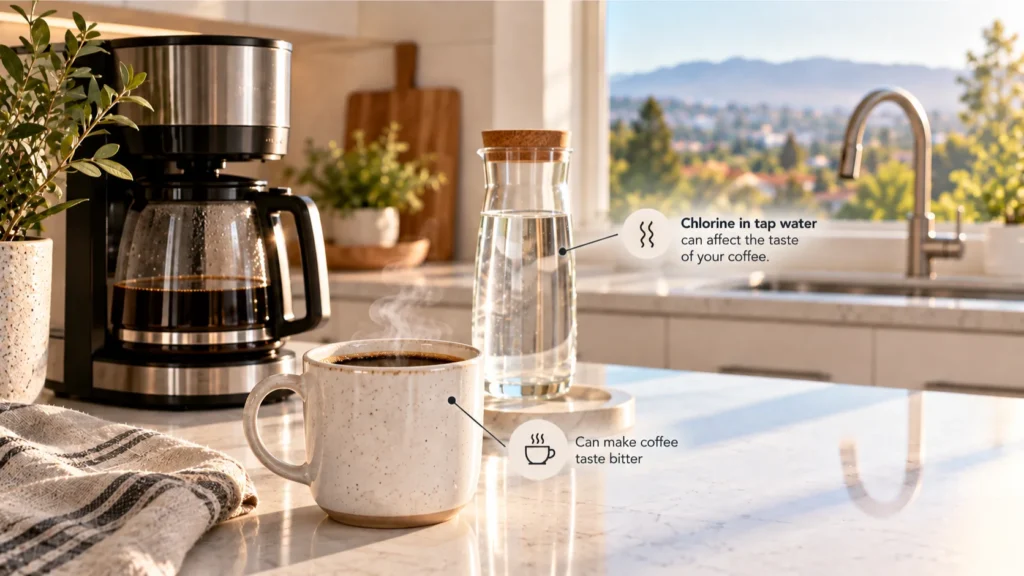
Many homeowners first notice chlorine in their drinking water, but the experience can extend throughout the kitchen. Coffee may taste flatter than usual. Tea may lose some of its natural character. Food prepared with tap water can carry a faint chemical note, particularly when the water itself has a strong smell. The same concern can appear when filling a pet’s bowl or preparing water for cooking. Even when the water meets treatment standards, an unpleasant taste can make people less comfortable using it.
Some homeowners respond by purchasing bottled water for drinking while continuing to use tap water for everything else. Over time, that can become an expensive habit, especially for a busy household. Others install a small filter beneath the kitchen sink. This can be a practical choice when the main concern is drinking and cooking water from one faucet. However, it may not address the water coming from showers, bathroom sinks, laundry areas, or other fixtures throughout the home. The right approach starts with understanding the scope of the problem.
Does a water filter remove chlorine?
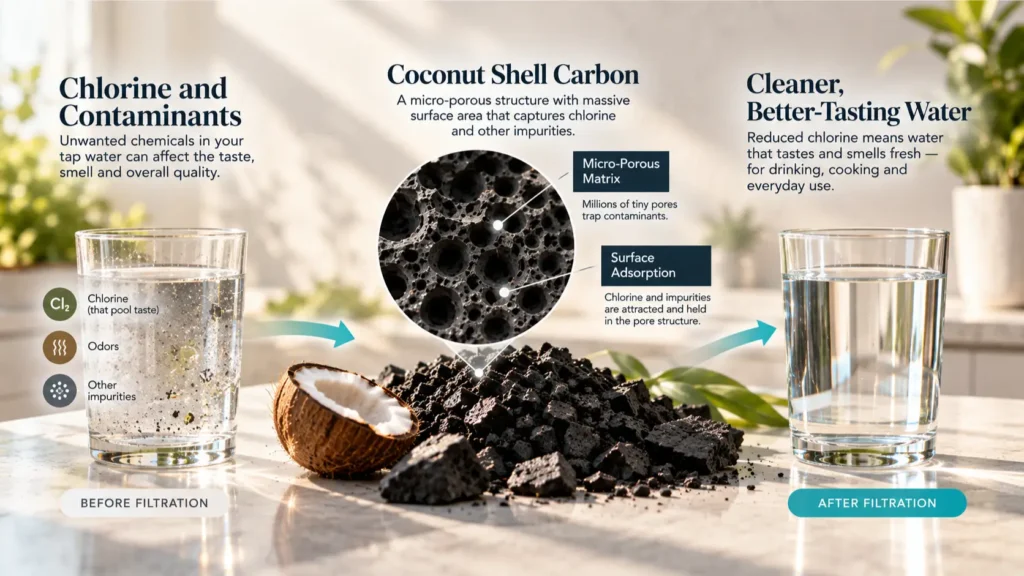
Some water filtration systems are designed to reduce chlorine and improve the taste and smell of municipal water. Activated carbon is commonly used for this purpose because it can reduce certain chemicals responsible for unpleasant taste and odor. However, not every filter performs the same job.
A basic pitcher filter, refrigerator filter, under-sink system, and whole-home filtration system may all use different designs, materials, capacities, and treatment methods. Their performance also depends on the quality of the filter, the amount of water being treated, and how regularly the filter is replaced. A filter that improves the taste of one glass of water may not be designed to treat every gallon entering your home.
This is where homeowners can run into trouble. They purchase a product based on a general promise, install it without testing the water, and expect the result to solve every concern. When the improvement is limited, they may assume that filtration does not work. Often, the real issue is that the system was not matched to the problem.
Whole-home or under-sink filtration?
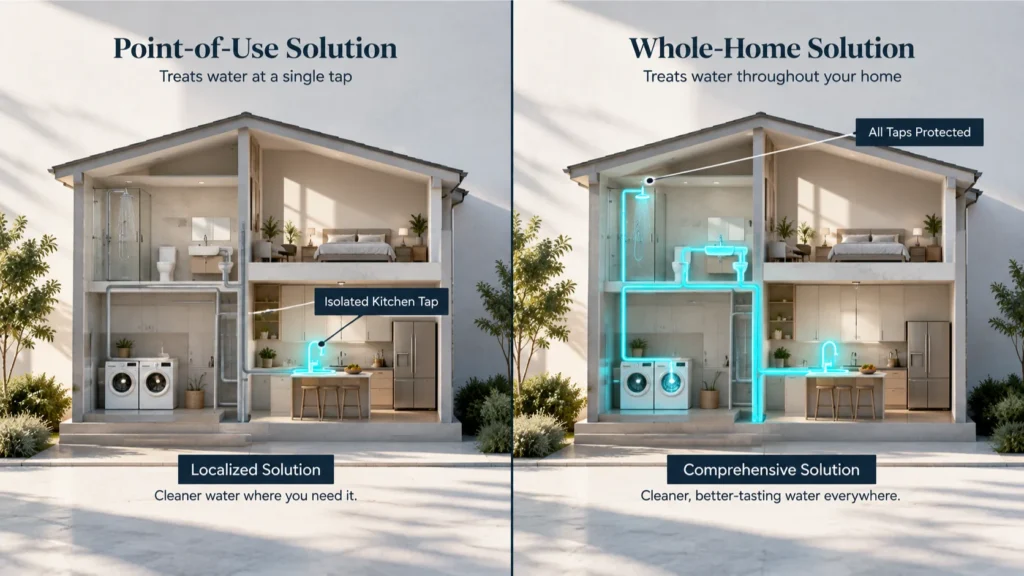
The best choice depends on where you notice the chlorine taste and what you want your water treatment system to accomplish. An under-sink filtration system can make sense when your main priority is better-tasting water for drinking, cooking, and filling bottles. It treats water at a specific point of use, usually in the kitchen, without changing the water supplied to the rest of the house.
Whole-home filtration takes a different approach. It treats water as it enters the property, helping improve the quality of water supplied to multiple fixtures throughout the home. This can be useful for homeowners who notice a chlorine smell while showering, washing their hands, or running water in different rooms. It can also be a better fit for families who want a consistent approach rather than relying on several separate filters.
Neither option is automatically right for every home. The decision should be based on the water, the household’s priorities, available space, water usage, and the type of treatment required. A good installation begins with those questions rather than with a particular product.
What if the chlorine taste keeps coming back?
A filter is not a permanent solution simply because it is installed once. Filtration media has a useful service life. Over time, its ability to reduce certain contaminants, tastes, and odors can decline. The rate depends on the system, the incoming water, and the amount of water your household uses.
If a filter is overdue for replacement, the chlorine taste may gradually return. The change can be subtle at first. Your water may seem fine for weeks or months before the difference becomes noticeable. This is why maintenance matters as much as the initial installation. Homeowners should understand how often the system needs servicing, which components require replacement, and what signs indicate that performance is declining. A reliable water treatment provider should explain these details before installation, not leave you to figure them out later.
Start with your water
At McCowin Water, we do not believe homeowners should have to choose a treatment system based only on a strong smell, a product advertisement, or a neighbour’s recommendation.
The first step is understanding the water entering your home. A professional water test can help identify the conditions that may be contributing to taste, odor, hardness, or other concerns. From there, the treatment options can be explained in practical terms.
I’m Brian McCowin. My family has been solving water problems in Orange County since 1972, one home and one honest answer at a time. We’re a licensed California water treatment contractor (CSLB C-55 #1022717), serving Irvine and the surrounding communities: Tustin, Santa Ana, Newport Beach, Costa Mesa, Lake Forest, Mission Viejo, Orange, Anaheim, Huntington Beach, Fountain Valley, Yorba Linda, Laguna Niguel, Laguna Hills, Aliso Viejo, Rancho Santa Margarita, San Juan Capistrano, and San Clemente.
The McCowin Promise
For more than fifty years, we’ve helped Orange County homeowners understand their water through professional testing, honest recommendations, and customized solutions.
“If the system we install doesn’t perform the way we promised… If your water doesn’t taste, feel, or behave the way we said it would… We’ll pull the whole system out. And either replace it or make it right. No fine print. Because your trust is worth more than the sale.”
Better-tasting water should not require guesswork
A chlorine taste in water can have a simple explanation, but the right solution is not always the same for every home. Some households need point-of-use filtration. Others may benefit from a whole-home approach. In some cases, testing may reveal that chlorine is only one part of the concern.
The goal is not to install the biggest system or add more equipment than you need. It is to understand your water and choose a solution that fits your home.
Book your free, in-home water test today, or call (949) 569-5736.
Frequently Asked Questions
Is a chlorine taste in water dangerous?
A noticeable chlorine taste does not automatically mean that your water is dangerous. Municipal water is commonly disinfected to help control harmful microorganisms. If you are concerned about your water, testing can provide more useful information than taste alone.
How can I reduce the chlorine taste in my tap water?
Depending on the water and your needs, an activated carbon filter or another suitable filtration system may help reduce chlorine-related taste and odor. The right system depends on the water conditions and the amount of water you want to treat.
Does boiling water remove chlorine?
Boiling can reduce some chlorine from water, although the result depends on factors such as the type of disinfectant present and how the water is heated. Boiling is not a complete water treatment solution and does not address every possible contaminant.
Should I choose whole-home filtration or an under-sink filter?
An under-sink filter may be suitable when your main concern is drinking and cooking water. Whole-home filtration may be more appropriate when you want to improve the water supplied to multiple fixtures. A water assessment can help determine which approach fits your home.
How often should a water filter be replaced?
The replacement schedule depends on the type of filter, water usage, and the manufacturer’s recommendations. A filter may need attention sooner if your household uses more water than expected or if the taste and odor begin to return.