


By Brian McCowin, McCowin Water. Serving Irvine and Orange County since 1972.
A water spot on the shower door. A faucet that looks cloudy around the edges. Water that tastes fine in one room but smells different in another. A coffee maker that needs cleaning more often than expected. These problems can all lead homeowners to question and compare water softener vs filtration vs RO.
It is an important question because these three systems do different jobs. A water softener is not designed to do everything a filter does. A whole-home filter cannot automatically replace a reverse osmosis system. Reverse osmosis, meanwhile, may be unnecessary if your main concern is hard water throughout the house. The right choice depends on what is happening in your water and what you want to improve. Once you understand the difference, choosing a system becomes much less confusing.
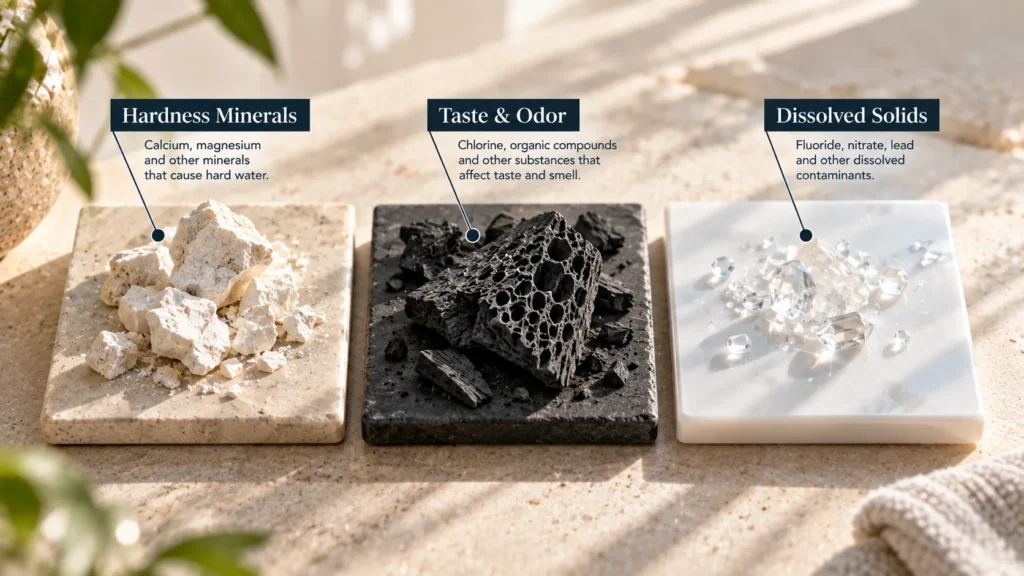
What does a water softener do?
A water softener is mainly designed to address hard water. Hard water contains minerals, especially calcium and magnesium. These minerals are not always obvious when you turn on the tap, but they can leave behind white spots, affect soap, and build up inside plumbing and appliances over time.
You may notice hard water when your shower glass becomes difficult to clean or when your soap refuses to lather properly. Your skin may feel dry after a shower, and your clothes may not feel as soft as expected after washing.
A water softener works by reducing the minerals responsible for hardness. It helps prevent those minerals from moving through your home’s plumbing and settling on fixtures, appliances, and surfaces. For many Orange County homeowners, a softener can make everyday cleaning easier and help protect water-using appliances. However, a water softener is not a complete drinking water filter. It is designed to address hardness, not every possible taste, odor, or dissolved substance.
What does a whole-home filtration system do?
A whole-home filtration system treats water as it enters your house and helps improve the water supplied to different fixtures. The type of filter used depends on the problem it is designed to address. Some filters help reduce chlorine taste and odor. Others are designed to reduce certain particles or specific substances in the water. The benefit is that filtration can address water quality throughout the home rather than at only one faucet.
You may notice the difference when washing your hands, taking a shower, preparing food, or filling a glass in another room. The goal is to make the water entering your home more suitable for your household’s needs.
However, “filtration” is a broad term. Two filtration systems may perform very different jobs, depending on the filter inside them. A whole-home filter designed to improve chlorine taste should not automatically be expected to reduce every dissolved mineral or contaminant. Before choosing one, you need to understand what the filter is actually designed to do.
What does reverse osmosis do?
Reverse osmosis, often called RO, is generally used to treat drinking water at a specific faucet. The system pushes water through a very fine membrane that reduces many dissolved substances. Depending on the system and the incoming water, it can help reduce certain salts, minerals, metals, and other unwanted substances.
Unlike a water softener, reverse osmosis is not usually installed to treat every gallon of water used throughout the house. It is commonly placed beneath the kitchen sink and connected to a separate drinking water faucet. This makes it useful for homeowners who want treated water for drinking, cooking, making coffee, or filling bottles.
Reverse osmosis can also change the taste of water because it reduces many substances that contribute to its mineral content. Some systems include an additional filter to adjust the final taste. RO can be an effective option for specific drinking water concerns, but it is not always the right answer for whole-home water problems.
Water softener vs filtration vs RO
The easiest way to understand the difference is to look at the main problem each system is designed to address.
| System | Main problem it addresses | What it does | Key considerations |
|---|---|---|---|
| ➤ Water softener | Hard water, white deposits, soap problems, and scale buildup. | Reduces the minerals that cause water hardness. | Helps protect appliances and plumbing. It is not a complete drinking water treatment system. |
| ➤ Whole-home filtration | Unpleasant taste, odors, or specific water quality concerns throughout the home. | Filters water supplied to multiple fixtures, depending on the type of filter used. | The filter should be selected based on actual water quality and the contaminants being targeted. |
| ➤ Reverse osmosis (RO) | The need for treated water for drinking and cooking. | Reduces many dissolved substances and is commonly installed at a drinking water faucet. | Requires regular filter changes and may need additional space beneath the sink. |
Which system should you choose?
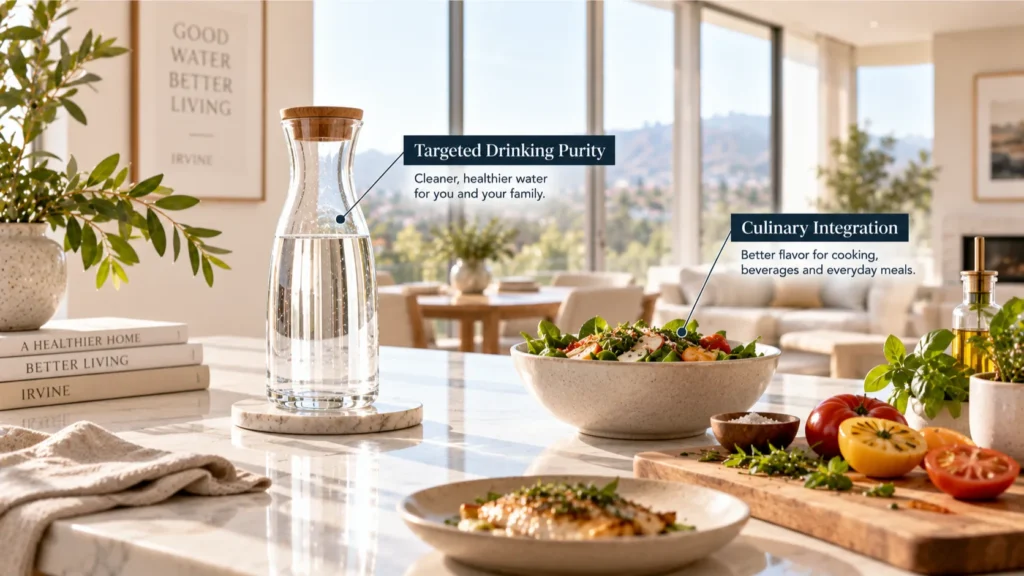
Start by identifying what you notice most:
- If your main frustration is white scale around faucets, soap that does not lather, or mineral buildup on shower doors, hard water may be the issue worth investigating first.
- If the water smells like chlorine or has an unpleasant taste throughout the house, a suitable whole-home filter may be worth considering.
- If you are mainly concerned about the quality of the water you drink and use for cooking, reverse osmosis may be a better fit.
Your water may also have more than one issue. Hard water and chlorine taste can exist together. A drinking water concern may also be separate from the water affecting your shower or washing machine. This is why choosing a system based on a neighbour’s recommendation can be risky. Your homes may receive water from the same general supply, but your plumbing, usage, priorities, and concerns may not be identical. A water test helps you move from guesswork to a clearer decision.
Can you use a softener, filter, and RO together?
Yes, in some homes, combining systems can make sense. A water softener can address hardness before water moves through the house. A whole-home filter can be selected to improve certain water quality concerns. An RO system can then provide more highly treated water at the kitchen sink. The order of the systems matters, and the equipment needs to be chosen carefully. For example, treating hard water before certain other systems may help reduce mineral buildup and support their operation.
However, adding every available system is not always the best approach. More equipment means more space, more maintenance, and more replacement costs. The aim should be to create a treatment plan that solves the actual problems in your home. If one system can address your main concern, there may be no reason to install two or three.
Do not choose based only on price or features
The least expensive system may not address the problem you have. The most expensive system may include features you never use. Look beyond the initial price and ask what the system will require over time. Find out how often filters or other parts need to be replaced. Understand how much space the equipment needs and whether your home has suitable plumbing and water pressure.
You should also know what the system does not remove or solve. A clear explanation is more valuable than a long list of impressive features. When you understand the purpose of each part, you can make a decision that suits your home instead of paying for equipment you may not need.
Why Irvine homeowners have trusted the McCowin family since 1972
I’m Brian McCowin. My family has been solving water problems in Orange County since 1972, one home and one honest answer at a time. We believe the process should begin with listening to your concerns and examining your water. From there, we explain the options in straightforward language, without pushing equipment that does not serve a clear purpose.
We’re a licensed California water treatment contractor (CSLB C-55 #1022717), serving Irvine and the surrounding communities: Tustin, Santa Ana, Newport Beach, Costa Mesa, Lake Forest, Mission Viejo, Orange, Anaheim, Huntington Beach, Fountain Valley, Yorba Linda, Laguna Niguel, Laguna Hills, Aliso Viejo, Rancho Santa Margarita, San Juan Capistrano, and San Clemente.
The McCowin Promise
For more than fifty years, we’ve helped Orange County homeowners understand their water through professional testing, honest recommendations, and customized solutions.
“If the system we install doesn’t perform the way we promised… If your water doesn’t taste, feel, or behave the way we said it would… We’ll pull the whole system out. And either replace it or make it right. No fine print. Because your trust is worth more than the sale.”
Start with the problem, then choose the system
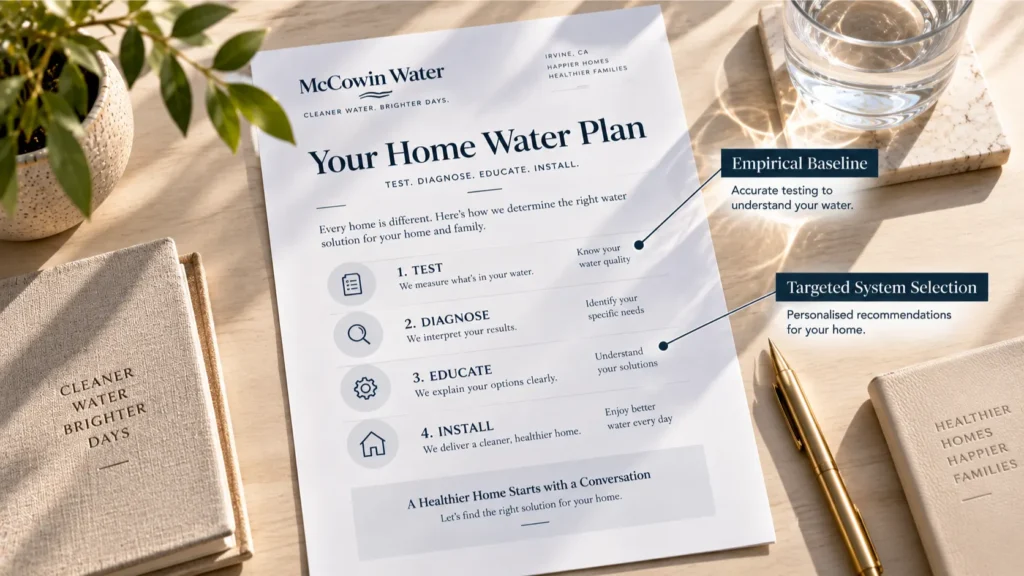
A water softener, whole-home filtration system, and reverse osmosis system each serve a different purpose. A softener focuses on hard water. Filtration can help address specific taste, odor, and water quality concerns throughout the home. Reverse osmosis is commonly used when homeowners want more thoroughly treated water for drinking and cooking.
Book your free, in-home water test today, or call (949) 569-5736.
The right choice is not about buying the system with the most features. It is about understanding your water and choosing the treatment that makes sense for your household.
Frequently Asked Questions
Is a water softener the same as a water filter?
No. A water softener is designed mainly to reduce the minerals that cause hard water. A filter is designed to address specific particles, tastes, odors, or other substances, depending on the type of filter used.
Is reverse osmosis better than a water softener?
Neither system is automatically better. They solve different problems. A softener addresses hard water throughout the home, while reverse osmosis is commonly used to treat drinking and cooking water.
Do I need both a water softener and reverse osmosis?
Some homes benefit from both systems because they address different concerns. A softener can help with hard water, while RO can provide more thoroughly treated drinking water. Your water and household needs should guide the decision.
Does whole-home filtration remove hard water?
A standard whole-home filter should not automatically be expected to remove hardness. If hard water is your main concern, you may need a system specifically designed to address it.
How do I know which water treatment system I need?
Start with a water test and identify the problems you want to solve. Understanding your water helps you choose a softener, filter, reverse osmosis system, or combination of systems based on actual needs.