


By Brian McCowin, McCowin Water. Serving Irvine and Orange County since 1972.
You scrub the shower glass, wipe the faucets, and clean the kitchen sink. A few days later, the same cloudy spots begin to appear again. You may have already changed your cleaning products, tried a different soap, or spent more time rinsing the fixtures. Still, the buildup keeps returning. In many homes, the problem is not the cleaning routine. It is the water.
Hard water contains minerals that can leave deposits on surfaces, affect how soap works, and build up inside plumbing and appliances. A water softener is designed to address these minerals, but it does not remove everything found in your water. So, what does a water softener remove? A traditional water softener mainly reduces calcium and magnesium, the minerals responsible for water hardness. Understanding what it removes, what it leaves behind, and how it differs from a filter can help you decide whether your home needs one.
What makes water hard?
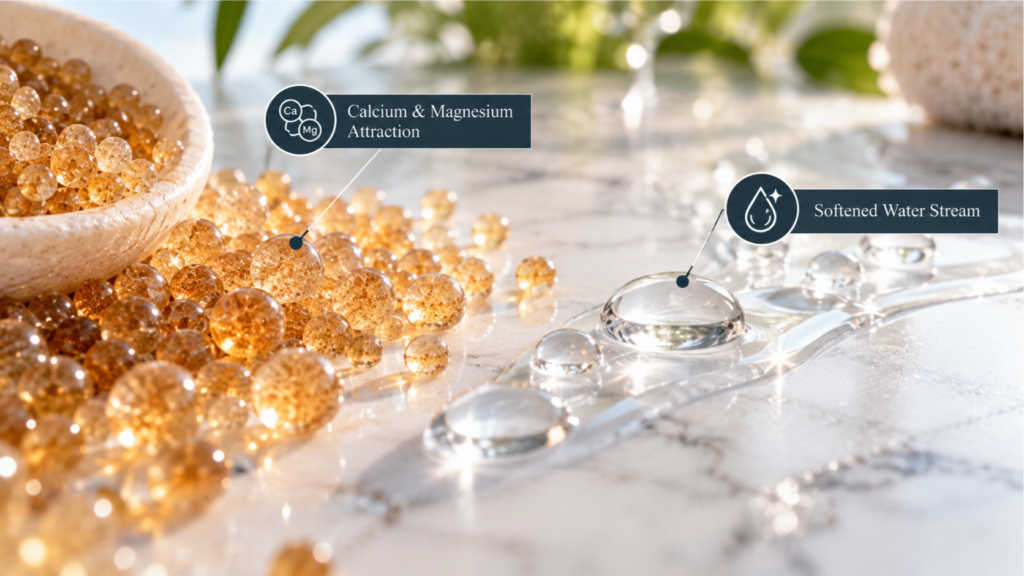
Water becomes hard when it contains dissolved minerals, especially calcium and magnesium. These minerals are naturally picked up as water moves through the ground and comes into contact with rocks and soil. By the time the water reaches your home, it may contain enough of these minerals to create noticeable problems.
Hard water is not always easy to identify when you first turn on the tap. It may look completely clear. The signs usually become more obvious after the water has been used. You may notice white marks around faucets, spots on shower doors, or a chalky layer inside a kettle. Soap may not lather easily, and shampoo may take longer to rinse away. Clothes can also feel less soft after washing. The issue is not necessarily the amount of water you use. It is what the water leaves behind.
What does a water softener remove from water?
A traditional water softener is designed to reduce the calcium and magnesium that cause hardness. Inside the softener is a special material called resin. As hard water passes through the system, the resin attracts the calcium and magnesium in the water. The system then releases a small amount of sodium or, in some cases, potassium in exchange. The result is water with less calcium and magnesium.
This process helps reduce the minerals that create scale and interfere with cleaning. It does not mean that every substance has been removed from the water. The softener is focused on hardness rather than complete water purification.
The main substances a traditional softener addresses are:
➤ Calcium
Calcium is one of the main minerals responsible for hard water. When water containing calcium dries on a surface, it can leave behind white spots or a chalky residue. Calcium can also contribute to buildup inside water heaters, pipes, dishwashers, and other appliances that regularly use hot water. A water softener reduces calcium so it is less likely to create these problems.
➤ Magnesium
Magnesium is another mineral that contributes to water hardness. Like calcium, it can affect soap, create deposits, and contribute to buildup inside plumbing and appliances. A properly working water softener reduces magnesium along with calcium. This helps make the water easier to use for everyday household tasks.
➤ Hard water minerals
People often refer to calcium and magnesium together as hard water minerals. These are the main minerals a traditional water softener is designed to address. Reducing them can help prevent scale from forming on showerheads, faucets, heating elements, and other surfaces that come into regular contact with water. A softener does not necessarily remove every mineral from water. Its job is to reduce the minerals that create hardness.

What does a water softener not remove?
One of the most common misunderstandings is that a water softener acts like a complete water filter. It does not. A traditional water softener is not designed to remove every contaminant, chemical, particle, or unpleasant taste in your water. It focuses on calcium and magnesium.
For example, a softener should not automatically be expected to remove:
➤ Chlorine
Chlorine is commonly used to disinfect municipal water. If your tap water has a swimming-pool-like smell or taste, a water softener is generally not the system designed to address it. A suitable carbon filter may be more appropriate for chlorine-related taste and odor concerns.
➤ Dirt and sediment
Small particles such as sand, dirt, and other debris require a suitable sediment filter. A water softener is not intended to act as a general-purpose particle filter.
➤ Unpleasant tastes and odors
A water softener may change the feel of your water by reducing hardness, but it is not designed to remove every taste or smell. If your main concern is the way your water tastes or smells, the right filtration system will depend on what is causing the problem.
➤ Every dissolved substance
Water can contain many dissolved substances, and different treatment systems are designed for different purposes. A softener should not be treated as a complete solution for every water quality concern. If you are worried about a particular substance, the first step is to find out whether it is present and what type of treatment is designed to address it.
Does a water softener purify water?
A water softener treats one specific water problem: hardness. It does not purify water in the broad sense of removing everything unwanted. Instead, it reduces the minerals that cause hard water and the household problems associated with them. This distinction matters because homeowners sometimes expect softened water to taste different, look different, and be free from every concern they may have about their water.
Softened water may feel different when you wash your hands or take a shower. Soap may work more easily, and mineral deposits may become less noticeable. However, these changes do not mean that the water has gone through a complete drinking water treatment process. If your goal is better-tasting drinking water or a reduction in certain dissolved substances, you may need a separate filtration system or reverse osmosis system. The right choice depends on the problem you are trying to solve.
Does a water softener remove salt?
A traditional water softener does not remove salt from water. In fact, many softeners use salt during their cleaning process. During normal operation, the softener exchanges calcium and magnesium for a small amount of sodium. The amount added depends on the hardness of the incoming water and how the system is set up. This is why homeowners who are concerned about sodium should discuss their options before choosing a softener.
A salt-based softener and a salt-free water treatment system do not work in the same way. Salt-free systems may help reduce the formation of scale, but they do not remove calcium and magnesium from the water in the same way a traditional softener does. The terms can sound similar, but the results are different. Understanding the difference can help you avoid choosing a system based on a label rather than its actual function.
Water Softener vs Water Filter
| Feature | Water Softener | Water Filter |
|---|---|---|
| ➤ Main purpose | Addresses hard water and reduces minerals that cause scale buildup. | Targets specific substances in water, depending on the filter type. |
| ➤ What it helps with | Mineral buildup, soap problems, and concerns about appliances and plumbing. | Chlorine, sediment, certain tastes, odors, or other specific water quality concerns. |
| ➤ How it works | Typically uses ion exchange to reduce hardness-causing minerals. | Uses different filtration methods to reduce targeted substances. |
| ➤ Whole-home use | Can help manage hard water throughout the house. | Can treat water throughout the house or at a specific faucet, depending on the system. |
| ➤ Drinking water | Not primarily designed to provide complete drinking water treatment. | Certain filters can improve drinking water quality, depending on their capabilities. |
| ➤ Can you use both? | Yes. A softener can manage hard water throughout the home. | Yes. A separate drinking water filter can address specific cooking and drinking water concerns. |
| ➤ Which one do you need? | Consider a softener if hard water is your main concern. | Choose a filter based on the specific substance or water quality issue you want to address. |
How can softened water help around your home?

Reducing hard water minerals can make a noticeable difference in everyday household tasks. You may spend less time removing white deposits from faucets and shower glass. Soap and shampoo may rinse away more easily. Water heaters, dishwashers, and other appliances may experience less mineral buildup. Cleaning may become less frustrating because the same spots are not returning as quickly.
A softener can also help reduce the amount of scale forming inside plumbing and water-using equipment. However, it is not a guarantee that every existing deposit will disappear immediately. Old buildup may require cleaning, and the system needs to be sized, installed, and maintained properly. The benefits are most noticeable when the system is matched to the hardness of your water and the needs of your household.
How do you know if your home needs a water softener?
Start by looking for repeated signs of hard water. If you regularly notice scale around faucets, cloudy shower glass, stiff laundry, or problems with soap, hardness may be worth investigating. You may also notice that appliances using hot water require frequent cleaning. However, these signs alone do not tell you exactly how hard your water is.
A water test can help identify the level of hardness and provide a clearer picture of what is happening. It can also help determine whether a softener is the right solution or whether another type of treatment is more appropriate. At McCowin Water, we help homeowners understand their water before recommending equipment.
Why have Irvine homeowners trusted the McCowin family since 1972?
I’m Brian McCowin. My family has been solving water problems in Orange County since 1972, one home and one honest answer at a time. We do not believe every household needs the same equipment. We take the time to understand the water, listen to the homeowner’s concerns, and explain the available options in clear, practical language.
We’re a licensed California water treatment contractor (CSLB C-55 #1022717), serving Irvine and the surrounding communities: Tustin, Santa Ana, Newport Beach, Costa Mesa, Lake Forest, Mission Viejo, Orange, Anaheim, Huntington Beach, Fountain Valley, Yorba Linda, Laguna Niguel, Laguna Hills, Aliso Viejo, Rancho Santa Margarita, San Juan Capistrano, and San Clemente.
The McCowin Promise
For more than fifty years, we’ve helped Orange County homeowners understand their water through professional testing, honest recommendations, and customized solutions.
“If the system we install doesn’t perform the way we promised… If your water doesn’t taste, feel, or behave the way we said it would… We’ll pull the whole system out. And either replace it or make it right. No fine print. Because your trust is worth more than the sale.”
Start with the water, not the equipment
A water softener is designed to reduce calcium and magnesium, the minerals responsible for hard water. It can help with scale, soap problems, and mineral buildup, but it is not a complete water filter. If hard water is affecting your home, testing can help you understand the problem and determine whether a softener is the right fit.
Book your free, in-home water test today, or call (949) 569-5736.
The goal is not to install more equipment than you need. It is to choose a system that addresses the actual issue in your water.
Frequently Asked Questions
What does a water softener remove?
A traditional water softener mainly reduces calcium and magnesium, the minerals that cause water hardness.
Does a water softener remove calcium?
Yes. A traditional water softener reduces calcium from water through a process that exchanges it for sodium or, in some systems, potassium.
Does a water softener remove magnesium?
Yes. A properly working traditional water softener reduces magnesium along with calcium.
Does a water softener remove chlorine?
No. A water softener is not designed to remove chlorine. A suitable filter may be more appropriate for chlorine-related taste and odor.
Does softened water contain salt?
Water treated by a traditional salt-based softener may contain more sodium because the system exchanges calcium and magnesium for sodium. The amount depends on the hardness of the incoming water and the system’s settings.