
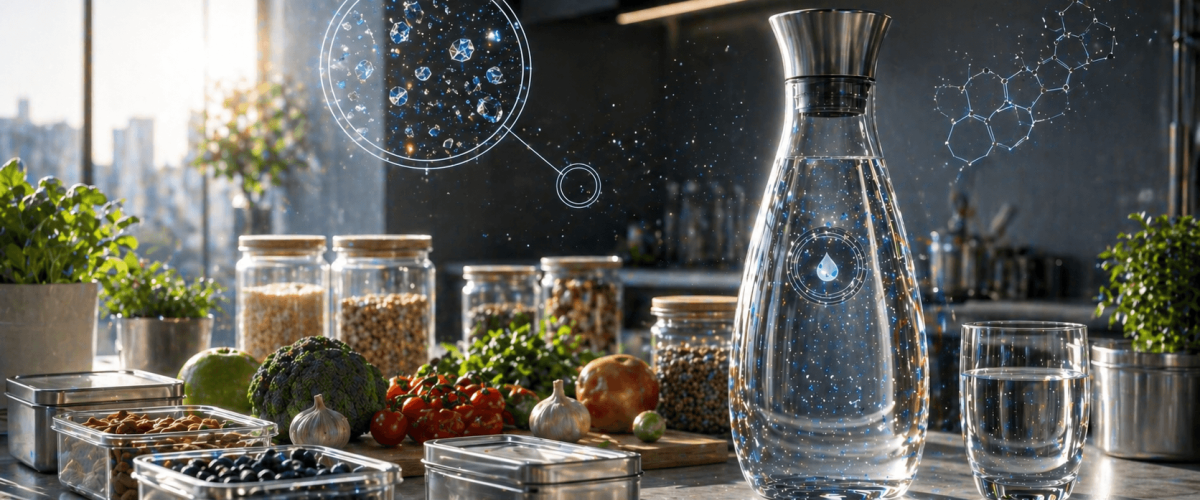

You can lower microplastic in water and food exposure by making a few smart changes: filter your water, avoid bottled water, stop heating food in plastic, reduce processed foods, and switch to glass or stainless steel for food and drink storage. You may not eliminate exposure completely, but you can cut it down dramatically.
What’s the uncomfortable truth about eating and drinking microplastics?
Most people think microplastics are an ocean problem. They are not.
They are often a kitchen problem. That catches people off guard.
But after over 50 years in water treatment, I can tell you:
Some of the highest levels of microplastic exposure occur during ordinary meals.
The good news? You can fix a lot of it.
Can you actually reduce microplastic in water and food exposure?
Yes. You can lower daily exposure in meaningful ways.
Do not aim for perfect. Aim for smarter.
Small changes compound.
Here are the five I would start with first.
1. Filter your drinking water properly
This is the big one.
If you ignore everything else, do not ignore this.
The best options:
- Reverse osmosis
- Multi-stage filtration
- Properly designed home systems Basic filters often do not go far enough.
Do not use a bandage for a plumbing problem.
Fix the source.
Why does this matter so much?
Because water is constant. You drink it.
Cook with it. Make ice with it.
And microplastic in water can show up in all three. Daily exposure adds up.
2. Stop relying on bottled water
This surprises people.
They switch to bottled water to avoid contamination. And often increase plastic exposure.
Why?
Because bottles can shed particles. Especially with:
- Heat
- Storage time
- Transport friction
In Southern California heat, that matters. A lot.
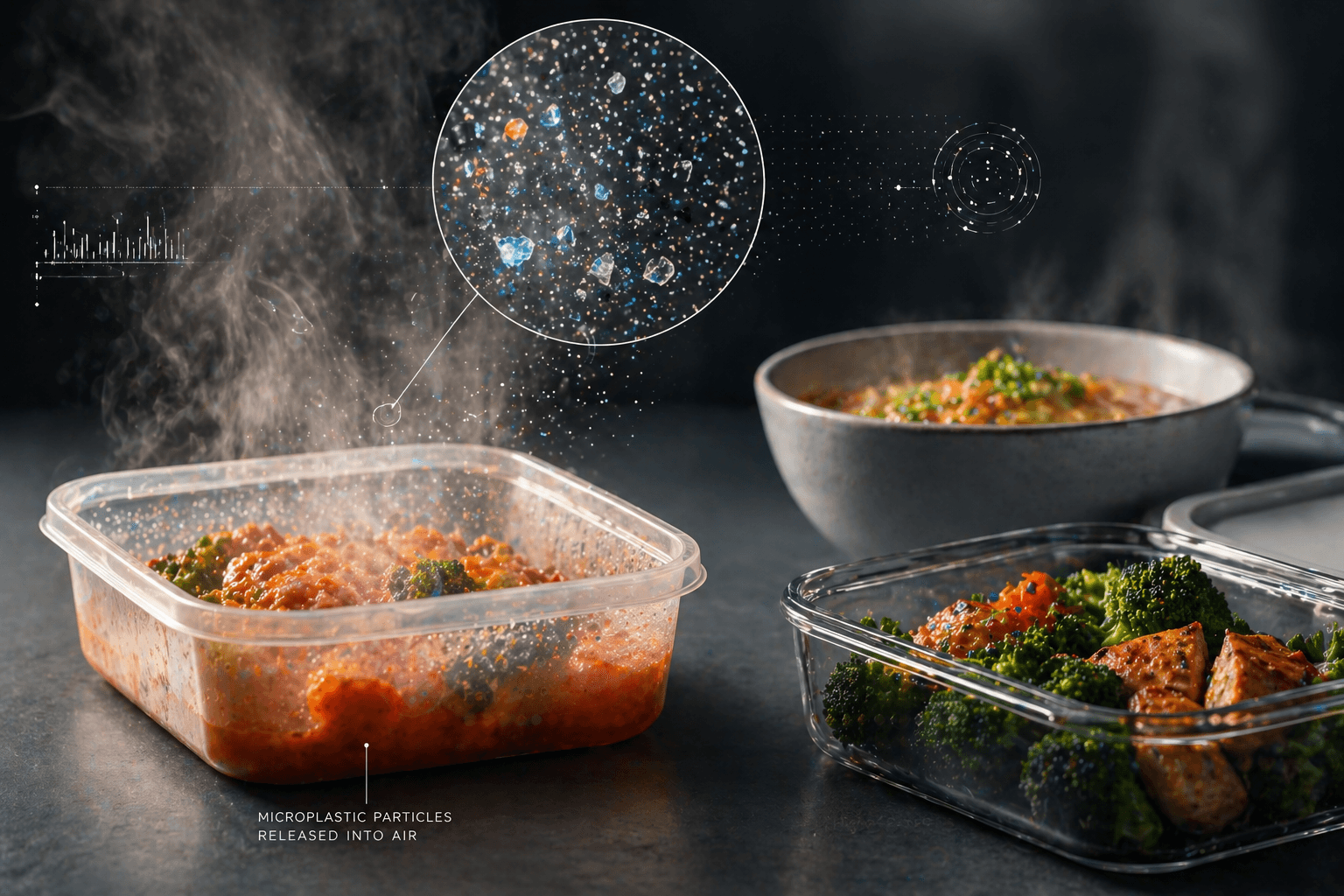
3. Never heat food in plastic
This is one of the easiest wins. Stop doing this:
- Microwaving leftovers in plastic
- Reheating takeout in plastic containers
- Pouring hot food into plastic storage Use:
- Glass
- Ceramic
- Stainless steel
Heat plus plastic is a bad equation. Always.
4. Eat less processed and heavily packaged food
This one gets overlooked. But it matters.
Highly processed foods can pick up plastic exposure through:
- Packaging
- Processing equipment
- Storage materials
Fresh food often means less plastic contact. Simple rule:
The more a food looks like food, the better.
5. Switch food and drink storage away from plastic
This is low effort. High payoff.
Swap:
- Plastic water bottles for stainless steel
- Plastic storage for glass
- Plastic pitchers for safer alternatives It is not dramatic.
It is just smarter.
Which of these reduces exposure the most?
If I were prioritizing:
| Priority | Action | Impact |
| ➤ 1st | Filter your water | Very High |
| ➤ 2nd | Stop bottled water | Very High |
| ➤ 3rd | Avoid heating food in plastic | High |
| ➤ 4th | Use glass or steel storage | High |
| ➤ 5th | Reduce processed foods | Medium to High |
Start at the top. Work down.
What mistake do most people make?
They focus on food… And ignore water.
That is backward.
If your water carries daily exposure, fixing that first is like fixing the leak before repainting the ceiling.
Always start there.
What about “safer” alternatives like canned water?
Be careful.
Even canned water often has plastic linings. This is why I tell homeowners:
Do not keep switching containers. Solve the source.
That is the difference.
How do we approach this at McCowin Water?
We do not push one product. We solve the whole problem.
I often say we are the Auto Mall of water treatment.
Not a captive dealership.
We carry multiple solutions and fit the right system to your home.
Because water in Irvine is not the same as water in Newport Beach or Laguna Niguel. And your solution should reflect that.
How do you know if your water needs treatment?
Start with a Free, In-Home Water Test. And we do not send tests out to a lab. We test on-site.
In real time.
With zero sales pressure. You get answers right away.
Why trust McCowin Water?
Because we stand behind what we install.
“If the system we install doesn’t perform the way we promised… If your water doesn’t taste, feel, or behave the way we said it would… We’ll pull the whole system out. And either replace it or make it right. No fine print. Because your trust is worth more than the sale.”
That is not marketing. That is our standard.
What should you do next?
If you want to avoid ingesting microplastics, start with your water.
Call us at (949) 569-5736 or Schedule a Free, In-Home Water Test Today.
No pressure. Just answers.
Final Thought
You do not have to live perfectly.
You just have to stop making exposure easy. Start with these five.
They move the needle.
McCowin Water Solutions
222 Goddard, Irvine, CA 92618
(949) 569-5736
CSLB Licensed C-55 #1022717
Three generations of McCowin Water. Trusted Orange County water expertise since 1972.