


A water heater can spend years doing its job quietly. It heats your showers, supplies hot water to the kitchen, and keeps daily routines moving without asking for much attention. Because it sits out of sight, it is easy to forget that the water flowing through it can affect how well it performs.
Hard water is one of the issues that can gradually create problems inside a water heater. The minerals responsible for hard water, mainly calcium and magnesium, can settle inside the tank as scale. Over time, this buildup can affect heating, reduce efficiency, create unusual noises, and put additional strain on the equipment. For homeowners asking, “Can hard water damage your water heater?” the answer is yes, especially when mineral buildup is allowed to continue for years.
The good news is that understanding the connection between hard water and your water heater gives you an opportunity to address the problem before a small maintenance issue becomes an expensive repair.
What hard water does inside a water heater
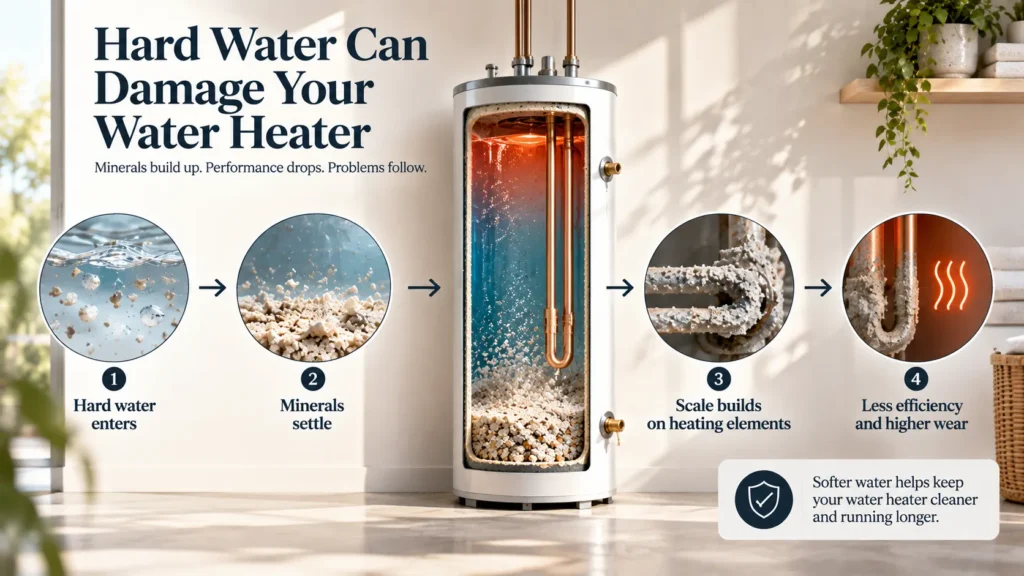
Hard water contains dissolved calcium and magnesium. These minerals are not usually visible when the water comes out of the tap. The problem becomes more noticeable when the water is heated. Heating encourages some of those dissolved minerals to separate from the water and form deposits. Inside a water heater, those deposits can collect on the bottom of the tank or around heating components.
Think about what happens when mineral residue repeatedly dries on a shower door. One shower does not create much buildup. Months and years of repeated exposure can leave a stubborn layer behind. A water heater experiences a similar process, except the deposits can develop inside the equipment where you cannot easily see them.
Can hard water damage your water heater over time?
Hard water does not usually destroy a water heater overnight. The concern is gradual accumulation. As mineral deposits build up, they can interfere with the way heat moves through the system. In a traditional tank water heater, the heating element or burner heats the water inside the tank. A layer of scale between the heat source and the surrounding water can make that process less efficient.
The system may need to work harder or run longer to heat the water. Depending on the severity of the buildup and the condition of the equipment, this can contribute to higher energy use and additional wear. The exact effect depends on the water heater, the hardness of the water, how much hot water the household uses, and how long the system has been exposed to those conditions.
Why does my water heater make popping or rumbling sounds?
One of the more noticeable signs of mineral buildup is an unusual sound coming from a tank water heater. You may hear popping, crackling, rumbling, or knocking sounds while the heater is operating. These noises can occur when water becomes trapped beneath layers of sediment or mineral deposits near the heating area.
As the water heats, steam bubbles can form and escape through the buildup. The result can sound like small pops or rumbling from inside the tank. A noisy water heater does not automatically mean hard water is the cause. Sediment, equipment age, and other issues can contribute to unusual sounds. Still, if the noise has gradually become more noticeable, it is worth having the system checked. Your water heater is not supposed to sound like a pot of water boiling on the stove.
Hard water can affect water heater efficiency
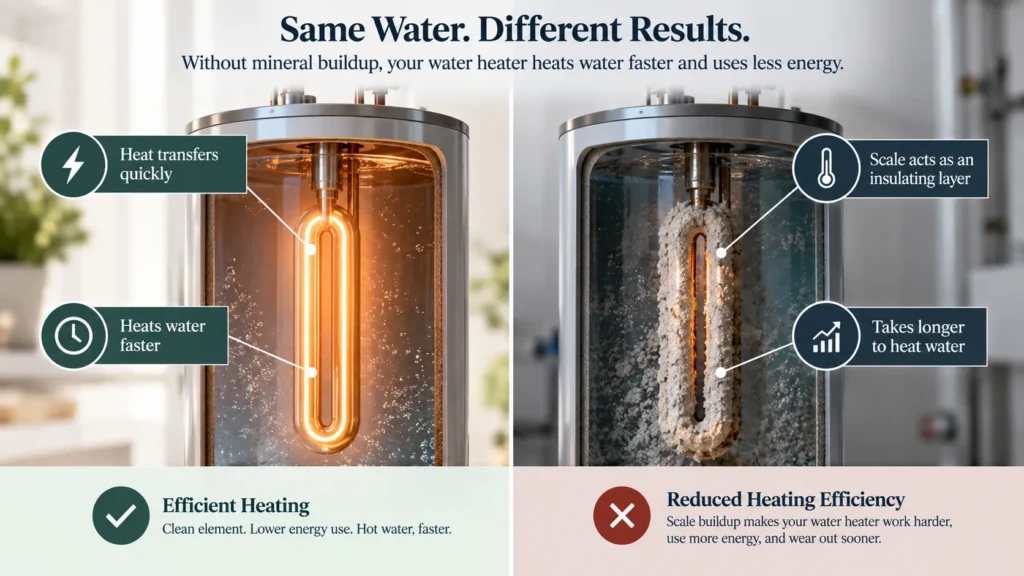
A water heater has one basic job: heat water and keep it available when you need it. Mineral scale can make that job more difficult. When deposits accumulate around the heating surface, the system may have to spend more time transferring heat into the water.
Imagine trying to warm a pan while a thick layer of residue sits between the burner and the metal. The heat still reaches the pan, but the process is no longer as clean or efficient. The same general principle applies inside a water heater. The thicker the buildup becomes, the more it can interfere with heat transfer. This does not mean every homeowner with hard water will immediately see a dramatic increase in their utility bill. Energy use depends on many factors. The important concern is that persistent scale buildup can reduce the efficiency of the equipment over time.
What happens to the bottom of a tank water heater?
The bottom of a traditional tank is particularly important because sediment and mineral deposits can settle there. As material accumulates, the usable space inside the tank can gradually be affected. More importantly, deposits near the heating area can interfere with normal operation.
This is one reason routine water heater maintenance matters. Flushing a tank can help remove accumulated sediment in some situations, although the effectiveness of flushing depends on the condition and age of the equipment. A heavily neglected water heater may not respond the same way as a newer system that has been maintained regularly. If the tank already contains significant buildup, forcing a maintenance procedure without understanding its condition can create complications. A professional assessment can help determine what makes sense for the specific water heater.
Does hard water shorten water heater life?
Hard water can contribute to conditions that place additional stress on a water heater, potentially affecting its useful life. The important word is “contribute.” Hard water is not the only factor that determines how long a water heater lasts.
Age, installation quality, water temperature, household demand, maintenance, tank condition, corrosion, and the type of water heater all matter. Two homes with the same water hardness can have very different experiences because their systems, usage patterns, and maintenance histories are different. Still, if a home has hard water and the water heater has developed repeated scale buildup, ignoring the water quality does not make the underlying issue disappear.
How can you tell if hard water is affecting your water heater?
Look for patterns rather than relying on one symptom. A water heater that has become increasingly noisy may deserve inspection. So does a system that seems to take longer to provide hot water than it used to. Reduced hot water capacity, recurring sediment, or signs of mineral buildup elsewhere in the home can also provide clues.
Look at your shower fixtures, faucets, and appliances. White or chalky mineral deposits can indicate that hard water is present throughout the plumbing system. You may also notice that water spots are difficult to remove from glass or that fixtures develop a crusty layer around openings. None of these signs alone proves that the water heater has been damaged by hard water. They do, however, suggest that testing the water could be useful.
Can a water softener protect a water heater?
A properly selected water softener can reduce the calcium and magnesium responsible for hard water. When hardness is reduced before the water travels through the home’s plumbing, less hardness mineral is available to form scale inside appliances and fixtures.
This is one reason homeowners often consider water softening as more than a comfort upgrade. It can also be part of a broader approach to protecting water-using appliances throughout the home. A water softener is different from a whole-home water filter. A softener is designed primarily to address hardness minerals. A filtration system may address other water concerns depending on the type of filter used.
The right approach depends on what is actually present in your water. Installing equipment without first understanding the water can result in paying for treatment your home does not need.
Should you soften your water before replacing the water heater?
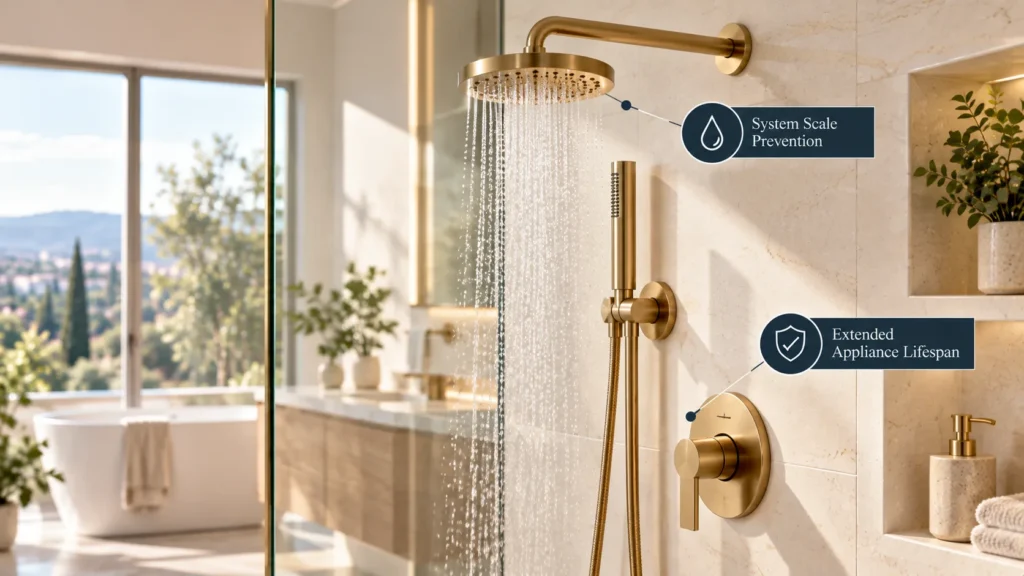
If your water heater is already old and experiencing problems, replacing the heater may solve the immediate equipment issue. It does not necessarily solve the water condition that contributed to mineral buildup in the first place. Imagine replacing a shower fixture while leaving the same mineral-heavy water flowing through it every day. The new fixture may look great when installed, but the water itself has not changed. The same idea applies to a water heater.
If hard water is confirmed, addressing the hardness can be considered alongside water heater maintenance or replacement. This can help protect the new equipment from facing the same conditions as the old one. The right timing depends on the age and condition of your water heater, the severity of the water hardness, and the needs of your household.
Why have Irvine homeowners trusted the McCowin family since 1972?
I’m Brian McCowin. My family has been solving water problems in Orange County since 1972, one home and one honest answer at a time. When a homeowner tells us about scale on fixtures, a noisy water heater, or repeated mineral buildup, we do not assume that one piece of equipment is automatically the answer. We start by looking at the water itself.
A free, in-home water test can help determine whether hardness is present and give you a clearer picture of what your household water may be doing to plumbing and appliances. From there, we can explain whether a water softener, filtration system, or another form of treatment makes sense for your home. Sometimes the right answer is a treatment system. Sometimes the existing equipment simply needs maintenance. The important thing is knowing what you are dealing with before spending money.
We’re a licensed California water treatment contractor (CSLB C-55 #1022717), serving Irvine and the surrounding communities: Tustin, Santa Ana, Newport Beach, Costa Mesa, Lake Forest, Mission Viejo, Orange, Anaheim, Huntington Beach, Fountain Valley, Yorba Linda, Laguna Niguel, Laguna Hills, Aliso Viejo, Rancho Santa Margarita, San Juan Capistrano, and San Clemente.
The McCowin Promise
For more than fifty years, we’ve helped Orange County homeowners understand their water through professional testing, honest recommendations, and customized solutions.
“If the system we install doesn’t perform the way we promised… If your water doesn’t taste, feel, or behave the way we said it would… We’ll pull the whole system out. And either replace it or make it right. No fine print. Because your trust is worth more than the sale.”
Should I replace my water heater because of hard water?
Not necessarily. The right decision depends on the age and condition of the heater, the amount of buildup, its performance, and other factors. Testing the water and evaluating the equipment can help determine whether treatment, maintenance, repair, or replacement is appropriate.
Hard water is easy to overlook because the minerals causing the problem are invisible when the water comes out of the tap. Your water heater, however, can experience the effects over years of heating that same water.
If you are seeing scale around your home or your water heater has become noisy, slow, or less reliable, start by finding out what is actually in your water.
Book your free, in-home water test today, or call (949) 569-5736.
Frequently Asked Questions
Can hard water damage a water heater?
Yes. Calcium and magnesium in hard water can form mineral scale inside a water heater. Over time, this buildup can interfere with heat transfer, contribute to noise, reduce efficiency, and place additional stress on the equipment.
Does hard water make a water heater work harder?
Mineral scale can interfere with heat transfer, which may make the water heater operate less efficiently. The actual effect depends on the amount of buildup, water hardness, equipment type, and household water use.
What does hard water buildup look like in a water heater?
You generally cannot see the inside of a closed water heater, but mineral deposits may appear as sediment or scale when the tank is serviced. White, chalky deposits around household fixtures can also indicate that hard water is present.
Can a water softener help protect a water heater?
A properly selected water softener reduces calcium and magnesium hardness in the water. Reducing hardness can help limit the formation of scale in plumbing fixtures and water-using appliances.