

Summary
Carbon filtration and reverse osmosis (RO) are two of the most popular water purification methods, but they differ significantly in contaminant removal. Carbon filters are highly effective at removing chlorine, odors, and organic compounds, improving water taste and smell. Reverse osmosis systems go further by eliminating dissolved solids, heavy metals, bacteria, and a wider range of contaminants. While carbon filtration is affordable and low-maintenance, it cannot match the depth of purification offered by RO systems. This blog compares both technologies in terms of effectiveness, cost, maintenance, and safety to help homeowners choose the best solution for clean drinking water.
Introduction
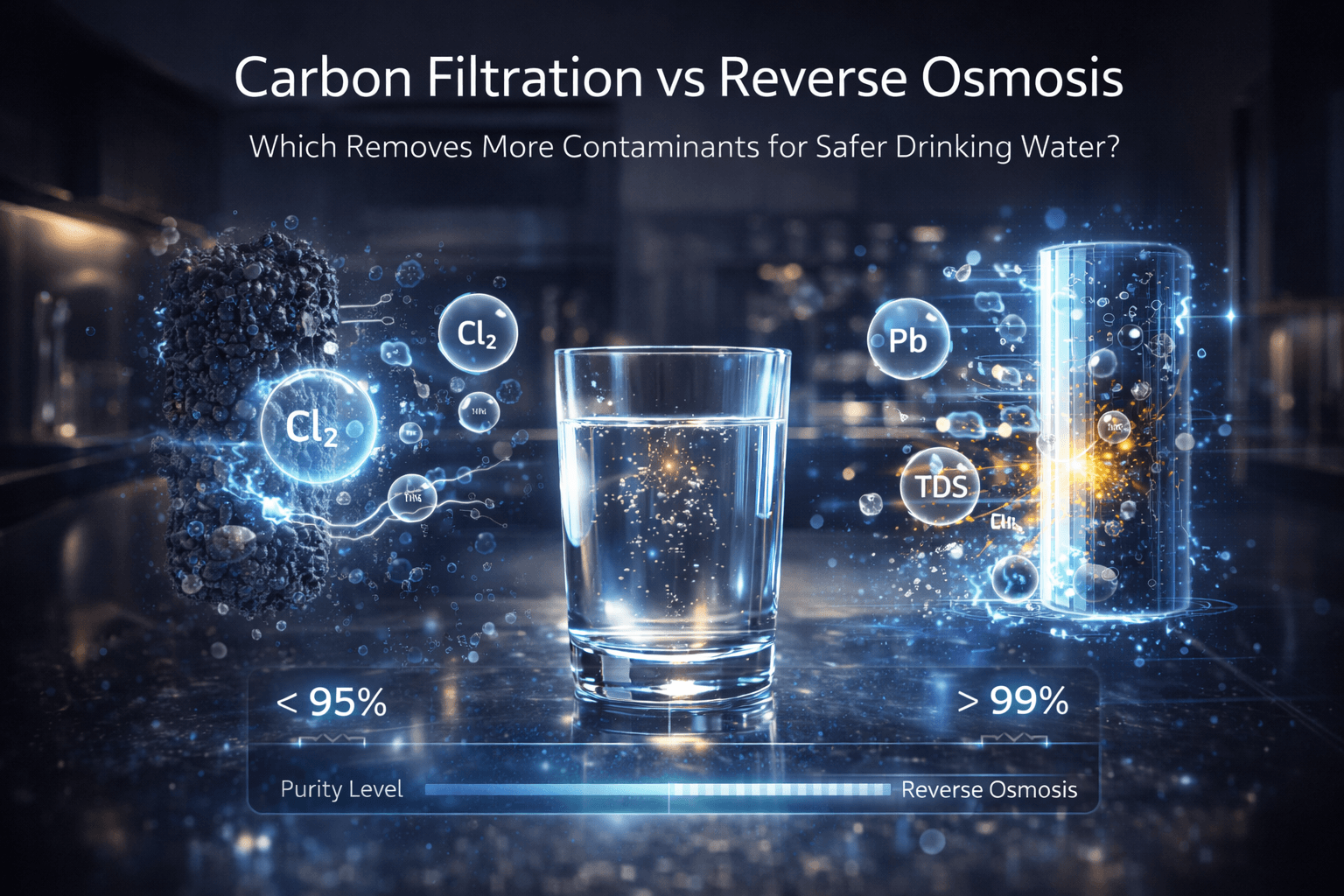
Clean drinking water is essential for every household, but not all filtration systems offer the same level of protection. Two of the most widely used technologies are carbon filtration and reverse osmosis (RO).
While both improve water quality, they differ in how they work and the types of contaminants they remove. Choosing the right system depends on your water quality, health concerns, and long-term needs.
What Is Carbon Filtration?
Carbon filtration uses activated carbon to absorb contaminants from water through a process called adsorption.
Key Benefits:
- Removes chlorine and bad odors
- Improves taste significantly
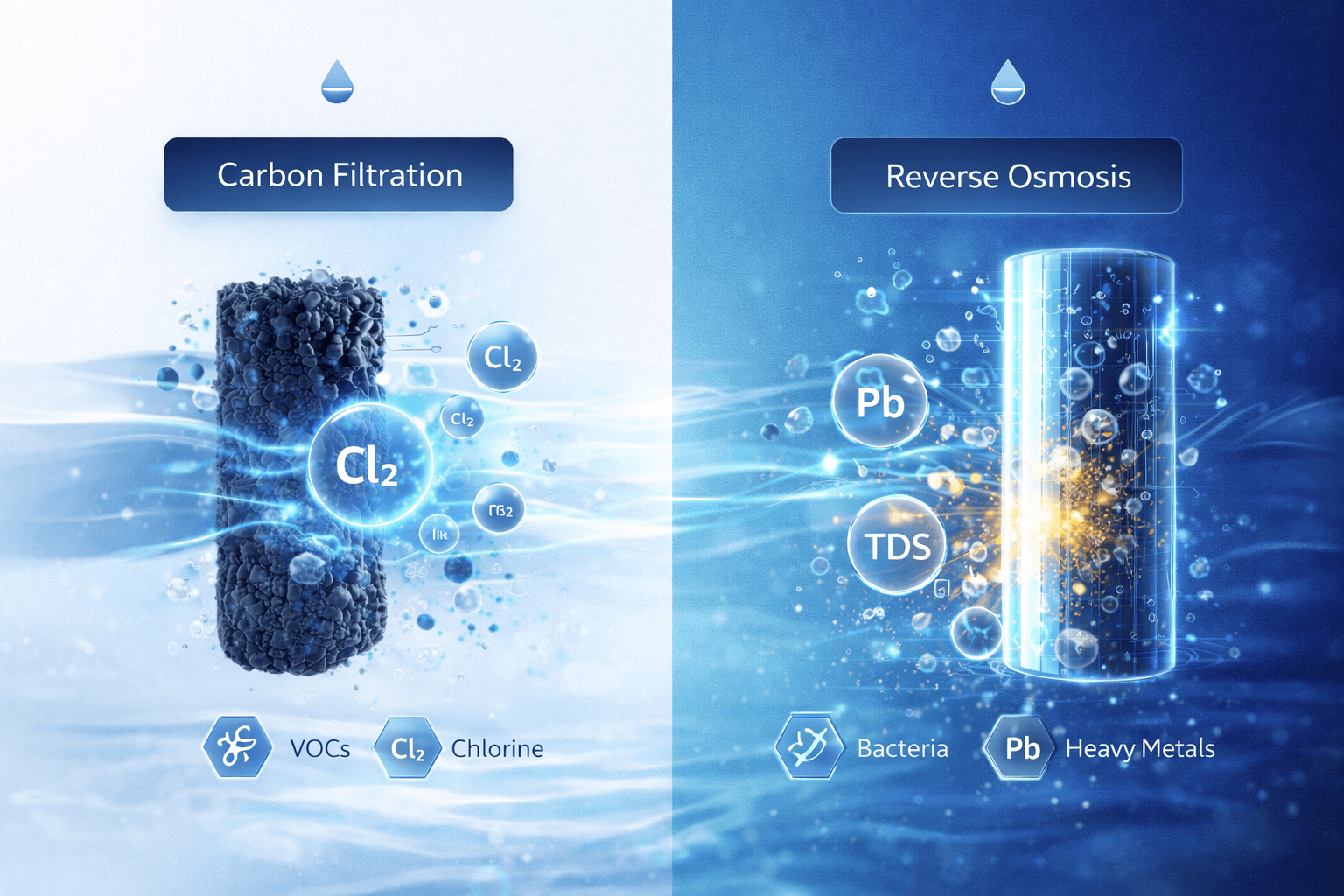
- Filters out volatile organic compounds (VOCs)
- Affordable and easy to maintain
Ideal for improving taste and smell of municipal water.
What Is Reverse Osmosis (RO)?
Reverse osmosis uses a semi-permeable membrane to remove contaminants at a molecular level.
Key Benefits
- Removes dissolved solids (TDS)
- Eliminates heavy metals like lead and arsenic
- Filters bacteria, viruses, and chemicals
- Provides highly purified drinking water
One of the most comprehensive water purification methods available.
Carbon Filtration vs Reverse Osmosis: Detailed Comparison
| Feature | Carbon Filtration | Reverse Osmosis (RO) |
| ➤ Filtration Method | Adsorption | Membrane separation |
| ➤ Contaminant Removal | Chlorine, VOCs, odors | Heavy metals, TDS, bacteria, viruses |
| ➤ Water Taste | Improves taste and smell | Very pure, sometimes flat taste |
| ➤ Effectiveness | Moderate | Very high |
| ➤ Maintenance | Low | Moderate |
| ➤ Water Waste | None | Some wastewater produced |
| ➤ Installation | Simple | More complex |
| ➤ Cost | Low | Moderate to high |
| ➤ Best For | Taste improvement | Deep purification |
Which Removes More Contaminants?
Carbon Filtration
Carbon filters are excellent at removing:
- Chlorine
- Pesticides
- Organic chemicals
- Odors and bad taste
However, they cannot remove dissolved salts, heavy metals, or microorganisms effectively.
Reverse Osmosis
RO systems remove:
- Heavy metals (lead, arsenic)
- Dissolved solids (TDS)
- Fluoride and nitrates
- Bacteria and viruses
RO clearly removes more types and a higher percentage of contaminants compared to carbon filtration.
Performance Comparison
1. Safety
- Carbon Filters: Improve water quality but may not eliminate harmful contaminants completely
- RO Systems: Provide high-level purification, making water safer for drinking
2. Water Taste
- Carbon filtration excels in taste enhancement
- RO water is extremely pure but may taste flat without remineralization
3. Usage Scenarios
- Carbon filters are suitable for basic filtration needs
- RO systems are ideal for drinking water purification and health safety
Cost & Maintenance
Carbon Filtration:
- Lower upfront cost
- Minimal maintenance
- Filter replacement every 6–12 months
Reverse Osmosis:
- Higher initial investment
- Requires periodic membrane and filter replacement
- More comprehensive system maintenance
While RO costs more, it delivers greater value in terms of safety and purification.
Pros and Cons
Carbon Filtration
| Pros | Cons |
| ✔️ Affordable | ✖️ Limited contaminant removal |
| ✔️ Improves taste and odor | ✖️ Not suitable for unsafe water |
| ✔️ Easy to maintain | ✖️ Filters need regular replacement to remain effective |
Reverse Osmosis
| Pros | Cons |
| ✔️ Removes a wide range of contaminants | ✖️ Higher cost |
| ✔️ Provides safe drinking water | ✖️ Produces wastewater |
| ✔️ Highly effective purification | ✖️ Requires maintenance |
Which One Should You Choose?
Choose Carbon Filtration If:
- Your main concern is taste and odor
- Your water is already relatively safe
- You want a low-cost solution
Choose Reverse Osmosis If:
- You want maximum contaminant removal
- Your water contains heavy metals or high TDS
- You prioritize health and safety
Final Thought
When it comes to contaminant removal:
- Carbon Filtration: Best for taste and basic filtration
- Reverse Osmosis: Best for deep purification and safety
For most households concerned about water safety, reverse osmosis is the better investment.
Both carbon filtration and reverse osmosis have their place in water treatment. However, if your goal is to ensure clean, safe, and contaminant-free drinking water, reverse osmosis offers a more complete solution.
Upgrade Your Water Quality Today
Upgrade your home with advanced water filtration from McCowin Water and enjoy safer, better-tasting water every day.
Call us at (949) 569-5736 or schedule your free water test today.