
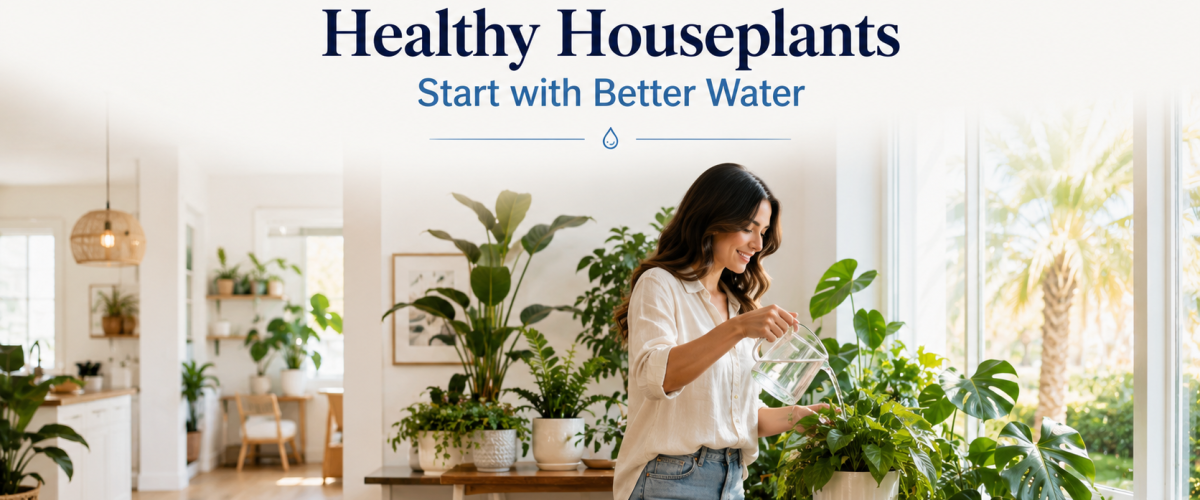

If you’re wondering whether Clean water for houseplants in Orange County makes a difference, the answer is often yes. Many homeowners notice that certain indoor plants respond better to water with fewer dissolved minerals, chlorine, and other taste or odor causing compounds. While every plant is different, water quality can influence soil conditions, mineral buildup, and overall plant health. The best way to understand your home’s water is through professional testing.

Here’s a truth most plant owners discover the hard way: Your houseplants drink the same water you do.
I’m Brian McCowin. My family has been helping Orange County homeowners understand their water since 1972. And every summer, I hear something interesting. Homeowners install a drinking water system. A few months later, they tell me: “My coffee tastes better.” “My ice tastes better.” “My dog drinks more water.” And occasionally: “My plants look better too.”
Now, I’m not a botanist. I’m a water guy. But after fifty years in this business, I’ve learned something important. Everything that uses water responds to water. People drink it. Pets rely on it. Appliances use it every day. And yes, sometimes even plants respond to it.
Let’s talk about why water quality may matter to your indoor garden.
Does water quality affect houseplants?
Yes, water quality can influence the growing environment for many houseplants.
Plants depend on water for:
- Nutrient transport
- Root health
- Soil moisture
- Growth support
When homeowners focus on:
- Lighting
- Fertilizer
- Pot size
- Soil quality
They sometimes overlook the one ingredient they use every week. Water. Think about it. If you’re watering a plant hundreds of times over several years, the characteristics of that water may matter.
Why do some Orange County homeowners use filtered water for plants?
Many homeowners become curious after noticing:
- White mineral deposits on pots
- Soil buildup
- Leaf spotting
- General plant sensitivity
Some plants appear more tolerant than others. Others can be more sensitive to water conditions.
Homeowners often use filtered water because they want:
- Cleaner water
- Reduced mineral content
- Fewer taste and odor compounds
- Greater consistency
The goal isn’t perfection. The goal is simply to provide water that works well for both the family and the plants.
Can hard water affect houseplants?
Hard water contains minerals such as:
- Calcium
- Magnesium
These minerals are common throughout Orange County.
You’ve probably seen hard water deposits on:
- Shower doors
- Faucets
- Glassware
Some homeowners notice similar mineral residue on:
- Plant pots
- Soil surfaces
- Decorative containers
Think of hard water minerals like tiny passengers riding along every time you water. Over time, they can accumulate. Whether that affects a particular plant depends on the species and growing conditions.
Does chlorine affect indoor plants?
Municipal water often contains chlorine or chloramines. These disinfectants serve an important purpose in public water supplies.
However, some homeowners prefer using filtered water for sensitive plants because they want to reduce certain compounds found in tap water. Many plant enthusiasts simply prefer consistency. And filtered water can provide that.
Which houseplants are considered more sensitive to water quality?
Some homeowners report that certain plants appear more sensitive than others.
Examples often discussed include:
- Calatheas
- Peace lilies
- Spider plants
- Dracaenas
- Prayer plants
- Some tropical species
Every home environment is different. And every plant is different. The important point is that water quality is one of many factors that can influence plant performance.
Can reverse osmosis water be used for houseplants?
Many homeowners use reverse osmosis water for:
- Drinking
- Cooking
- Coffee
- Ice
And some also use it for plants. Think of reverse osmosis as creating a clean canvas.
Water with fewer dissolved solids may provide greater consistency for homeowners who are particularly attentive to plant care. Some homeowners use RO water exclusively. Others mix it with regular water.
The approach depends on personal preference and the plants involved.
Why do houseplants sometimes develop white crust on the soil?
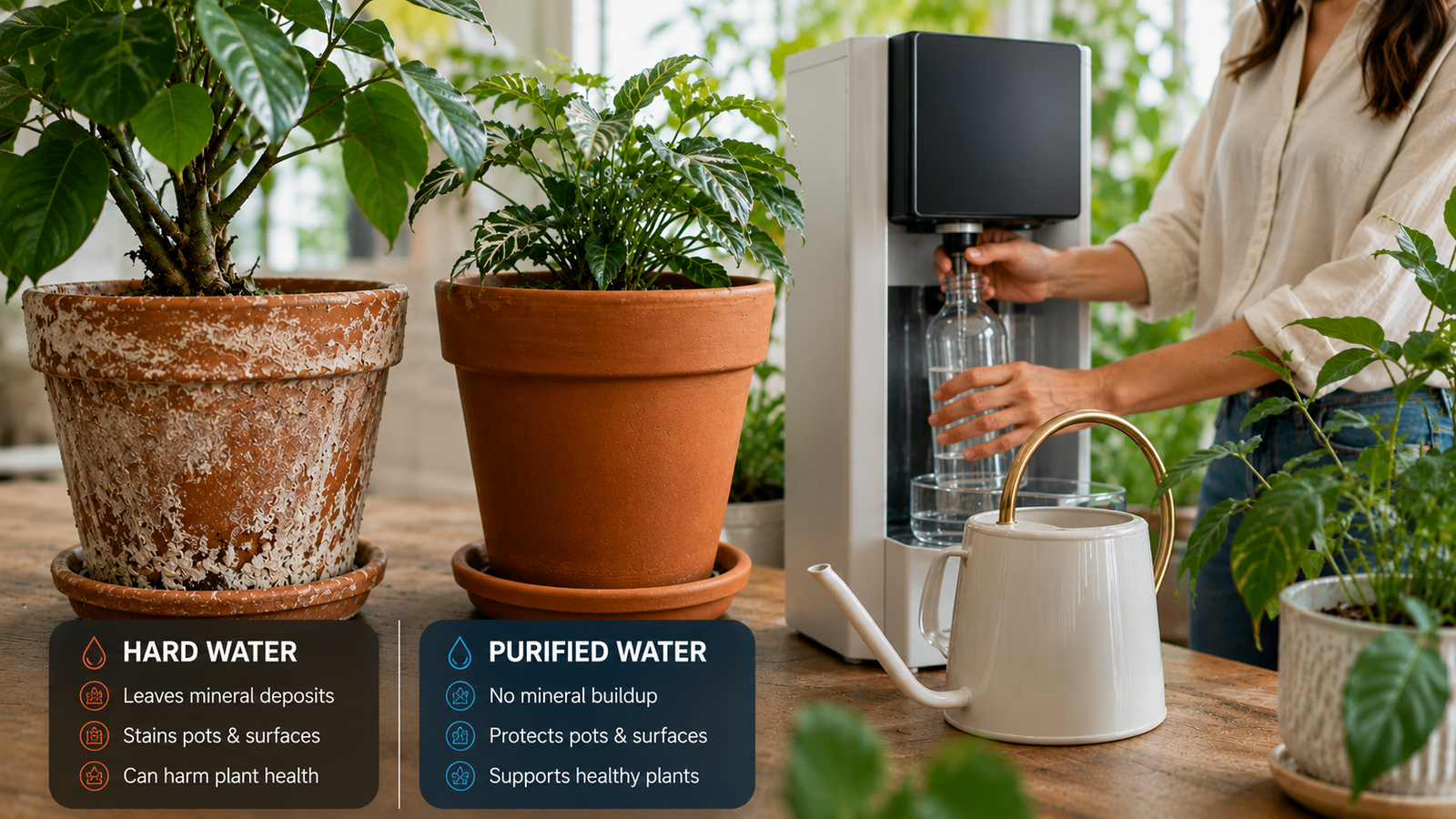
Those white deposits are often mineral residue. Think about your shower door. When water evaporates, minerals remain behind. The same thing can happen in plant pots.
Over time, dissolved minerals may accumulate as water evaporates from the soil.
Some homeowners notice:
- White rings on clay pots
- Surface deposits on soil
- Mineral buildup around drainage areas
Filtered water may help reduce these deposits.
Why do different water companies recommend different solutions?
Many companies only sell one product. That creates confusion. Imagine walking into a dealership that only sells sports cars. Even if you need a pickup truck, they’re still likely to recommend a sports car.
At McCowin Water, we’re like an Auto Mall for water.
We’re not tied to one manufacturer. We carry a broad range of treatment technologies because every home’s water is different. That flexibility allows us to recommend solutions based on your water and not on our inventory.
How do I know if my water is affecting my plants?
The answer starts with understanding your water.
A professional water evaluation can help identify:
- Water hardness
- Total dissolved solids (TDS)
- Chlorine levels
- Overall water characteristics
Once you understand what’s in your water, you can make informed decisions about:
- Drinking water
- Cooking water
- Pet water
- Plant care
Knowledge removes guesswork. And plants, just like homeowners, often benefit from consistency.
What is the smartest first step if I’m concerned about my water?
The smartest first step is scheduling a professional in-home water test. Not buying equipment online. Not guessing what’s in your water. Not chasing advice from social media. Start with facts.
Because understanding your water helps you make better decisions for your family, your home, your appliances, and even your houseplants.
The McCowin Promise
For more than fifty years, we’ve helped Orange County homeowners understand their water before recommending treatment solutions.
“If the system we install doesn’t perform the way we promised… If your water doesn’t taste, feel, or behave the way we said it would… We’ll pull the whole system out. And either replace it or make it right. No fine print. Because your trust is worth more than the sale.”
Schedule Your Free, In-Home Water Test
If you’re curious about filtered water for houseplants in Orange County, start by understanding the water flowing through your home.
We do NOT send tests out to a lab and make you wait.
We perform professional, on-site testing right at your kitchen sink. You’ll see exactly what’s in your water, understand your options, and receive honest recommendations with absolutely zero sales pressure.
Call us at (949) 569-5736 or Schedule a Free, Water Test today and discover how better water can benefit your home in ways you may not expect.
CSLB: C-55 #1022717