


By Brian McCowin, McCowin Water. Serving Irvine and Orange County since 1972.
If your reverse osmosis water taste seems different from your regular tap water, it is usually because the RO system changes the water’s makeup as it filters it. Reverse osmosis reduces many dissolved substances, while carbon filters help reduce chlorine and certain compounds that affect taste and odor. The result can taste cleaner, lighter, or simply unfamiliar compared with what you are used to drinking.
Taste is one of the first things homeowners notice after installing an RO system. Sometimes the difference is exactly what the system is designed to create. Other times, a new or unusual taste can point to a filter, membrane, storage tank, or installation issue that deserves attention.
Why does reverse osmosis water taste different?
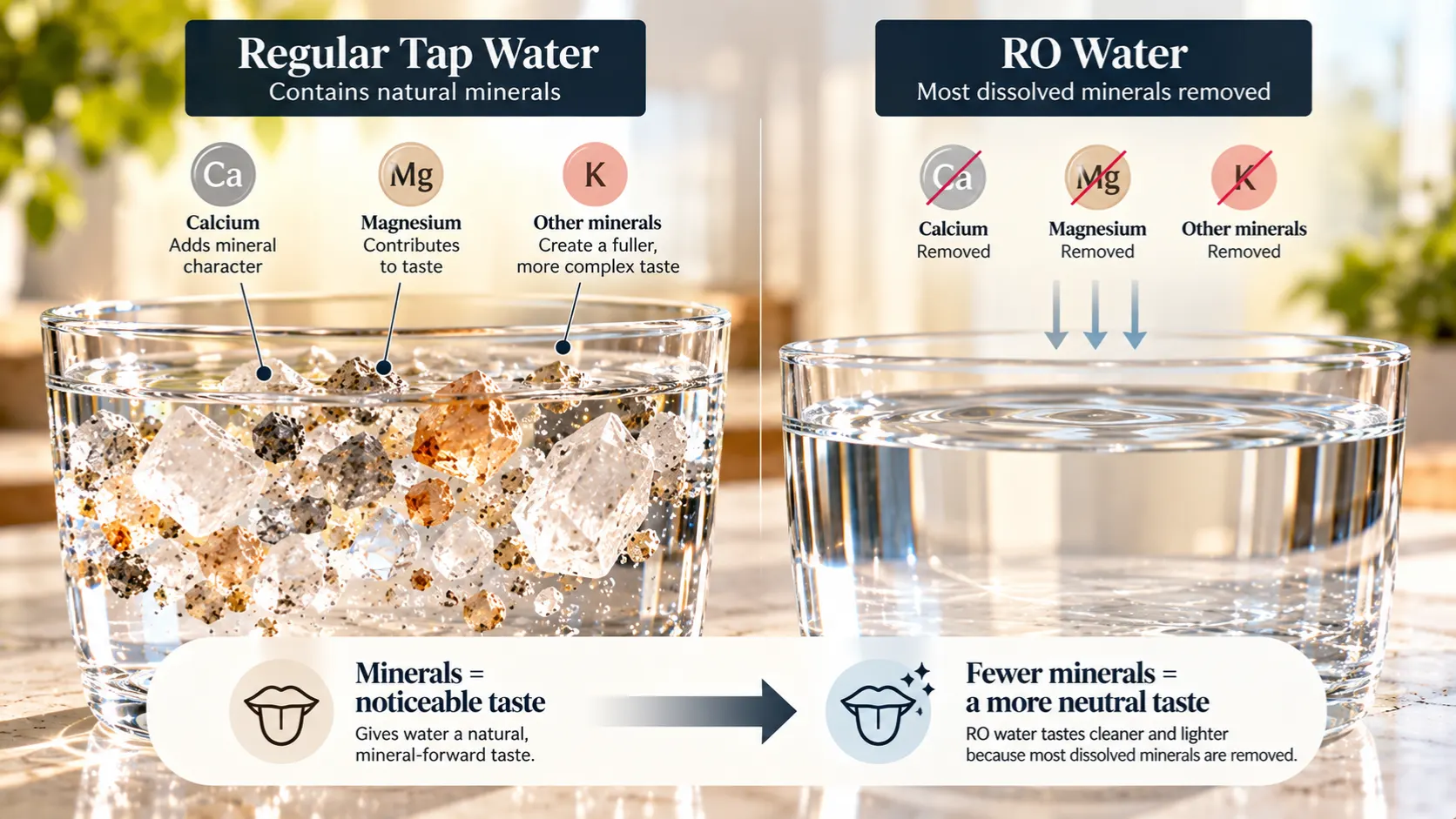
Tap water contains naturally occurring minerals and other dissolved substances. Depending on your local water and plumbing, it can also have a noticeable chlorine taste or odor. An RO system removes a significant portion of many dissolved substances as water passes through its membrane. Carbon filtration before and after the membrane can also reduce compounds that affect taste.
When some of the minerals and other substances you are accustomed to tasting are reduced, the water can taste noticeably different. Some people describe it as cleaner or fresher. Others initially describe it as flat or lacking the familiar mineral taste of their tap water.
Neither reaction automatically means something is wrong. Your taste buds are simply comparing the treated water with the water you have been drinking every day.
Why can RO water taste flat?
One common reason for a different reverse osmosis water taste is the reduction of dissolved minerals. Minerals contribute to the taste and character of water. When an RO membrane reduces many of these dissolved substances, the finished water can have a lighter taste. Think about it like removing seasoning from a familiar recipe. The food is still there, but some of the flavors you recognize are no longer as strong. RO water can feel similar because the treatment changes what reaches your palate.
Temperature also makes a difference. Very cold water can taste different from water sitting at room temperature, even when both come from the same RO faucet. If the taste is simply lighter or less mineral-like, that does not necessarily indicate a problem with the system.
What if RO water tastes bad or strange?
A noticeably unpleasant taste deserves a closer look. New filters can sometimes contribute to an unusual taste until they have been properly flushed. If the system has been sitting unused for an extended period, the water in the storage tank and filter path may also taste different.
An old carbon filter can affect taste as well. Carbon filtration plays an important role in reducing chlorine and other compounds before and after RO treatment. Once filters reach the end of their useful life, the water may no longer taste the way it did when the system was working properly.
The storage tank can also influence taste. If the tank is old or the system has not been maintained correctly, the water may not taste fresh even though the RO membrane itself is still functioning.
Can an RO filter change water taste?
Yes. Every stage in an RO system can influence the finished water. The prefilters help protect the membrane and remove particles and certain compounds. The RO membrane performs the primary separation of many dissolved substances. A post-carbon filter can then polish the water before it reaches the faucet.
A change in reverse osmosis water taste after replacing a filter does not automatically mean the new filter is defective. The system may simply need to be flushed according to the manufacturer’s instructions. If an unusual taste remains after proper flushing, it is worth checking the entire treatment system rather than replacing individual parts without knowing the cause.
Could the RO membrane be affecting the taste?
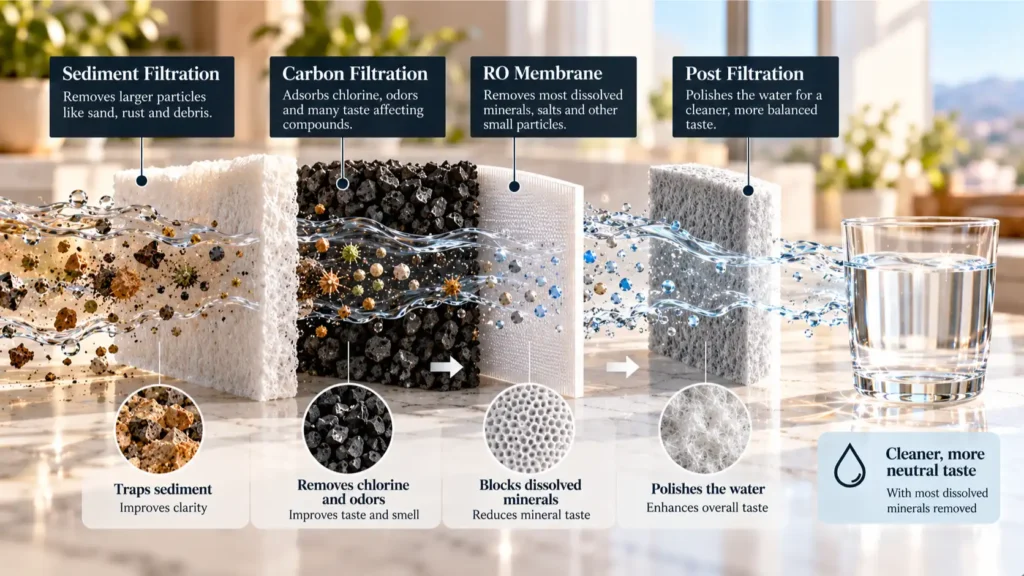
The membrane is one of the most important parts of an RO system, so its condition can affect the finished water. As a membrane ages, its performance can change. The quality of the incoming water, the amount of water produced, system maintenance, and the age of the membrane all matter.
A change in taste by itself does not tell you whether the membrane needs replacement. Other signs can provide useful clues, such as changes in water production or overall system performance. This is why taste should be treated as a signal rather than a diagnosis.
What about the minerals in RO water?
Many homeowners ask whether removing minerals changes the water too much. The answer depends on which minerals are present, their concentration, and what the homeowner wants from the treatment system. Reverse osmosis is designed to reduce many dissolved substances, which is one reason it is useful for drinking and cooking water.
Some homeowners prefer the lighter taste of RO water. Others prefer water with more mineral character. If taste is the main reason you are considering a treatment system, there is no need to guess. Testing the water and understanding what is causing its existing taste gives you a much better starting point.
How can you tell whether the taste is normal?
Start by noticing what changed. If the water has always tasted light since the RO system was installed, the difference may simply reflect the treatment process. If the water recently developed a plastic, musty, bitter, metallic, or otherwise unusual taste, the situation deserves more attention.
Look at when the taste started, whether it occurs only from the RO faucet, whether filters were recently replaced, and whether the system has been used regularly. Those details can help identify whether you are experiencing a normal change in water character or a maintenance issue.
Why Irvine homeowners have trusted the McCowin family since 1972
I’m Brian McCowin. My family has been solving water problems in Orange County since 1972, one home and one honest answer at a time.Taste is one of the most noticeable signs homeowners experience, but it is not enough by itself to tell you what is happening in your water.
Our approach is to test first, diagnose the water and treatment system, explain what we find, and then recommend a solution when one is actually needed. This matters because two homes can have very different water concerns even when they are only a few miles apart.
We’re a licensed California water treatment contractor (CSLB C-55 #1022717), serving Irvine and the surrounding communities: Tustin, Santa Ana, Newport Beach, Costa Mesa, Lake Forest, Mission Viejo, Orange, Anaheim, Huntington Beach, Fountain Valley, Yorba Linda, Laguna Niguel, Laguna Hills, Aliso Viejo, Rancho Santa Margarita, San Juan Capistrano, and San Clemente.
The McCowin Promise
For more than fifty years, we’ve helped Orange County homeowners understand their water through professional testing, honest recommendations, and customized solutions.
“If the system we install doesn’t perform the way we promised… If your water doesn’t taste, feel, or behave the way we said it would… We’ll pull the whole system out. And either replace it or make it right. No fine print. Because your trust is worth more than the sale.”
Not sure why your RO water tastes different?
You do not have to diagnose the taste by replacing filters one at a time. A free in-home water test can help determine what is in your water and whether the treatment system is working the way it should.
Book your free, in-home water test today, or call (949) 569-5736.
Get peace of mind knowing your drinking water is clean, fresh, and properly treated. Our water specialists can identify potential issues and recommend the right solution for your home.
Frequently Asked Questions
Why does RO water taste different from tap water?
RO water has a different taste because the treatment reduces many dissolved substances that contribute to the taste of untreated water. Carbon filtration can also reduce chlorine and other compounds that affect flavor and odor.
Why does my reverse osmosis water taste flat?
A lighter or flatter taste can happen because reverse osmosis reduces many dissolved minerals and other substances. If the change is sudden or unpleasant, the filters, membrane, storage tank, and system operation should be checked.
Why does my new RO water taste strange?
New filters or a newly installed system may require proper flushing before the water reaches its normal taste. Follow the system’s flushing instructions and have the system checked if an unusual taste continues.
Can old RO filters change the taste of water?
Yes. Filters that have reached the end of their useful life can affect taste and odor. Filter condition should be considered along with the age and performance of the rest of the system.
Does RO remove the minerals that affect water taste?
Reverse osmosis reduces many dissolved minerals and other substances. How noticeable the change is depends on the incoming water and the system’s performance.