


If you’re comparing a fridge filter vs reverse osmosis in Orange County, the answer depends on what you’re trying to accomplish. Refrigerator filters can improve taste and reduce some contaminants, but they are typically limited in what they can remove. Reverse osmosis systems provide a much higher level of filtration and are designed to reduce a broader range of dissolved substances. The best choice depends on your water quality, your family’s goals, and what is actually in your water.
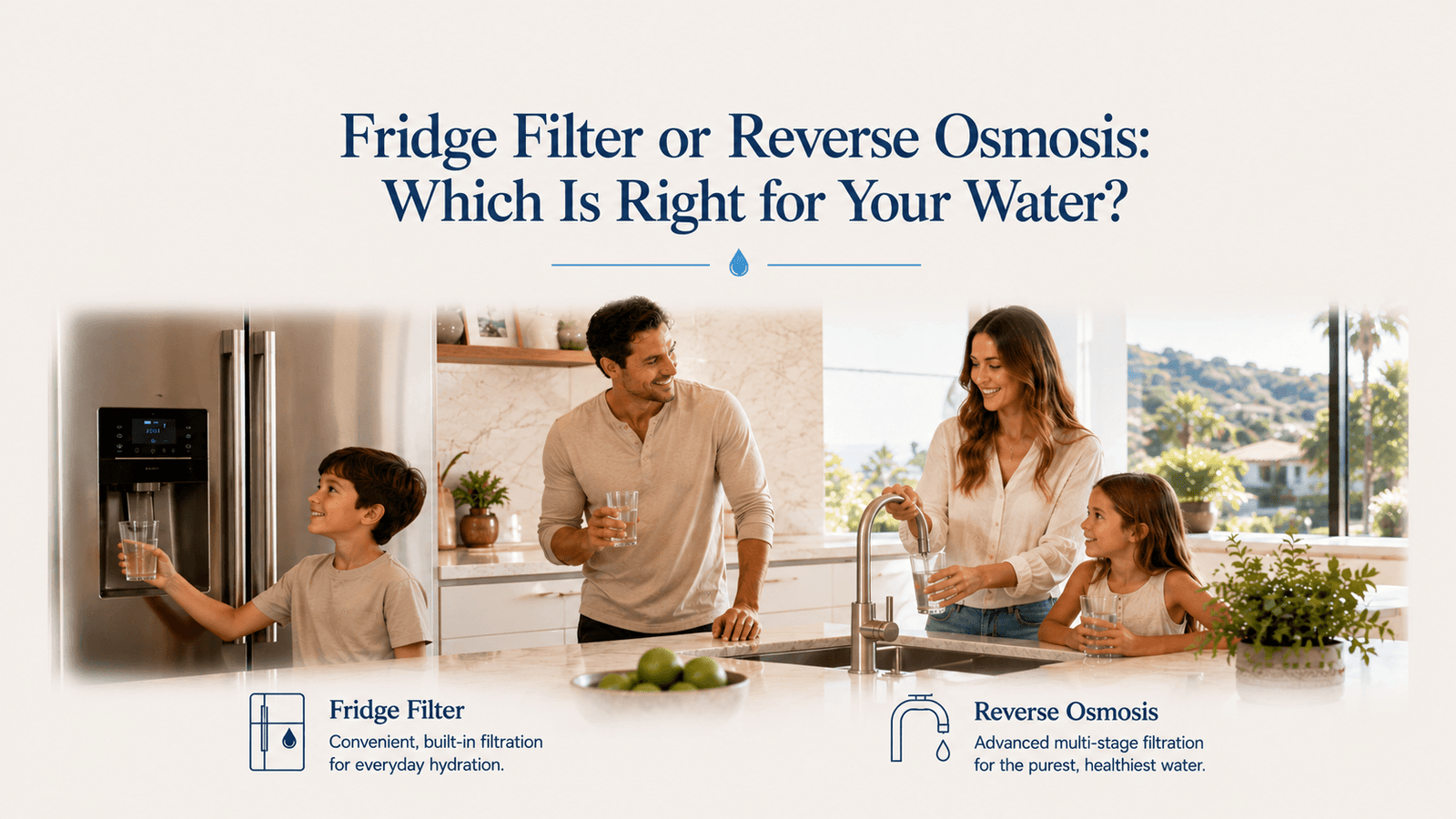
Here’s a truth that surprises many Orange County homeowners: That little filter in your refrigerator works harder than most people realize. But it also does less than most people assume.
I’m Brian McCowin. My family has been helping Orange County homeowners solve water problems since 1972. And one of the most common questions we hear is: “Do I really need reverse osmosis if my refrigerator already has a filter?”
It’s a fair question. After all, you’ve been replacing that filter every few months. The water tastes better and the ice looks cleaner. So why would you need anything else?
The answer is simple: A refrigerator filter and a reverse osmosis system are designed to do very different jobs. Comparing them is a little like comparing a window screen to a security door. Although both serve a purpose but they aren’t built for the same level of protection.
Let’s break it down.
Do refrigerator water filters actually work?
Yes. Refrigerator water filters can improve drinking water taste and reduce certain contaminants.
Let’s start with some good news. Most modern refrigerator filters are not useless. In fact, many homeowners notice improvements in:
- Taste
- Odor
- Chlorine levels
- Overall drinking experience
That’s because refrigerator filters typically use activated carbon filtration. Carbon is very effective at addressing many taste and odor related concerns. For many families, that improvement alone is enough to make water more enjoyable to drink. But that’s only part of the story.
What does a refrigerator filter remove?
Most refrigerator filters are primarily designed to improve taste, odor, and certain common contaminants. Depending on the model, a refrigerator filter may help reduce:
- Chlorine
- Certain sediment particles
- Some taste and odor compounds
However, refrigerator filters are generally limited by:
- Their size
- Filter media capacity
- Water contact time
- Design constraints
Think about the physical size of a refrigerator filter. It’s relatively small. There’s only so much filtration that can happen inside a cartridge designed to fit inside a refrigerator door and that’s why it’s important to understand its limitations.
How is reverse osmosis different from a fridge filter?
Reverse osmosis uses a specialized membrane that can reduce many dissolved substances that standard refrigerator filters typically cannot address.
This is the biggest difference for a refrigerator filter is primarily a taste and odor improvement tool. Reverse osmosis is a more advanced filtration technology.
Think of it this way:
- Refrigerator Filter: Like when using a coffee filter, refrigerator filter too catches certain materials as water passes through.
- Reverse Osmosis: Like using a microscopic screening system, in reverse osmosis also water molecules pass through a highly selective membrane while many dissolved substances are left behind. The result is a much more comprehensive level of filtration.
Fridge Filter vs Reverse Osmosis: What’s the Difference?
The biggest difference is the level of filtration each system provides.
| Refrigerator Filter | Reverse Osmosis System |
|---|---|
| ➤ Improves taste and odor | Provides advanced filtration |
| ➤ Usually carbon-based | Uses multiple filtration stages |
| ➤ Installed in refrigerator | Installed under sink or as part of a treatment system |
| ➤ Limited contaminant reduction | Addresses a broader range of dissolved substances |
| ➤ Small filter capacity | Larger treatment capability |
| ➤ Primarily drinking water | Designed specifically for high-quality drinking water |
Both have value, but they both serve different purposes.
Why are Orange County homeowners interested in reverse osmosis?
Many Orange County homeowners are looking for greater control over their drinking water quality. Over the last several years, public awareness about drinking water has increased significantly.
Homeowners frequently ask about:
- Total dissolved solids (TDS)
- Hard water minerals
- Chlorine and chloramine
- PFAS and emerging contaminants
- Drinking water quality
As awareness increases, many homeowners begin exploring treatment options that go beyond basic refrigerator filtration. That’s where reverse osmosis often enters the conversation.
Is reverse osmosis worth it if I already have a fridge filter?
For many homeowners, reverse osmosis provides benefits that a refrigerator filter simply isn’t designed to deliver. This doesn’t mean refrigerator filters are bad. They’re not but they have their own limitations.
A reverse osmosis system may be worth considering if:
- You buy bottled water regularly
- You dislike your tap water’s taste
- You’re concerned about dissolved solids
- You want a higher level of filtration
- You want greater consistency in drinking water quality
The key question isn’t whether one system is better. The key question is whether your current system is accomplishing your goals.
Can I use both a refrigerator filter and reverse osmosis system?
Yes, many homeowners use both systems together. In fact, this is quite common.
A reverse osmosis system can provide highly treated drinking water. The refrigerator then dispenses that water through its own filtration pathway. Think of it as adding layers of protection.
Many homeowners appreciate the convenience of cold, filtered water and ice while benefiting from the advanced treatment provided by reverse osmosis.
Why do different water companies give different answers?
Many water companies only sell one type of equipment. This creates one of the biggest sources of confusion for homeowners.
At McCowin Water, we’re like an Auto Mall for water treatment.
We aren’t tied to a single manufacturer, we carry a broad range of premium solutions because every home’s water is different. Some homeowners need simple filtration while some benefit from reverse osmosis. Some need a combination of technologies. It is the water that determines the recommendation and not the inventory.
How do I know which option is right for my home?
The best way to determine whether a refrigerator filter is enough—or whether reverse osmosis makes sense—is through professional water testing.
Before spending money on equipment, you should know:
- What’s in your water
- What concerns actually exist
- What treatment goals you have
- Which solutions fit your needs
Once those answers are clear, choosing becomes much easier and much more cost-effective.
The McCowin Promise
For more than fifty years, we’ve helped Orange County homeowners make informed decisions about water treatment without pressure, gimmicks, or scare tactics.
“If the system we install doesn’t perform the way we promised… If your water doesn’t taste, feel, or behave the way we said it would… We’ll pull the whole system out. And either replace it or make it right. No fine print. Because your trust is worth more than the sale.”
Schedule Your Free, In-Home Water Test
If you’re comparing a fridge filter vs reverse osmosis in Orange County, the smartest first step is understanding your water.
We perform professional, on-site testing right at your kitchen sink. You’ll see exactly what’s in your water, understand your options, and receive honest recommendations with absolutely zero sales pressure.
Call us at (949) 569-5736 or Schedule a Free, In-Home Water Test today and find out which solution truly makes sense for your home.
CSLB: C-55 #1022717