
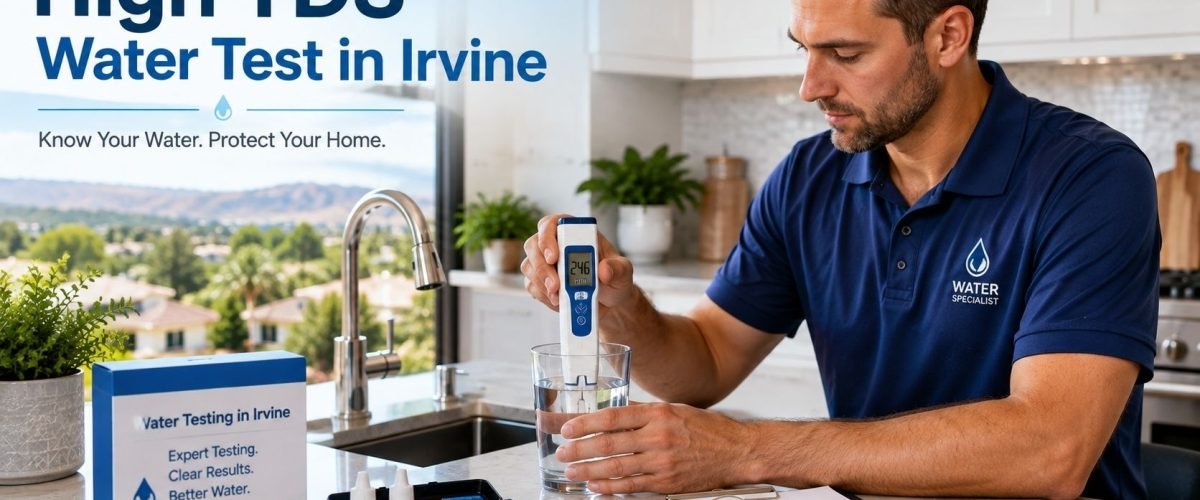

If you’re wondering, “What should I expect from a free in-home water test in Irvine?”, one of the measurements you may hear about is Total Dissolved Solids (TDS). A high TDS reading does not automatically mean your water is unsafe or that you need reverse osmosis. TDS is a broad measurement of dissolved material in water, and the number needs to be interpreted alongside other water-quality information.
The important question isn’t simply “Is my TDS high?”
It’s: “What is contributing to my TDS, and does my home actually need additional treatment?”
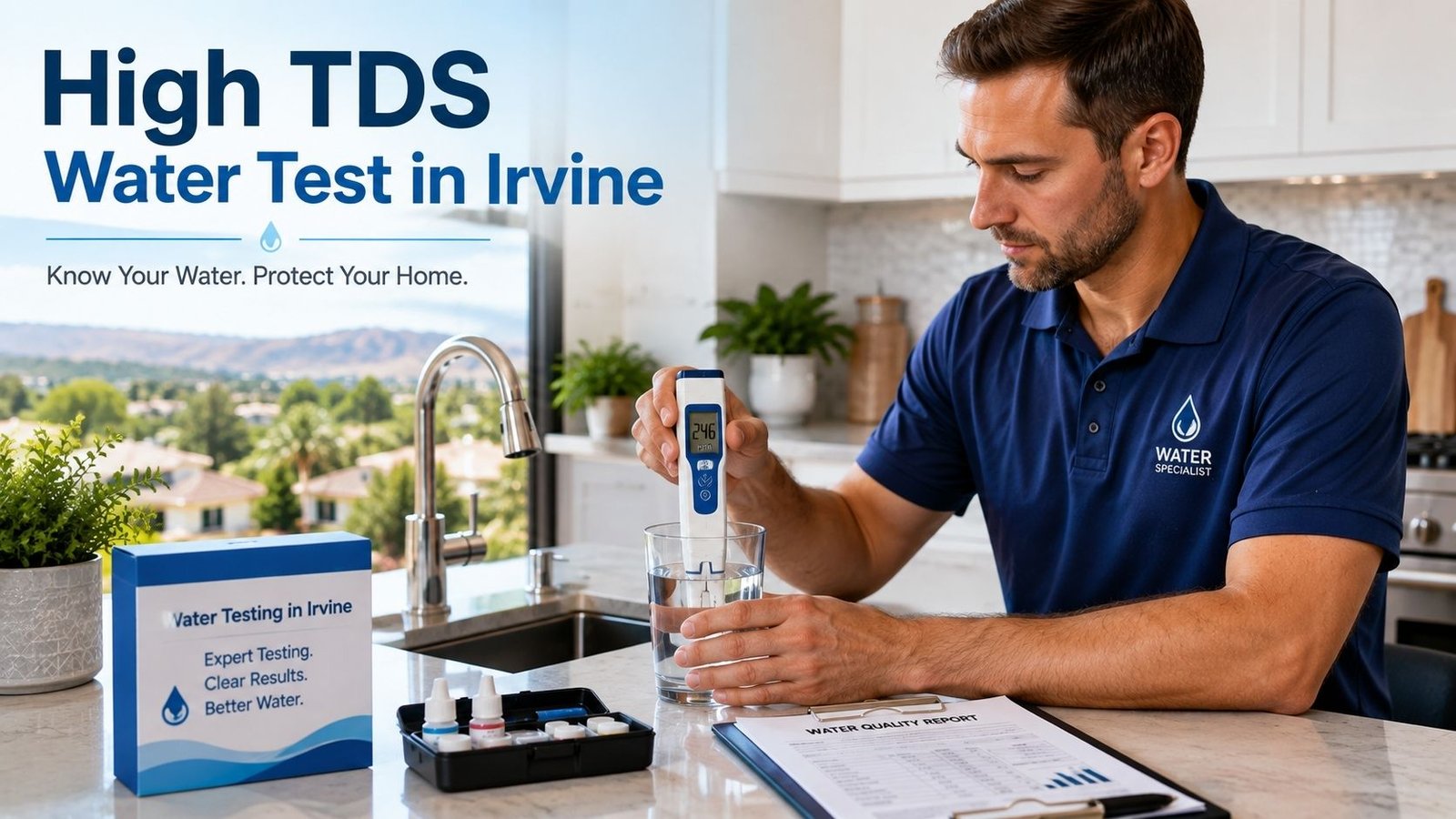
I’m Brian McCowin. My family has been helping Orange County homeowners understand their water since 1972.
And one question I hear during water evaluations is: “What does this TDS number actually mean?” That’s a good question. Because TDS is one of those water-quality terms that sounds more alarming than it actually is.
You see a number on a meter, maybe it’s higher than you expected and immediately you’re wondering, if something’s wrong with your water. Not necessarily. A TDS reading is a starting point, not a diagnosis.
Think about your car’s dashboard. One warning light doesn’t tell you exactly what’s wrong with the engine. You need context.
Water testing works the same way.
What Is TDS?
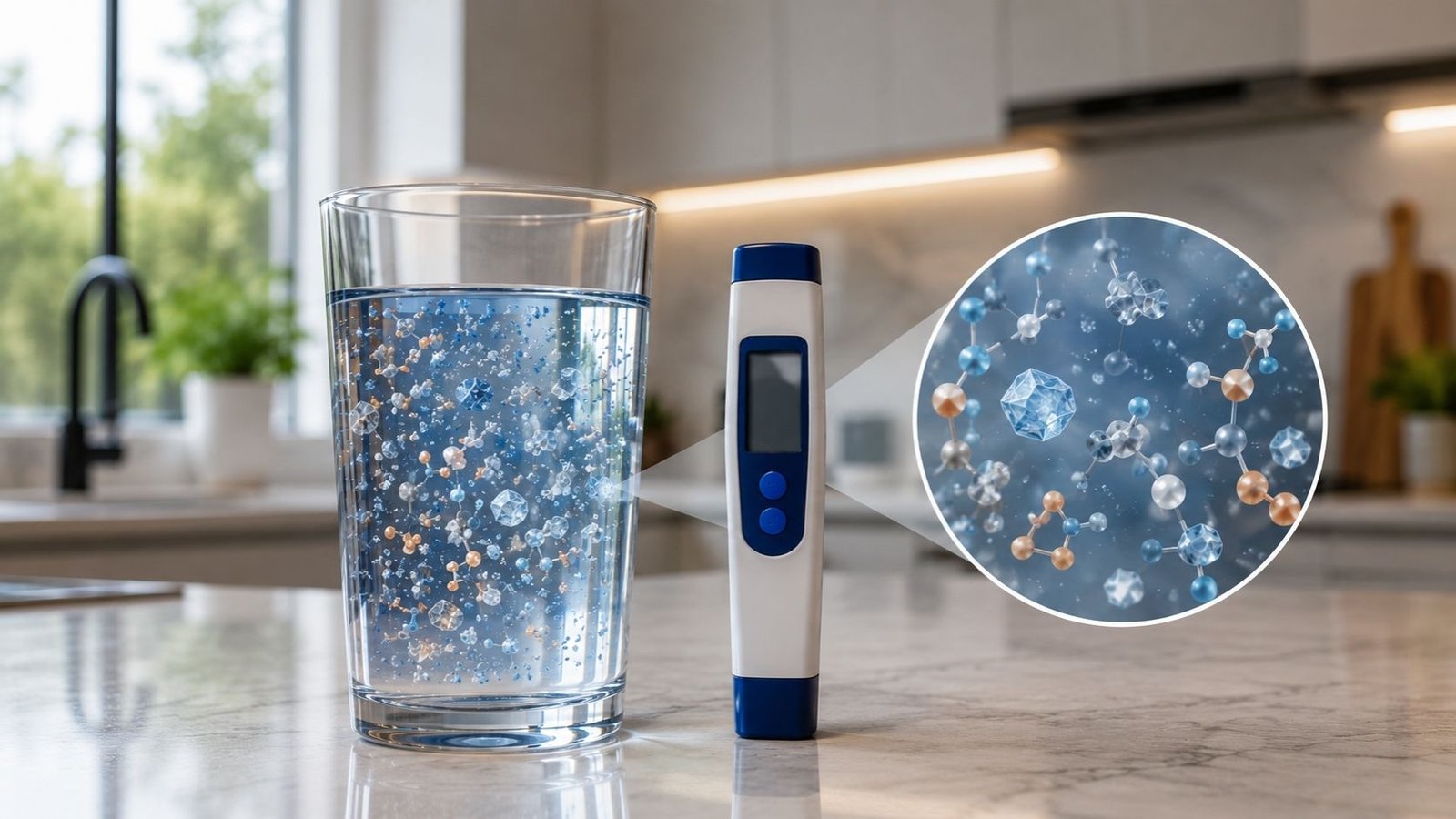
TDS stands for Total Dissolved Solids. It refers broadly to dissolved substances in water, including minerals and salts.
These can include naturally occurring substances such as:
- Calcium
- Magnesium
- Sodium
- Bicarbonates
- Chlorides
- Sulfates
A TDS meter measures the water’s ability to conduct electricity and uses that measurement to estimate the amount of dissolved material. That means a TDS number is not a list of individual contaminants, this distinction is important.
A TDS reading cannot tell you: if you have X amount of lead or PFAS. It is a broad measurement of dissolved material.
Is High TDS Automatically a Health Concern?
No, this is probably the most important thing to understand.
A high TDS reading by itself does not identify a specific contaminant or establish that water is unsafe to drink. So if your home test shows a higher TDS number, don’t panic.
Find out what’s behind the number.
What Does Irvine’s Water Quality Report Say About TDS?
This is where local context matters.
IRWD’s 2026 report, which contains 2025 water-quality results, reports a calculated TDS value of 507 ppm. It also reports that the District’s drinking water met or exceeded all applicable quality standards.
That gives homeowners an important baseline. But your home’s tap can still be worth evaluating separately.
Why? Because your home has its own:
- Plumbing
- Fixtures
- Water usage
- Existing filtration equipment
- Water-treatment history
A home water evaluation helps connect the broader water-quality picture to what is actually happening at your property.
Why Might Your TDS Reading Be Higher Than Expected?
Several factors can influence TDS.
- Natural Minerals: Groundwater and other water sources naturally contain dissolved minerals. Calcium, magnesium, sodium, bicarbonates, and other dissolved substances can contribute to TDS.
- Water Source: IRWD’s water supply comes from multiple sources, including local groundwater, imported water, and treated surface water. Different sources can have different mineral profiles.
- Household Plumbing: Your home’s plumbing and fixtures can influence certain water characteristics as water travels to the tap.
- Existing Treatment Equipment: If you already have a filtration or RO system, the TDS measurement before and after treatment can provide useful information about system performance.
What Should You Expect From a Free In-Home Water Test?
A professional Free, In-Home Water Test should be about more than looking at one number.
Depending on the evaluation, we may look at:
- Total Dissolved Solids
- Water hardness
- Chlorine or chloramines
- Household water usage
- Existing plumbing
- Current water treatment equipment
- Your family’s specific water concerns
The goal is to understand the bigger picture. For example, if your TDS is elevated and you also have concerns about hardness, taste, or scale, those factors can be considered together.
What Happens If Your TDS Test Shows a Higher Number?
Don’t jump straight to buying a filtration system.
Instead, follow these steps:
Step 1: Confirm the Reading
Portable TDS meters are useful screening tools, but they’re not the same as comprehensive laboratory analysis.
If a reading seems unusual or you’re making an important water-quality decision, additional testing may be appropriate.
Step 2: Look at the Other Water Results
TDS should be considered alongside:
- Hardness
- Chlorine or chloramines
- Other relevant water-quality measurements
- Your household’s concerns
One number doesn’t tell the entire story.
Step 3: Understand What’s Actually Dissolved
TDS is a broad measurement.
If you’re concerned about a specific contaminant, ask for a test that specifically measures that substance.
Step 4: Determine Whether Treatment Is Necessary
Only after understanding the water should you consider treatment.
That’s where professional guidance can be valuable.
Does High TDS Mean I Need Reverse Osmosis?
Not automatically. This is one of the biggest misconceptions homeowners encounter.
Reverse osmosis can reduce many dissolved substances, including contributing components of TDS. But that doesn’t mean every home with a higher TDS reading needs whole-home RO.
Depending on your water and goals, you might instead consider:
- Carbon filtration
- Water softening
- Sediment filtration
- Point-of-use RO
- Whole-home RO
- A combination of treatment technologies
The correct solution depends on what you’re trying to accomplish.
Whole-Home RO vs. Point-of-Use RO for High TDS
This is an important distinction.
Point-of-Use RO
A point-of-use RO system treats water at a specific location, such as a kitchen drinking-water faucet. It may make sense if your primary goal is highly treated drinking and cooking water.
Whole-Home RO
Whole-home RO treats water for broader household use. It can be a much more comprehensive approach, but it also involves greater system complexity, sizing considerations, installation requirements, and maintenance.
Neither is automatically better. The right choice depends on your home’s water and your treatment goals.
Why Should You Consider More Than TDS?
Imagine looking at your blood pressure and trying to diagnose your entire health from that one number. You can’t.
Water quality is similar. TDS is useful information.
But it doesn’t tell you:
- Which dissolved substances are present
- Whether a specific contaminant is present
- Whether the water is safe or unsafe by itself
- Which filtration technology you need
That’s why we look at the complete picture.
Why Are McCowin Water Recommendations Different?
Many water treatment companies start with a product.
We start with your water.
At McCowin Water, we’re like an Auto Mall for water.
We’re not tied to one manufacturer. We carry a broad selection of premium water-treatment technologies because different homes have different water conditions and treatment goals.
That gives us the flexibility to recommend:
- Carbon filtration
- Water softening
- Reverse osmosis
- Sediment filtration
- Multi-stage systems
depending on what your home actually needs. Not simply the equipment we happen to sell.
High TDS Doesn’t Always Mean “Buy a Filter”
This deserves repeating. A high TDS number shouldn’t be used as a scare tactic. It should lead to a conversation.
Test → Understand → Evaluate → Decide.
That’s the process we believe homeowners deserve.
If your water doesn’t need treatment, we’ll tell you. If a simpler solution makes sense, we’ll explain that.
If RO is appropriate, we’ll explain why.
TDS Screening vs. Comprehensive Water Testing
| TDS Screening | Comprehensive Water Evaluation |
|---|---|
| ➤ Provides a broad dissolved-solids estimate | ➤ Looks at multiple water characteristics |
| ➤ Quick screening tool | ➤ Provides greater context |
| ➤ Doesn’t identify individual contaminants | ➤ Specific tests can target individual concerns |
| ➤ Useful for comparison | ➤ Useful for treatment decisions |
| ➤ One measurement | ➤ Multiple factors considered |
| ➤ Doesn’t automatically determine treatment | ➤ Helps determine appropriate next steps |
The goal isn’t to get the biggest number on a meter. It’s to understand what that number means for your home.
Why Choose a Family-Owned Irvine Water Company?
When you’re making a decision about your home’s water, trust matters. Our family has served Orange County since 1972.
For more than fifty years, we’ve built our approach around:
- Listening before recommending.
- Testing before designing.
- Educating before selling.
- Supporting homeowners after installation.
We don’t believe homeowners should be frightened into buying water treatment. You should understand your water first.
What Is the Smartest First Step?
If your Free, In-Home Water Test shows high TDS, don’t panic and don’t immediately purchase an RO system.
Start by understanding the result, compare it with the rest of your water-quality information. Determine whether additional testing is necessary. Then evaluate whether treatment would actually provide value for your home.
That’s how you make a smarter water-treatment decision.
Schedule Your Free, In-Home Water Test
If you’re wondering what to expect from a free in-home water test in Irvine, TDS is one of the measurements you may encounter. And if your TDS reading comes back higher than expected, that doesn’t automatically mean there’s a problem.
It means there’s another question to answer: what is contributing to that TDS, and does your home actually need additional treatment?
At McCowin Water, we’ll evaluate your home’s water, explain your results in plain English, and help you understand whether filtration, softening, reverse osmosis, additional testing, or no treatment at all makes sense.
No scare tactics, no unnecessary equipment and no pressure to buy. Just honest advice from a family-owned Orange County water company serving local homeowners since 1972.
Call us at (949) 569-5736 or Schedule a Free, In-Home Water Test today and understand what your home’s TDS reading really means.
CSLB: C-55 #1022717