


By Brian McCowin, McCowin Water. Serving Irvine and Orange County since 1972.
A water treatment system can be a valuable addition to your home, but choosing one is not always straightforward. Walk into a showroom or search online, and you may find water softeners, whole-home filters, reverse osmosis systems, carbon filters, and several combinations of them.
Every product seems to promise cleaner, better, or healthier water. The problem is that your home may not need all of them. One homeowner may be dealing with hard water and white buildup around the faucets. Another may be frustrated by the taste of chlorine. Someone else may want better drinking water in the kitchen but have no concerns about the water used for bathing or laundry. These are different problems, and they may require different solutions.
If you want to choose a water treatment system for your home, the best place to begin is not with a product catalogue. It is with the water itself.
Start by identifying what bothers you
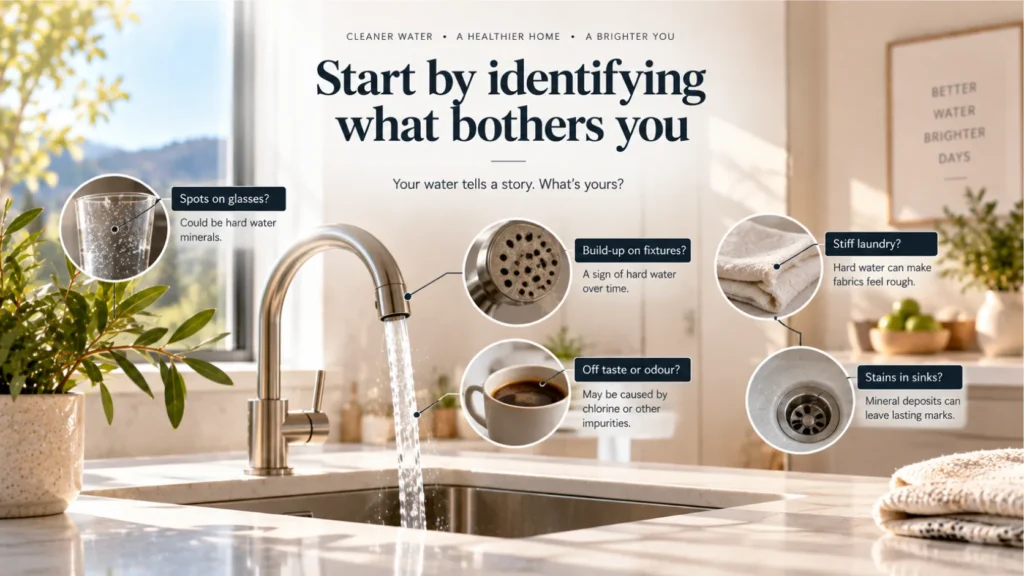
Before choosing a system, pay attention to the signs you notice around your home. Do your shower doors collect white spots that are difficult to remove? Does soap seem to disappear without creating much lather? Do your clothes feel rough after washing? These may be signs of hard water.
Perhaps the water smells like chlorine when you turn on the tap. Maybe your morning coffee has an unusual taste, or your family avoids drinking directly from the faucet. These concerns may point toward a need for filtration. You may also be concerned about substances in your drinking water that you cannot see, smell, or taste. In that situation, a water test can provide more useful information than appearance or taste alone.
The first step is to separate what you notice from what you assume. A problem that looks like hard water may have another cause, and a filter that improves taste may not address every concern in your water. Understanding the problem makes the next decision much easier.
Know what each water treatment system does
Different water treatment systems are designed for different jobs. Choosing the right one means understanding the purpose of each.
➤ Water softeners
Water softeners are mainly designed to address hard water. Hard water contains minerals that can leave deposits on fixtures, affect soap, and create buildup inside water-using appliances. A suitable softener can help reduce the minerals responsible for these problems. Homeowners often consider one when they notice scale on shower doors, cloudy faucets, stiff laundry, or frequent buildup around plumbing fixtures.
A water softener is not a complete drinking water filter. It focuses on hardness rather than every possible taste, smell, or dissolved substance. If hard water is affecting your daily routine, a softener may be worth exploring.
➤ Whole-home filtration systems
Whole-home filtration systems treat water as it enters your house. They are designed to address specific water concerns throughout the home. Depending on the filter, a whole-home system may help reduce chlorine taste and odor, certain particles, or other substances found in the water. The advantage is that the treated water can reach several fixtures instead of being limited to one faucet. This may matter if you notice an unpleasant smell while showering, washing your hands, or running water in different parts of the house.
However, filtration is a broad term. Not every whole-home filter does the same job, so you should always ask what a particular system is designed to reduce.
➤ Reverse osmosis systems
Reverse osmosis, often called RO, is commonly used to treat drinking and cooking water. It pushes water through a very fine membrane that can reduce many dissolved substances. Depending on the system and the water being treated, it may help reduce certain salts, minerals, metals, and other unwanted substances.
Most household RO systems are installed beneath the kitchen sink and connected to a separate drinking water faucet. This can be a practical choice when your main priority is better-treated water for drinking, cooking, making coffee, or filling bottles. It is not usually intended to treat all the water used throughout your home.
Decide whether you need one system or more
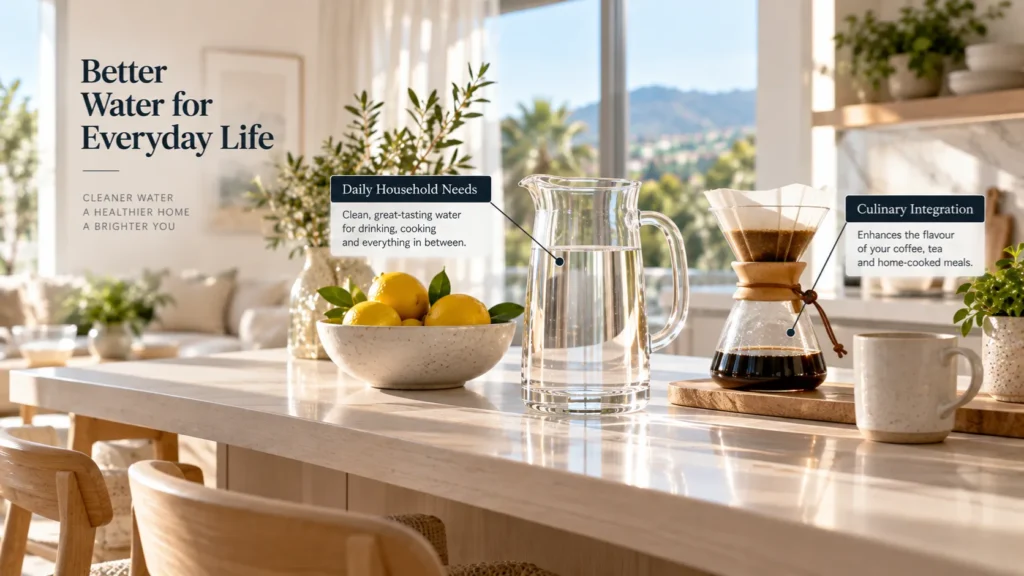
Some homeowners need only one type of treatment. Others may benefit from a combination. For example, a water softener may help address hard water throughout the home, while a reverse osmosis system may provide more thoroughly treated water for drinking and cooking. A whole-home filter may also be useful when the main concern is chlorine taste or odor across several fixtures.
These systems can sometimes work together because they address different concerns. However, adding more equipment is not always the right answer. Every additional system takes up space and may require separate maintenance, filter changes, or replacement parts. If a single system can solve your main problem, there may be no reason to install several. The aim should be to create a treatment plan that is useful, practical, and appropriate for your household.
Test your water before buying equipment
Water testing is one of the most important steps when choosing a water treatment system. It helps you understand what’s in your water instead of relying only on taste, smell, or assumptions. It can also show whether the problem is related to hardness, chlorine, dissolved substances, or something else.
Testing is especially helpful when you are considering an expensive system. You want to know that the equipment is designed to address a real concern in your home. A neighbour’s recommendation may be a helpful starting point, but it shouldn’t be the final reason you choose a system. Two homes in the same area can have different plumbing, different water usage, and different priorities. A water test gives you a clearer foundation for making the decision.
Think about your household’s daily routine
The best water treatment system should fit the way your family lives. A household that mainly wants better drinking water may have different needs from a large family that uses a significant amount of water every day. Think about how many people live in your home, how often you cook, how much water you drink, and whether several people use water at the same time. These details can influence the size, capacity, and design of the system you choose.
Space is another practical consideration. Some systems need room near the main water line, while others are installed beneath the kitchen sink. You should have enough space to access the equipment when filters need to be replaced, or maintenance is required. A system that works well on paper may become frustrating if it does not fit your home or routine.
Consider the ongoing cost of ownership
The initial purchase price is only one part of choosing a water treatment system. You should also consider filter replacements, servicing, repairs, electricity if required, and other ongoing costs. A system that seems inexpensive at first may become costly if its replacement parts are difficult to find or need to be changed frequently.
Ask how often the filters need to be replaced and what the maintenance schedule looks like. Find out whether the system is easy to service and whether help is available if something goes wrong. You should also understand what the system does not do. Clear information about its limits can help you avoid disappointment later. A good water treatment system should provide value over time, not just appear attractive on the day you buy it.
Avoid choosing based only on features
It is easy to be impressed by a system with a long list of stages, special features, or complicated product descriptions. However, more features do not automatically mean better water. A system should be judged by how well it addresses your concerns, how suitable it is for your home, and how manageable it is to maintain.
Ask simple questions. What does this system remove? Where will it be installed? How much water can it treat? What needs to be replaced? What happens if the system stops working properly? You deserve clear answers before making a decision. The right equipment is not necessarily the most expensive option. It is the one that performs a useful job for your household.
Why have Irvine homeowners trusted the McCowin family since 1972?
I’m Brian McCowin. My family has been solving water problems in Orange County since 1972, one home and one honest answer at a time. We believe the process should begin with your concerns and the condition of your water. From there, we explain the available options in straightforward language and help you understand what each system can and cannot do.
We’re a licensed California water treatment contractor (CSLB C-55 #1022717), serving Irvine and the surrounding communities: Tustin, Santa Ana, Newport Beach, Costa Mesa, Lake Forest, Mission Viejo, Orange, Anaheim, Huntington Beach, Fountain Valley, Yorba Linda, Laguna Niguel, Laguna Hills, Aliso Viejo, Rancho Santa Margarita, San Juan Capistrano, and San Clemente.
The McCowin Promise
For more than fifty years, we’ve helped Orange County homeowners understand their water through professional testing, honest recommendations, and customized solutions.
“If the system we install doesn’t perform the way we promised… If your water doesn’t taste, feel, or behave the way we said it would… We’ll pull the whole system out. And either replace it or make it right. No fine print. Because your trust is worth more than the sale.”
Choose a water treatment system with confidence, not confusion
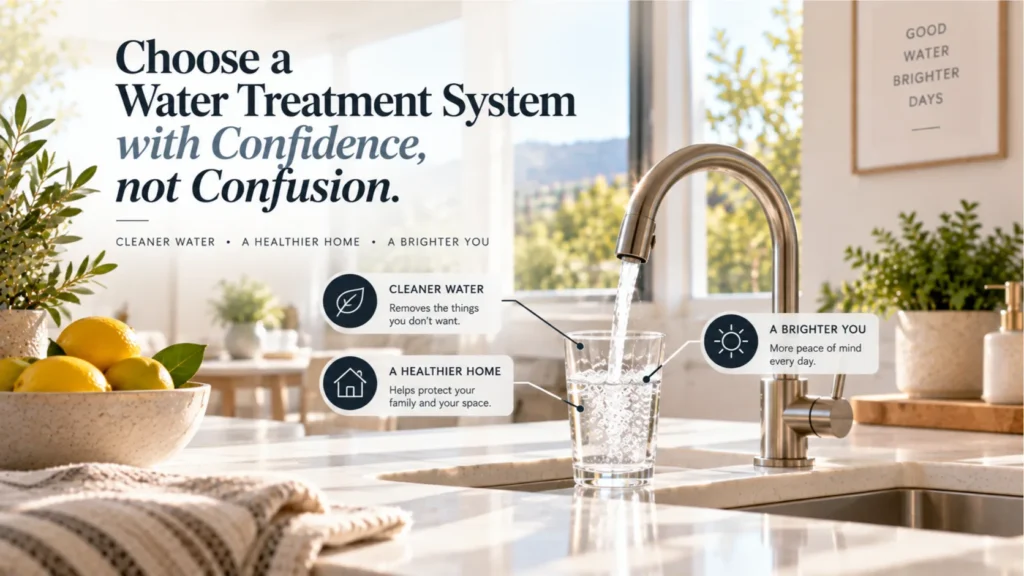
Choosing a water treatment system becomes easier when you stop looking for a product that does everything and start identifying the problems you actually want to solve. A water softener may be suitable for hard water. A whole-home filter may help with specific taste, odor, or water quality concerns. Reverse osmosis may be the right choice for more thoroughly treated drinking and cooking water.
Book your free, in-home water test today, or call (949) 569-5736.
In some homes, a combination may make sense. In others, one carefully chosen system may be enough. Start with a water test, ask practical questions, and choose equipment that fits your home’s needs and your family’s routine.
Frequently Asked Questions
How do I choose a water treatment system for my home?
Begin by identifying the problems you want to solve and arranging a water test. Then compare systems based on your water quality, household needs, available space, budget, and maintenance requirements.
Is a water softener the same as a water filter?
No. A water softener is mainly designed to address hard water, while a filter is designed to reduce specific particles, tastes, odors, or other substances, depending on its type.
Do I need a whole-home filter and reverse osmosis?
Not necessarily. A whole-home filter and a reverse osmosis system serve different purposes. Some homes may benefit from both, while others may need only one system.
Is the most expensive water treatment system the best choice?
No. The best system is the one that addresses your actual water concerns and fits your home, budget, and maintenance preferences.
Why should I test my water before buying a treatment system?
Testing helps you understand what is present in your water and prevents you from choosing equipment based only on assumptions, advertisements, or someone else’s experience.