
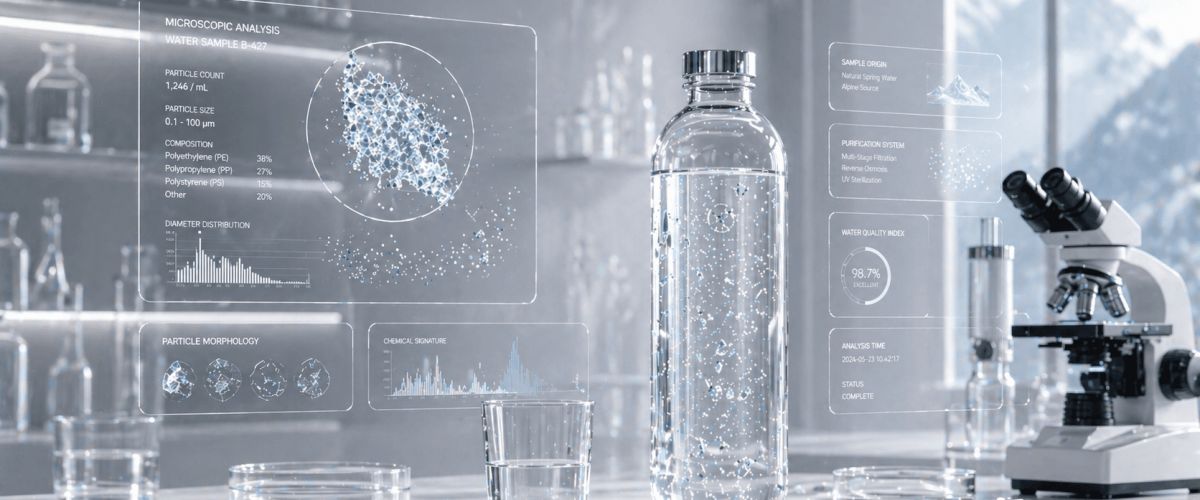

Detecting microplastic in water is difficult without specialized equipment. You usually cannot see, taste, or detect microplastics at home with DIY test kits. Accurate detection often requires laboratory methods such as microscopy and spectroscopy. For homeowners, the smarter move is professional water evaluation and source-level filtration, not trying to spot microplastics yourself.
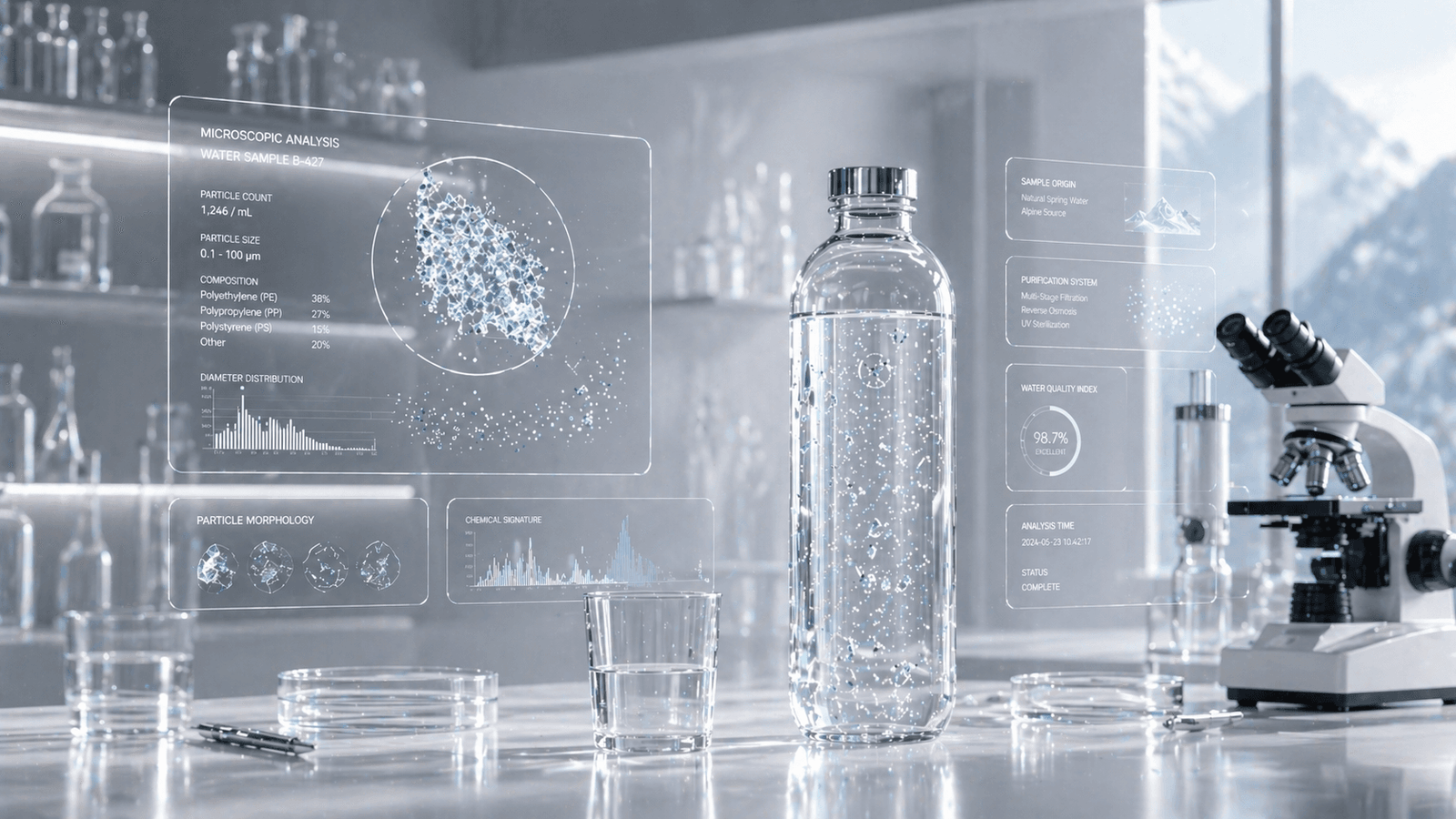
What’s the uncomfortable truth about detecting microplastics?
Most people assume if something dangerous is in water… You should be able to test for it at home.
That sounds reasonable.
But when it comes to microplastics, it is often wrong.
I have been in this business since 1972, and here is the truth.
Some contaminants are easiest to remove long before they are easy to detect.
That is one of them.
Can you detect microplastic in water at home?
Not reliably. Most homeowners cannot accurately detect microplastic in water with home tools.
That surprises people.
But these particles can be:
- Smaller than a human hair
- Invisible to the eye
- Too small for consumer tests And nanoplastics are even smaller.
Trying to “see” them is like trying to spot smoke particles floating in sunlight. You may suspect they are there.
But you are not measuring them.
Why can’t most water test kits detect microplastic in water?
Because they were not built for it. Most home kits test for:
- Chlorine
- pH
- Hardness
- Basic contaminants
They do not typically test for:
- Microplastics
- Nanoplastics
- Plastic-associated chemicals
This is one of the biggest misconceptions I see. People use a home strip test…
And think they checked everything. They did not.
How do scientists detect microplastic in drinking water?
They use specialized methods.
i. Fine Filtration Analysis
Water is filtered through extremely fine membranes. Particles are captured and studied.
This helps estimate:
- Particle count
- Size
- Shape
ii. Microscopy
Researchers examine suspected particles under advanced microscopes. This can help identify:
- Fibers
- Fragments
- Microbeads
But appearance alone does not confirm plastic.
That requires more.
iii. Spectroscopy
This is where true confirmation often happens. Methods like:
- Raman spectroscopy
- FTIR spectroscopy
Help determine whether a particle is actually plastic. Not dust.
Not sediment.
Plastic.
Can you detect microplastics in water by looking, tasting, or boiling?
No.
Let me be blunt.
None of these work.
You cannot detect microplastics by:
- Looking at water clarity
- Taste
- Smell
- Boiling water
- Letting water settle
Clear water can still carry invisible contaminants.
That catches people off guard.
But it is true.
Are there signs your drinking water may have microplastic exposure?
Not direct signs.
That is part of the challenge.
But exposure risk may be higher depending on:
- Aging infrastructure
- Heavy plastic use in supply chains
- Bottled water dependence
- Environmental and coastal conditions
In places like Newport Beach and Huntington Beach, environmental exposure can be part of the bigger picture.
Is detecting microplastic in water more important than removing it?
Honestly?
No.
And this is where experience matters.
If risk is possible, focus on reduction.
Not just detection.
You do not need to count every grain of dust before deciding to clean the house.
Same principle.
What actually reduces microplastics in water?
This is where the practical solution begins.
Effective options:
- Reverse osmosis
- Multi-stage filtration
- Whole-home water treatment
Here is a simple comparison:
| Method | Detects Microplastics | Removes Microplastics |
| ➤ Home Test Kit | No | No |
| ➤ Lab Testing | Yes | No |
| ➤ Reverse Osmosis | No | Yes |
| ➤ Multi-Stage Filtration | No | Yes |
See the difference?
Detection informs.
Treatment protects.
How does McCowin Water approach this?
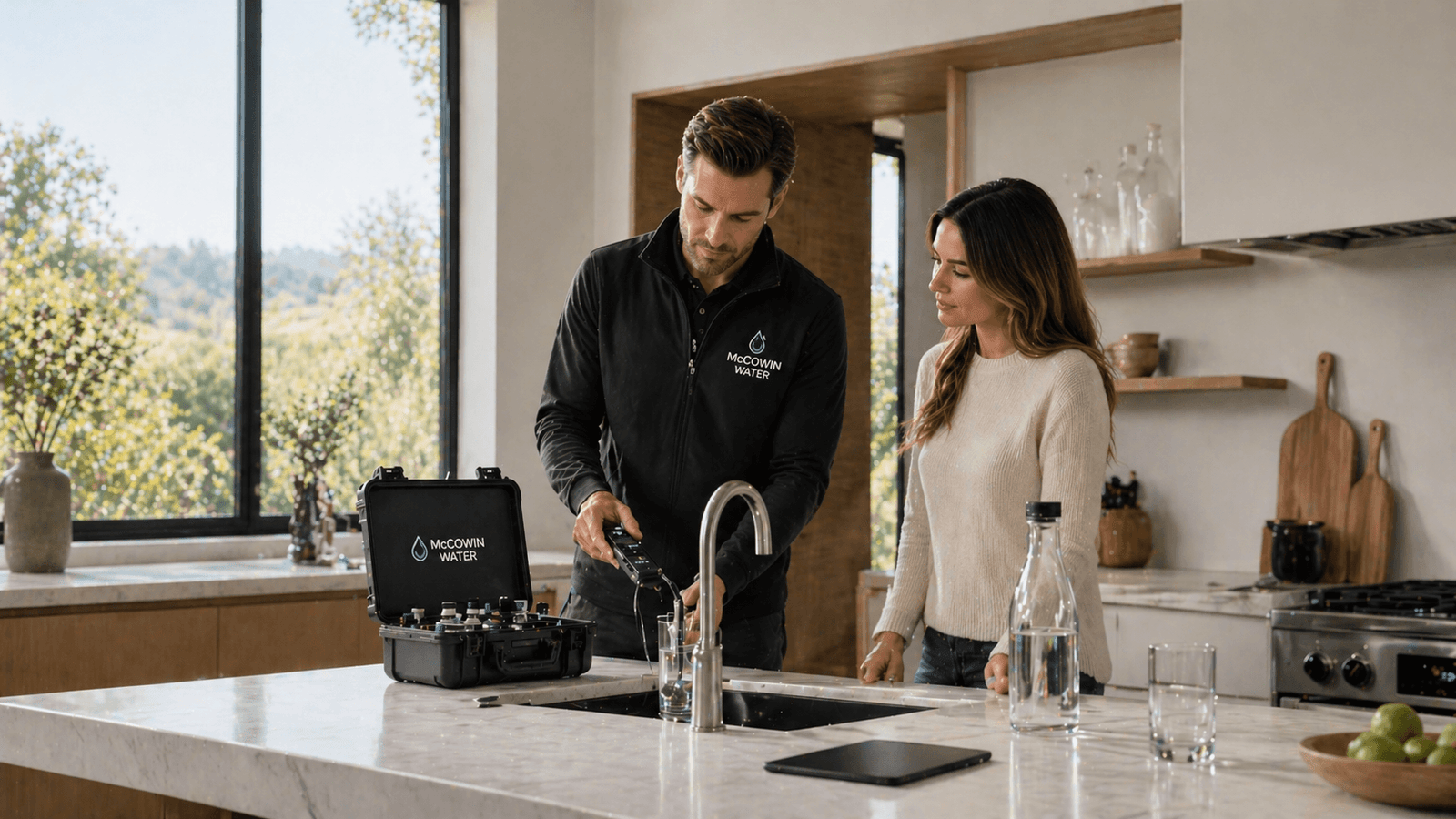
We start with the bigger question.
Not “Can we count every particle?”
But:
“How do we protect your water?”
That is why I call us the Auto Mall of water treatment.
We are not tied to one captive brand.
We carry multiple systems and match the right solution to your home.
Because the water in Irvine is different from that in Laguna Niguel or Newport Beach.
And your solution should reflect that.
How do you know what your water needs?
Start with a Free, In-Home Water Test.
And we do not send tests to a lab. We test on-site.
In real time.
With zero sales pressure. You get clarity immediately.
Why trust McCowin Water?
Because we back our work.
“If the system we install doesn’t perform the way we promised… If your water doesn’t taste, feel, or behave the way we said it would… We’ll pull the whole system out. And either replace it or make it right. No fine print. Because your trust is worth more than the sale.”
That is how we have done business for over 50 years.
What should you do next?
If you are worried about microplastics in water, do not get stuck trying to detect what you cannot see.
Start by protecting your water.
Call us at (949) 569-5736 or Schedule a Free, In-Home Water Test Today.
No pressure. Just answers.
Final Thought
Detecting microplastics is difficult.
Reducing exposure does not have to be.
Focus on what protects your family.
That is what matters.
McCowin Water Solutions
222 Goddard, Irvine, CA 92618
(949) 569-5736
CSLB Licensed C-55 #1022717
Three generations of McCowin Water. Trusted Orange County water expertise since 1972.