
• Home /
  • Blog /
  • Mid-Year Maintenance: When to Change Your RO Filters
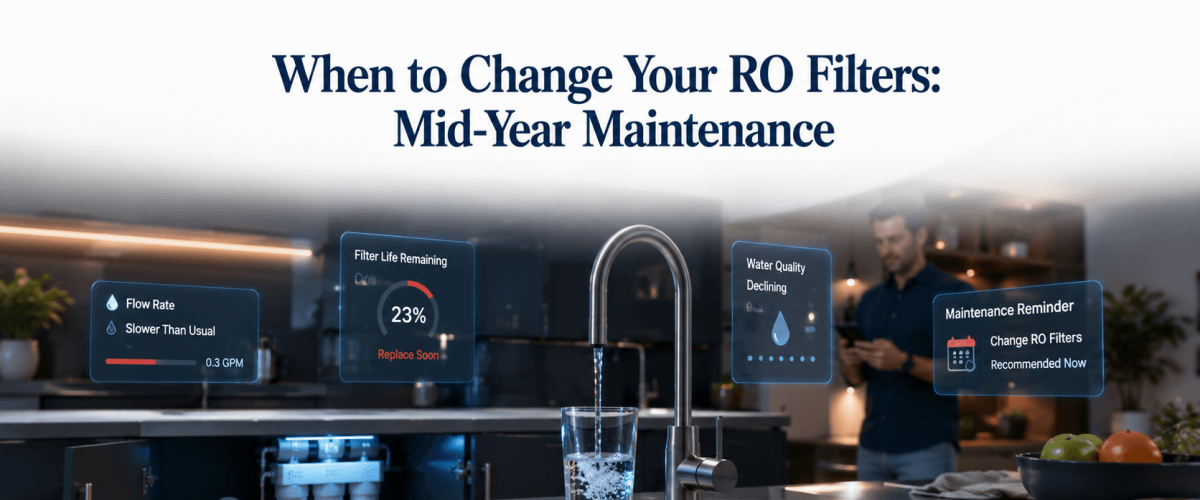
Mid-year RO filter maintenance overview

Mid-Year Maintenance: When to Change Your RO Filters

Table of Contents

If you own a residential reverse osmosis system, regular RO filter changes are one of the most important parts of ongoing maintenance. Most RO systems require periodic replacement of pre-filters and carbon filters, while the RO membrane typically lasts longer. However, the ideal maintenance schedule depends on your water quality, household size, and water usage. The best way to protect your investment is to have your system professionally evaluated and maintained before small issues become expensive problems.


Mid-year RO filter maintenance overview

Here’s a truth most homeowners don’t realize: The biggest threat to your reverse osmosis system isn’t bad water, it’s neglect.

I’m Brian McCowin. My family has been helping Orange County homeowners solve water problems since 1972. And every year, especially around the middle of summer, we get calls that sound something like this:

  • “My water doesn’t taste the same anymore.”
  • “My system seems slower.”
  • “I’m not getting as much water as I used to.”

Then I ask a simple question: “When was the last time your filters were changed?” Most homeowners pause, some can’t remember. Others say, “A few years ago.” That’s usually the problem.

The reality is that reverse osmosis systems are incredibly reliable when they’re maintained properly but like any hardworking piece of equipment, they need attention. Your RO system deserves the same level of care. Let’s talk about why filter maintenance matters and how homeowners can keep their systems performing at their best.


Why do RO filters need to be changed?

Reverse osmosis filters need to be changed because they gradually collect contaminants and lose effectiveness over time.

Every day, your system is working, it’s processing water, capturing particles, reducing unwanted compounds, protecting the RO membrane. Over time, those filters become loaded with the materials they’re designed to remove.

Replacing them helps maintain:

  • Water quality
  • System performance
  • Proper flow rates
  • Long-term reliability

What filters are inside a residential reverse osmosis system?

Most residential reverse osmosis systems use multiple stages of filtration.

Common components include:

  • Sediment Pre-Filters: These help remove particles before they reach sensitive system components.
  • Carbon Filters: Carbon filtration helps address taste and odor concerns while protecting the membrane.
  • Reverse Osmosis Membrane: The membrane performs the primary filtration process.
  • Post-Filters: These help polish the water before it reaches your faucet.

Each stage plays an important role and each stage has a maintenance schedule.


How often should RO filters be changed?

Most RO filters require periodic replacement, but the exact schedule depends on water conditions and household usage.

Several factors influence filter life:

  • Household size
  • Daily water consumption
  • Water quality
  • System design
  • Filter capacity

This is one reason generic online recommendations can be misleading. Two homes may have identical RO systems but completely different maintenance needs.

That’s why professional monitoring is so valuable.


What happens if I don’t change my RO filters?

Ignoring filter maintenance can lead to reduced performance and increased wear on the system.

Many homeowners assume, if water is still coming out, everything must be fine, not necessarily. A neglected system may experience:

  • Reduced water production
  • Changes in taste
  • Lower water pressure
  • Increased strain on components
  • Reduced membrane life

The longer maintenance is delayed, the greater the risk of larger problems developing.


How can I tell if my RO system needs maintenance?

Many systems provide warning signs before performance drops significantly.

Common indicators include:

  • Taste Changes: Water no longer tastes as fresh as it once did.
  • Slower Production: The storage tank takes longer to refill.
  • Reduced Flow: Water pressure at the RO faucet feels weaker.
  • Maintenance History: You can’t remember the last service visit.

That last one is more common than you might think.


Is the RO membrane replaced at the same time as the filters?

Usually not, the RO membrane generally lasts longer than standard pre-filters and carbon filters. Their job is to protect the membrane.

When filters are replaced on schedule, the membrane often enjoys a longer lifespan. When filters are neglected, the membrane may wear out sooner.

That’s one reason regular maintenance can save homeowners money over time.


Why is mid-year maintenance a smart idea?

Mid-year is often the perfect time to evaluate your system’s performance.

Summer usually means:

  • Higher water consumption
  • More guests
  • Increased hydration
  • Greater demand on household water systems

A mid-year inspection creates an easy maintenance checkpoint before small issues become larger problems.


Why do some homeowners struggle with RO maintenance?

Because many companies focus on installations instead of long-term support.

This is one of the biggest frustrations we hear, the system gets installed, everything works great.

Then the homeowner is left wondering:

  • Which filters do I need?
  • When should they be replaced?
  • Is the system working properly?
  • Who do I call if I have questions?

That’s why support matters. The best water treatment companies don’t disappear after installation.


Why does choosing the right company matter for long-term maintenance?

Because ongoing maintenance is about more than replacing filters. It’s about protecting your investment.

We’ve been helping Orange County families since 1972. And we’ve learned something important: The system is only part of the solution. The support behind the system matters just as much.

At McCowin Water, we’re like an Auto Mall for water.

We’re not tied to one manufacturer that allows us to recommend the best maintenance strategy for your specific system and water conditions.


What is the smartest way to keep an RO system performing properly?

The smartest approach is proactive maintenance.

That means:

  • Following recommended service schedules
  • Replacing filters on time
  • Monitoring system performance
  • Scheduling periodic evaluations

Preventative maintenance is almost always less expensive than corrective maintenance. The goal isn’t simply fixing problems. The goal is preventing them.


The McCowin Promise

For more than fifty years, we’ve helped Orange County homeowners protect their water treatment investments through honest advice, professional service, and long-term support.

Choosing the right water care solution

“If the system we install doesn’t perform the way we promised… If your water doesn’t taste, feel, or behave the way we said it would… We’ll pull the whole system out. And either replace it or make it right. No fine print. Because your trust is worth more than the sale.”


Schedule Your Free, In-Home Water Test

If you’re researching residential reverse osmosis systems and ongoing maintenance, now is the perfect time to make sure your system is performing the way it should.

We perform professional, on-site testing right at your kitchen sink. We’ll evaluate your water, discuss your system’s performance, and provide honest recommendations with absolutely zero sales pressure.

Call us at (949) 569-5736 or Schedule a Free, In-Home Water Test today and give your RO system the attention it deserves.

CSLB: C-55 #1022717

  1. Why do reverse osmosis filters need to be changed?

    Reverse osmosis filters gradually collect contaminants and lose effectiveness over time. Replacing them helps maintain water quality, proper flow rates, and long-term system performance.

  2. How often should RO filters be changed?

    The ideal replacement schedule depends on household size, water quality, daily usage, and system design. Professional evaluation helps determine the appropriate maintenance schedule for each home.

  3. What happens if I don’t change my RO filters?

    Neglected filters can lead to reduced water production, changes in taste, lower water pressure, increased strain on system components, and potentially reduced membrane lifespan.

What You’ll Notice Within
24 Hours
of the Right System