


If you’re researching myths about residential reverse osmosis systems, here’s the truth: most concerns about reverse osmosis stem from outdated information, poor installations, or one-size-fits-all systems. Modern RO systems are designed to provide high-quality drinking water, improve taste, and reduce many dissolved substances. The key is choosing the right system for your home’s water and having it professionally installed and maintained.
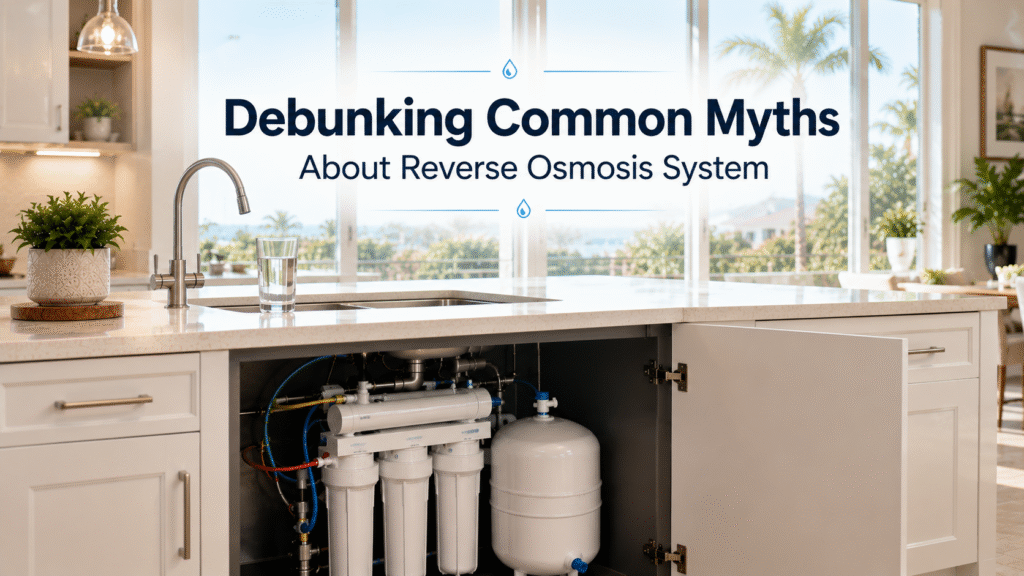
Here’s a truth the water industry doesn’t always admit: Half the things homeowners believe about reverse osmosis systems came from somebody’s neighbor.
I’m Brian McCowin. My family has been helping Orange County homeowners understand their water since 1972. And if I had a dollar for every time someone told me: “My friend said reverse osmosis system water isn’t healthy.” “My neighbor said it wastes too much water.” “I heard it removes everything.” “I read online that it makes water dead.”I’d probably have enough money to buy every bottled water company in California.
The problem isn’t homeowners. The problem is information. The internet has made it easy to spread myths. And unfortunately, water treatment myths tend to stick around for decades.
Let’s separate the facts from the fiction.
Is reverse osmosis water unhealthy because it removes everything?
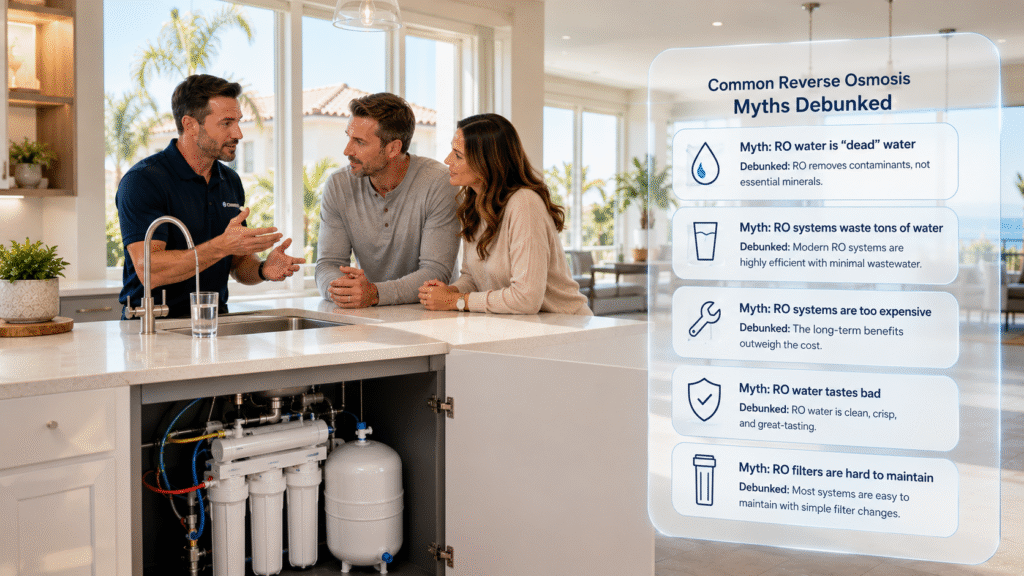
No. This is probably the most common myth. Homeowners often hear that reverse osmosis removes “everything” from water and somehow makes it unhealthy. The reality is much simpler.
Most of the minerals your body needs come from:
- Food
- Fruits
- Vegetables
- Proteins
- Dairy products
Not drinking water. People don’t eat salads because they’re thirsty. And they don’t drink water because they’re trying to replace their dinner.
RO systems are designed to improve drinking water quality. They’re not replacing your nutrition.
Does reverse osmosis make water “dead”?
No. Water isn’t alive. Therefore, it cannot become dead. This is one of those phrases that sounds scientific but really isn’t. Think about bottled water. Many bottled waters undergo extensive treatment processes.
People drink them every day. The goal of reverse osmosis is simple: Provide clean, great-tasting drinking water. The water still hydrates. The water still cooks your pasta, makes coffee and ice too. It’s simply treated differently.
Does a reverse osmosis system waste huge amounts of water?
Modern systems are significantly more efficient than older systems. This myth often comes from outdated equipment. Think about older cars. A vehicle built forty years ago is very different from a vehicle built today.
RO technology has improved. Modern systems can be much more efficient than homeowners expect. More importantly, many homeowners compare RO water to bottled water.
Consider everything involved with bottled water:
- Manufacturing bottles
- Transportation
- Warehousing
- Delivery
- Recycling
When viewed from the larger picture, many homeowners feel the convenience and water quality benefits are worthwhile.
Is a reverse osmosis system only for bad water?
No. Many Orange County homeowners install a reverse osmosis system because they want:
- Better taste
- Cleaner drinking water
- Improved coffee
- Better ice cubes
- Reduced bottled water purchases
Think of it like buying premium cookware. Your old cookware may still work. You simply want a better experience. Water treatment often works the same way.
Does RO water taste flat?
Some people hear this concern. Others say the exact opposite. Taste is highly personal.
Many homeowners report:
- Cleaner taste
- Crisper taste
- Better coffee
- Better tea
- Better ice
Here’s an insider secret: People often become accustomed to the taste of their existing water.
When the taste changes, it feels different. After a few weeks, many homeowners tell us they don’t want to go back.
Is a reverse osmosis system difficult to maintain?
Not usually. Many homeowners assume the system requires constant attention.
In reality, maintenance often involves:
- Periodic filter replacement
- System inspections
- Routine service
Think of it like changing the oil in your car. Maintenance is important but it isn’t something you think about every day.
A properly installed system is designed to work quietly in the background.
Can every home use the same reverse osmosis system?
Absolutely not. This is one of the biggest mistakes in the industry. Here’s an insider secret from fifty years in the business: The best RO system isn’t the most expensive one. It’s the one designed for your water.
Every home has:
- Different water chemistry
- Different plumbing
- Different goals
- Different usage patterns
That’s why customization matters. One-size-fits-all solutions often create many of the myths homeowners hear about.
Will an RO system solve every water problem?
No. And this is important. Reverse osmosis is one treatment technology. It’s not a magic box.
Depending on your water, you may also need:
- Water softening
- Whole-home filtration
- Carbon filtration
- Customized treatment solutions
Think of a toolbox. You don’t use a hammer for every project. Water treatment works the same way.
Why do some people have bad experiences with a reverse osmosis system?
Usually, it comes down to one of three things:
- Wrong System: The equipment wasn’t appropriate for the water.
- Poor Installation: The system wasn’t installed properly.
- Unrealistic Expectations: The homeowner expected one system to solve multiple problems.
The good news is that these issues are often preventable. Good testing and good design solve many problems before they start.
Why do different companies recommend different RO systems?
Many companies only sell one manufacturer’s products. That creates a challenge.
At McCowin Water, we’re like an Auto Mall for water. We’re not tied to one manufacturer. We carry a broad range of premium technologies because every home’s water is different. That flexibility allows us to recommend solutions based on your water and not on our inventory.
How do I know if reverse osmosis is right for my home?
The answer starts with testing.
Before recommending equipment, we want to understand:
- What’s in your water
- What concerns do you have
- What goals do you want to achieve
- Which solutions make sense
Without testing, you’re guessing. With testing, you’re making informed decisions. And informed decisions usually lead to happier homeowners.
What is the smartest first step before buying a reverse osmosis system?
The smartest first step is scheduling a professional in-home water test. Not reading social media comments, not believing every online myth and definitely not guessing.
But rather start with facts. Because once you understand your water, you’ll know whether reverse osmosis makes sense for your home.
The McCowin Promise
For more than fifty years, we’ve helped Orange County homeowners separate water facts from water fiction.
“If the system we install doesn’t perform the way we promised… If your water doesn’t taste, feel, or behave the way we said it would… We’ll pull the whole system out. And either replace it or make it right. No fine print. Because your trust is worth more than the sale.”
Schedule Your Free, In-Home Water Test
If you’re researching residential reverse osmosis system myths, the best way to get answers is to understand your actual water.
We perform professional, on-site testing right at your kitchen sink. We’ll explain your water, answer your questions, and provide honest recommendations with absolutely zero sales pressure.
Call us at (949) 569-5736 or Schedule a Free, In-Home Water Test today and separate the myths from the facts.
CSLB: C-55 #1022717
-
Is reverse osmosis water unhealthy because it removes everything?
No. Most essential minerals come from food, not drinking water. Reverse osmosis system ais designed to improve drinking water quality and taste.
-
Does a reverse osmosis system waste huge amounts of water?
Modern reverse osmosis systems are significantly more efficient than older models. Many homeowners find the water quality and convenience benefits worthwhile
-
Can every home use the same RO system?
No. Every home’s water chemistry, plumbing, and treatment goals are different. A customized system typically delivers better results than a one-size-fits-all solution.