
Summary
Residential reverse osmosis systems are one of the most reliable ways to ensure clean, safe, and great-tasting drinking water at home. These systems use advanced multi-stage filtration and water pressure technology to remove contaminants, odors, and harmful impurities with exceptional precision. Unlike many filtration options, most reverse osmosis units do not rely on electricity, making them efficient and cost-effective for city water homes. In this guide, you will learn how residential reverse osmosis systems work, what features to look for, and how to choose the best system for your household needs.
What Are Residential Reverse Osmosis Systems?
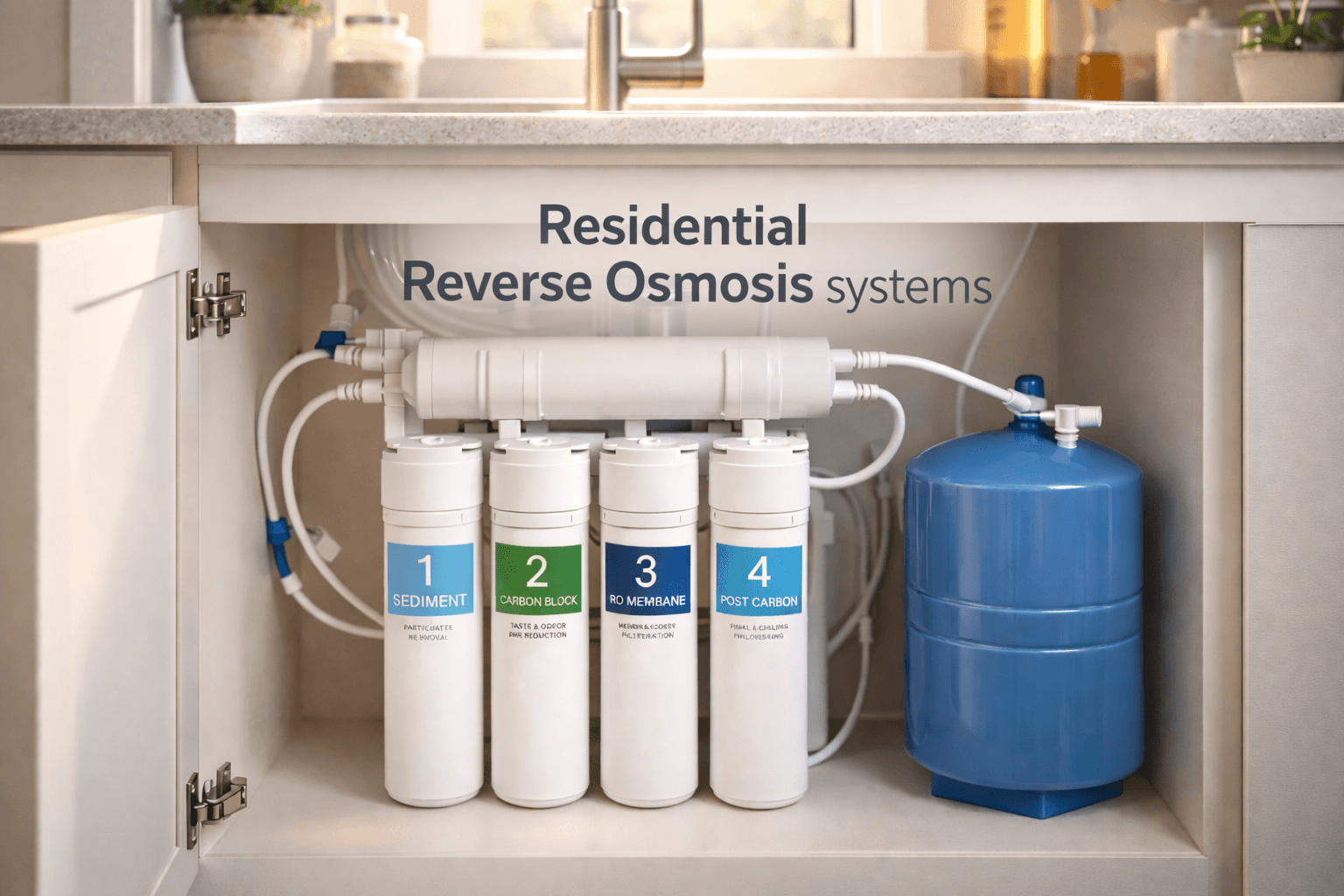
Residential RO systems are advanced water filtration units designed to purify drinking water at the point of use. They are typically installed under the kitchen sink and connected directly to your water supply.
These systems use a semi-permeable membrane to remove contaminants such as:
- Chlorine
- Bacteria
- Sediment
- Heavy metals
- Dissolved solids
- Odors
Because residential reverse osmosis systems operate using water pressure, they are energy-efficient and ideal for homes connected to municipal water supplies.
How Residential Reverse Osmosis Systems Work
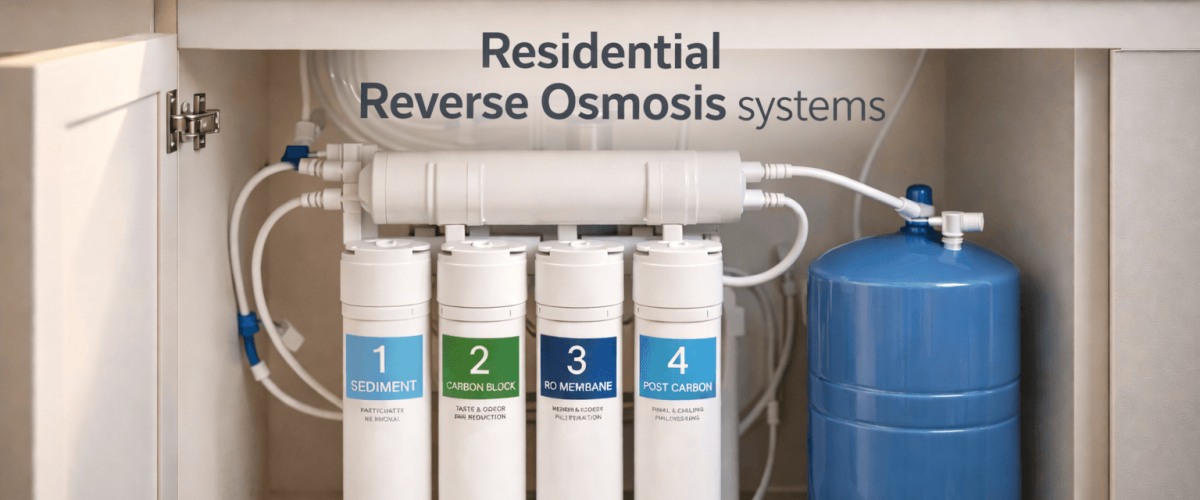
Reverse osmosis filtration works in multiple stages. Water passes through pre-filters that remove sediment and chlorine before reaching the RO membrane. The membrane then filters out microscopic contaminants.
After purification, clean water is stored in a dedicated tank for convenient access. Many residential reverse osmosis systems include post-filters to enhance taste before dispensing water through a separate faucet.
The result is crisp, clean, and better-tasting drinking water directly from your kitchen.
7 Important Features to Look for in Residential Reverse Osmosis Systems
1. Easy-to-Change Filters
Maintenance is essential for long-term performance. Residential reverse osmosis systems use pre-filters, post-filters, and an RO membrane that require periodic replacement.
Choosing a system with easy-to-change filters simplifies maintenance and ensures consistent water quality. This is especially important in areas with hard water or high sediment levels.
2. Adequate Water Production Capacity
Water production capacity varies by model. A typical family may require up to 100 gallons per day for drinking and cooking.
When selecting residential reverse osmosis systems, consider how much purified water your household consumes daily. Proper sizing prevents shortages and ensures reliable supply.
3. Number of Filtration Stages
Standard residential reverse osmosis systems include 4 to 6 filtration stages. Each stage targets specific contaminants to improve water purity.
While more stages can enhance filtration, the system must match your local water conditions. Professional water testing helps determine the appropriate level of filtration.
4. Built-In Safety Features
Modern residential reverse osmosis systems often include:
- Automatic shut-off valves
- Backflow prevention
- Leak detection features
These safety components protect your system from overworking and reduce the risk of water damage.
5. Water Pressure Compatibility
Since residential reverse osmosis systems rely on water pressure rather than electricity, proper pressure is critical.
Low water pressure can reduce efficiency and output. A professional installer can test your home’s water pressure and recommend a booster pump if necessary.
6. Wastewater Recycling Options
Reverse osmosis systems produce wastewater during filtration. Some advanced residential reverse osmosis systems allow wastewater to be redirected for secondary uses such as flushing or cleaning.
This feature promotes sustainability while minimizing water waste.
7. Professional Installation and Support
Professional installation ensures optimal performance and system longevity. Proper alignment, pressure calibration, and leak testing are essential steps that protect your investment.
At McCowin Water, our experts assist homeowners in selecting and installing residential reverse osmosis systems that match their water profile and lifestyle needs.
Benefits of Residential Reverse Osmosis Systems
Homeowners who install residential reverse osmosis systems often experience:
- Improved drinking water taste
- Reduced bottled water expenses
- Protection from harmful contaminants
- Cleaner cooking water
- Greater peace of mind
Unlike basic filtration pitchers or faucet filters, reverse osmosis provides deeper purification and consistent quality.
Why Choose McCowin Water for Residential Reverse Osmosis Systems?
McCowin Water provides customized solutions based on professional water testing. Instead of recommending generic models, our team evaluates your water pressure, contamination levels, and household usage.
Our residential reverse osmosis systems are professionally installed to ensure maximum efficiency and long-term reliability. We also provide ongoing maintenance support to keep your system performing at its best.
When it comes to safe and dependable water purification, experience and expertise matter.
Final Thoughts
Residential reverse osmosis systems offer one of the most effective ways to achieve clean and great-tasting drinking water at home. With proper sizing, professional installation, and regular maintenance, these systems deliver long-term value and protection for your household.
If you are ready to upgrade your drinking water quality, contact McCowin Water today for a consultation. Our water experts will guide you toward the best residential reverse osmosis system for your home and ensure a smooth installation process from start to finish.
Call us at (949) 569-5736 or schedule your free water test today.