
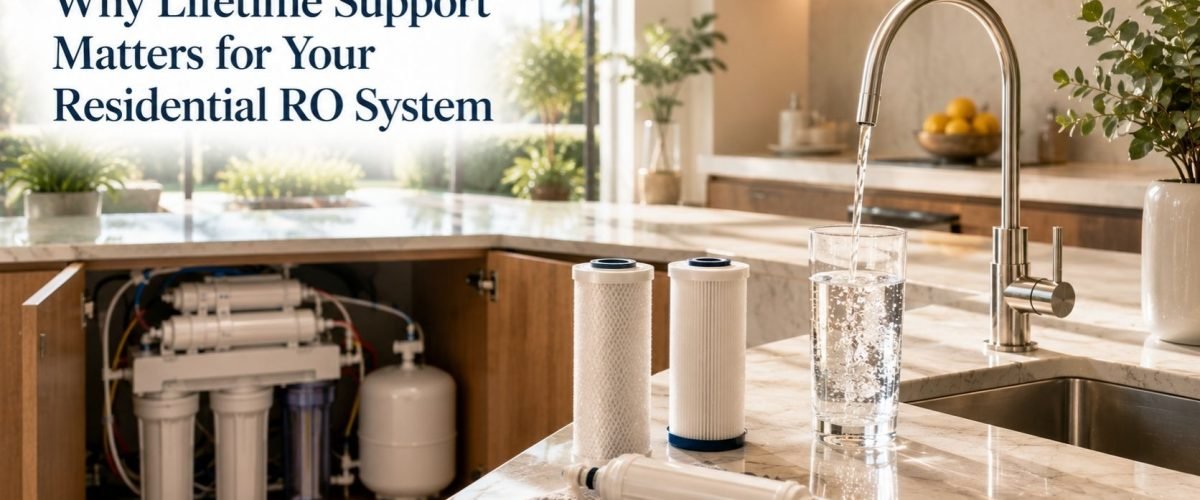

A residential reverse osmosis system is not a “set it and forget it” appliance. I believe the best choice is a system matched to your water, installed correctly, and backed by dependable maintenance support. When homeowners compare residential RO systems with lifetime support, they should look beyond the membrane and price tag. Ask who will replace filters, troubleshoot leaks or pressure issues, explain maintenance, and help when the system is no longer performing as expected. Ongoing service protects your investment and helps keep the system operating as designed.
Why does lifetime support matter for a residential RO system?
Lifetime support matters because an RO system needs routine care long after installation, and the person who sold it may not always be the person who services it.
A reverse osmosis system can be an excellent tool for producing treated drinking water, but it contains multiple working parts: pre-filters, a membrane, post-treatment, tubing, fittings, a storage tank on some designs, and a dedicated faucet or other dispensing equipment. Those parts do not all have the same service needs.
I’m Brian McCowin, and I’ve spent decades helping Orange County homeowners understand their water. When I talk with homeowners comparing residential RO systems with lifetime support, I tell them to think beyond installation day. That same question matters when comparing residential RO systems with lifetime support from different providers.
The EPA notes that home treatment systems require maintenance, including filter changes and, for some systems, membrane related service. The CDC likewise recommends maintaining and replacing filters according to the manufacturer’s instructions. (US EPA)
What does ongoing maintenance actually include?
Ongoing maintenance means keeping the filters, membrane, connections, and other serviceable components operating according to the system’s requirements. The exact schedule depends on the equipment, incoming water, household usage, and manufacturer instructions. I never want a homeowner to assume that every RO system needs the same service interval.
For residential RO systems with lifetime support, I recommend asking what happens when routine maintenance is due. A good service plan should make the answer clear. Depending on the system, maintenance may include:
- Replacing pre-filters and post-filters.
- Checking membrane performance.
- Inspecting tubing, fittings, valves, and connections.
- Checking storage-tank or pressure-related components when applicable.
- Looking for leaks or unusual changes in flow.
- Reviewing water quality or system performance when there is a concern.
- Explaining what was serviced and what should happen next.
The EPA specifically advises that filters should be replaced according to manufacturer instructions and notes that RO systems can have membranes and other parts requiring maintenance.
Why is the installer as important as the RO equipment?
The installer matters because correct sizing, setup, connections, and follow-up can affect how well the system serves your home. I would rather see a homeowner choose an appropriate system with strong service than buy an impressive-looking system that nobody wants to support later.
When comparing residential RO systems with lifetime support, ask:
- Who performs the maintenance?
- Can I reach the same local provider after installation?
- What parts are considered routine maintenance?
- What happens if the system develops a leak or performance issue?
- Is the support actually provided by the installer, or am I sent to a manufacturer call center?
- What is covered by the written warranty, and what is not?
What should I compare when choosing residential RO systems with lifetime support?
I recommend comparing the complete ownership experience, not just the equipment specifications.
| What to compare | Why it matters |
|---|---|
| ➤ Water testing | Helps identify the water conditions the system should address. |
| ➤ System design | The equipment should fit the home’s needs and usage. |
| ➤ Installation | Proper connections and setup matter for reliable operation. |
| ➤ Filter and membrane service | RO systems have components that require maintenance. |
| ➤ Troubleshooting | You need a clear path when flow, taste, leaks, or other performance issues change. |
| ➤ Warranty terms | A warranty is different from ongoing maintenance and service. |
| ➤ Local support | A nearby provider can be easier to contact when service is needed. |
This is where residential RO systems with lifetime support become a meaningful search question. “Lifetime support” should not simply be a phrase on a sales page. Ask what the provider actually means by it. Is it a phone number? Scheduled maintenance? Parts availability? Troubleshooting? Filter replacement? A local technician? Those are very different levels of support.
Does lifetime support mean everything is free forever?
No. “Lifetime support” should never be assumed to mean every future part, filter, labor charge, or repair is free forever. This is one of the most important questions I want homeowners to ask when evaluating residential RO systems with lifetime support.
A support commitment and a warranty are not necessarily the same thing. Routine consumables such as filters may still need to be replaced. Certain components may have specific warranty periods. Service calls can have terms and conditions. I want homeowners to read those details before they buy.
If a provider says “lifetime support,” ask for a simple explanation of what that includes, what it does not include, and what costs you should expect as the system ages.
How does maintenance affect RO performance?
Maintenance helps the system continue operating as designed, but it cannot turn an improperly selected or neglected system into the right system. Filters gradually become loaded with material they are designed to reduce. Other components can wear, and changes in pressure or water conditions can affect performance. The EPA and CDC both emphasize maintenance as part of responsible home water treatment.
For me, residential RO systems with lifetime support are about having a clear plan when routine service is needed. I also want to make one limitation clear: maintenance does not mean an RO system removes everything from water. Treatment performance depends on the specific technology, system design, and claims supported for that system. If you are concerned about a particular contaminant, ask what the system is certified or designed to reduce rather than accepting a broad claim.
The EPA recommends checking treatment capabilities and certification when selecting filters for specific contaminants.
What are the warning signs that an RO system needs service?
A change in performance is a good reason to have the system checked rather than guessing at the cause. The long term value of residential RO systems with lifetime support becomes clearer when you know what service may look like.
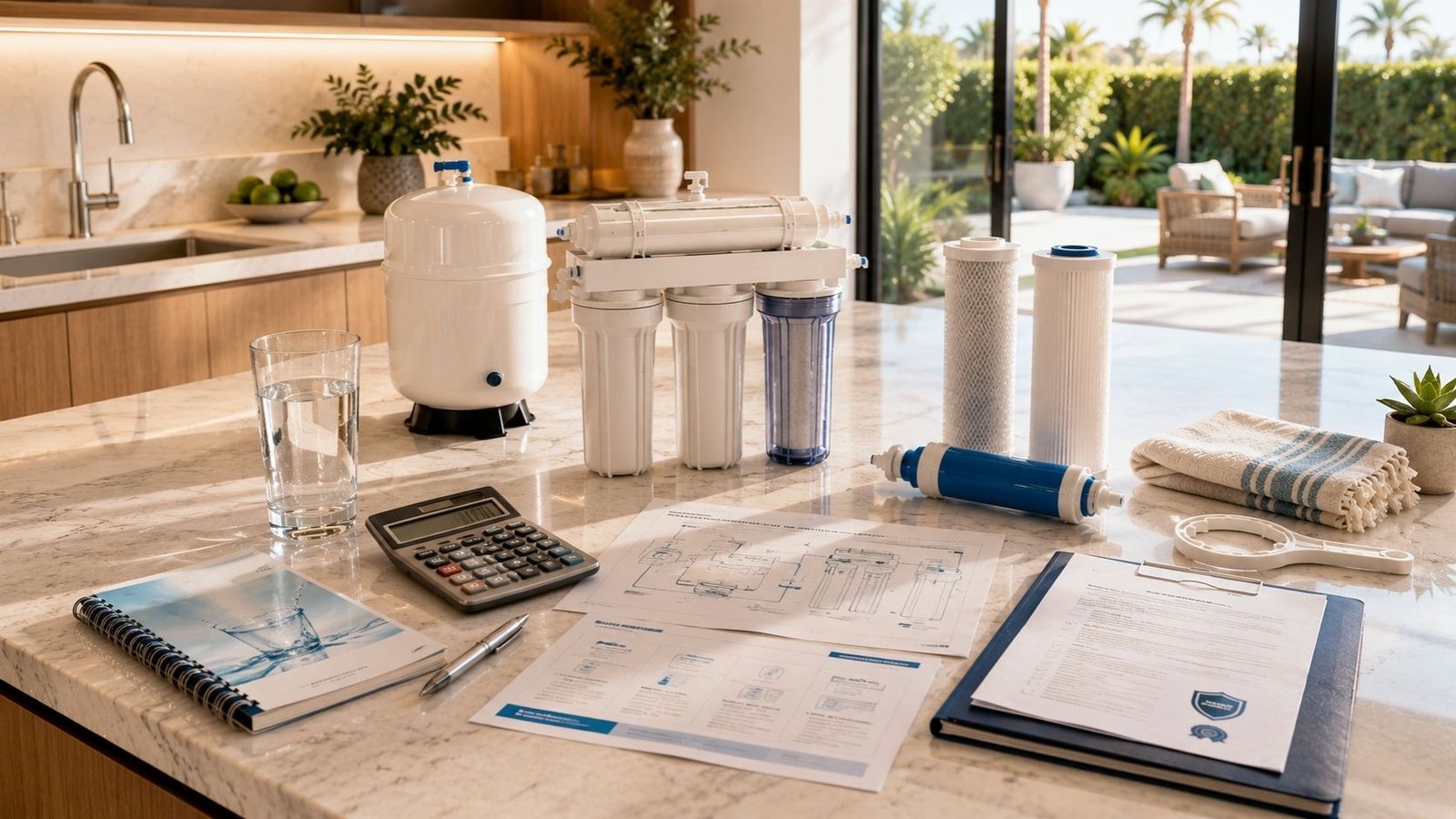
Common reasons to request service can include:
- A noticeable change in water taste or odor.
- Slower-than-usual water production or dispensing.
- A system that is not filling as expected.
- Water leaks or damp connections.
- A filter-change indicator or service reminder.
- Unusual noises.
- A noticeable change in the amount of treated water available.
These signs do not automatically identify the problem. A slow faucet, for example, can have more than one possible cause. That is why I prefer diagnosis before replacing parts.
Should I choose a local provider for ongoing RO support?
For many homeowners, local support is worth considering because water treatment is a physical system inside your home, not just an online purchase. When we evaluate residential RO systems with lifetime support, we look at whether the provider can stay involved after installation. Can the homeowner call with a question? Can the system be inspected? Can maintenance be arranged? Can someone explain what changed?
At McCowin Water, we start with understanding the home’s water rather than assuming one RO configuration fits every household. Our free in-home water test is designed to help us evaluate the water and discuss a treatment approach when one makes sense.
What should I do before buying an RO system?
Before buying, I recommend starting with your water and your actual household needs, then comparing service terms alongside the equipment. We also tell homeowners that residential RO systems with lifetime support should be judged by the service relationship, not just the equipment.
Before signing, ask:
- Is this system appropriate for my water and intended use?
- Who will install and maintain it?
- What support will I receive after the sale?
We also recommend asking for the manufacturer’s maintenance instructions and understanding which components are consumable. The goal is to choose a system that can be maintained, serviced, and supported for the long term.
Why should a free in-home water test come first?
A free in-home water test gives me a starting point for understanding your home’s water before I recommend an RO approach. When homeowners search for residential RO systems with lifetime support, they are usually trying to solve two problems at once: “Which system should I buy?” and “Who will help me after I buy it?” I think both questions deserve an answer.
Our free in home test lets us examine the water in your home and discuss what the results mean. From there, if reverse osmosis is appropriate, we can talk about the type of system and the support required to keep it operating properly.
I would rather tell you that an RO system is unnecessary than recommend equipment that does not solve your actual problem. That is the difference between selling a product and helping a homeowner make a water treatment decision.
The McCowin Promise
We believe support should continue after installation. We want homeowners to understand their equipment, know what maintenance it needs, and have a clear path to service when something does not seem right.
“If the system we install doesn’t perform the way we promised… If your water doesn’t taste, feel, or behave the way we said it would… We’ll pull the whole system out. And either replace it or make it right. No fine print. Because your trust is worth more than the sale.”
Areas We Serve
As a trusted local water expert, we understand the unique water conditions across Southern California and provide solutions tailored to every home and business.
Anaheim · Santa Ana · Irvine · Huntington Beach · Costa Mesa · Orange County · Mission Viejo · Tustin · Lake Forest · Newport Beach · Yorba Linda · Laguna Niguel · San Clemente · Aliso Viejo · San Juan Capistrano
Whether you need water filtration, water softening, reverse osmosis, or another water-treatment solution, McCowin Water serves homeowners throughout these communities.
Give Your RO System a Long-Term Plan
If you are comparing residential RO systems with lifetime support, do not stop at the equipment quote. Ask who will be there for maintenance, troubleshooting, and questions after installation.
Call us at (949) 569-5736 or Schedule a Free, In-Home Water Test today to start with the water, understand the system, and then choose the support plan that makes sense for your home. If you are in Southern California, test your water before you make a decision.
CSLB: C-55 #1022717
-
Why does an RO system need filter changes?
RO systems use filters and other components that require maintenance. Replacing filters according to the manufacturer’s instructions helps the system continue operating as designed.
-
What should I ask a provider about lifetime RO support?
Ask who performs maintenance, how you request service, what routine maintenance includes, what the warranty covers, and which future costs are your responsibility.
-
Can every RO system remove the same contaminants?
No. Treatment performance depends on the specific technology, system design, and claims supported for that system. Homeowners should check what a particular system is designed or certified to reduce.