


By Brian McCowin, McCowin Water. Serving Irvine and Orange County since 1972.
Installing a water filtration system should make your daily routine easier, not turn your home upside down. Still, a little preparation before installation day can make the process smoother. Knowing where the equipment will go, understanding what the installation involves, and clearing access to the right areas can save time and help avoid last-minute surprises.
If you’re planning a water filtration system installation, the first step isn’t moving everything out of your garage or making space under every sink. It is understanding which system your home needs and where it will be installed.
A whole-house filtration system, an under-sink reverse osmosis unit, and a water softener each have different installation requirements. The preparation depends on the equipment, your plumbing layout, and the space available in your home.
Here is what I recommend homeowners take care of before installation day.
Start by understanding which system is being installed
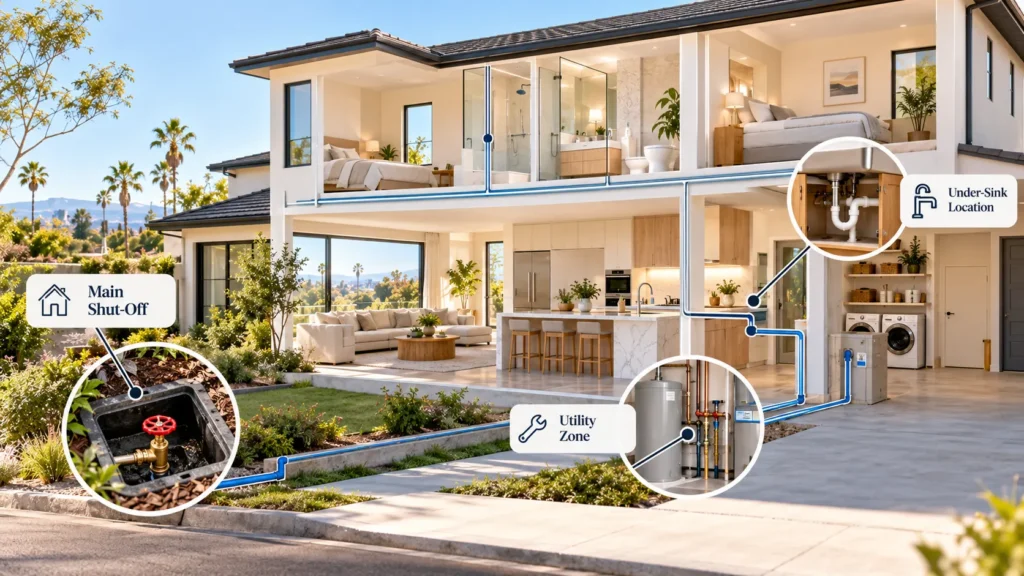
Before preparing your home, make sure you know what the installation involves. Not every water treatment system connects to your plumbing in the same way. A whole-house filtration system is generally installed near the point where the main water supply enters your home. Water passes through the treatment equipment before travelling to your kitchen, bathrooms, laundry room, and other fixtures.
A water softener is also commonly installed near the main water supply. However, it has additional requirements, including a drain connection for its regeneration cycle and access to an electrical outlet for many models.
An under-sink reverse osmosis system is different. It is usually installed inside the cabinet below a kitchen sink, with connections to the cold-water line, a drain, and a dedicated drinking-water faucet. Some systems also need space for a storage tank.
These differences matter because preparing for one system does not necessarily prepare your home for another. Before installation, ask your water treatment provider which equipment is being installed, where it will sit and what connections it requires.
Make sure there is enough space for the equipment
One of the simplest things you can do before installation is to check the proposed location. Water treatment equipment needs more than enough room to fit. The installer also needs space to connect the plumbing, access valves, replace filters, and carry out future maintenance.
For a whole-house system, the location may be in a garage, utility area, or another accessible space near the main water line. Move stored boxes, tools, cleaning supplies, and other items away from the installation area. If the equipment is being placed in a cabinet or enclosed area, check that the installer can comfortably reach the connections.
For an under-sink system, remove the items stored beneath the kitchen sink. This includes cleaning products, spare containers, bins, and anything else occupying the cabinet. Check whether the cabinet has a shelf or divider that could affect the available space, but do not remove fixed parts without confirming with the installer first.
If your system includes a storage tank, make sure there is room for both the tank and the associated plumbing. A clear working area makes installation easier and leaves enough room for future servicing.
Check access to your main water supply
For whole-house filtration and water softening systems, the main water supply is an important part of the installation. The equipment is usually connected near the point where water enters the property. Depending on your home’s plumbing arrangement, this could be in the garage, near an exterior wall, or in a dedicated utility space.
Locate your main shut-off valve before installation day. You do not need to operate it or adjust any plumbing yourself. Simply knowing where it is can help you understand the installation area and make it easier to discuss the setup with your installer.
The installer may need to shut off the water supply temporarily while making the connections. This means taps, showers, toilets, washing machines, and other water-using appliances may be unavailable for part of the installation. If the main shut-off valve is difficult to reach, blocked by stored items, or not working properly, mention it beforehand. It is better to identify access issues before the work begins than during the installation.
Understand the drain and electrical requirements
Some water treatment systems need more than a connection to your water supply. A water softener, for example, sends water to a drain during its regeneration cycle. The installer needs to identify a suitable drain connection and make sure the discharge arrangement follows the equipment manufacturer’s requirements and applicable plumbing rules.
Reverse osmosis systems also produce wastewater as part of their filtration process. The system generally connects to the sink drain using an appropriate drain fitting. If the sink cabinet has limited space or an unusual plumbing arrangement, let your installer know in advance.
Electrical requirements depend on the equipment. Many modern water softeners use an electrical connection to operate their control valves. Some filtration systems may also need power, while others operate without it.
Avoid using extension cords or making electrical changes to accommodate the equipment unless the installer has specifically approved the arrangement. The right location should provide suitable access to any required power supply.
These details are worth discussing during the planning stage because drain and electrical connections can influence where a system can be installed.
Think about your household’s water usage

Installation day is a good time to plan around your household routine. During a water filtration system installation, the water supply may need to be turned off temporarily. The length of the interruption depends on the equipment, plumbing work, and any unexpected conditions found during installation.
If you work from home, have children in the house, or have a busy household schedule, plan. Fill a few drinking-water bottles, keep some water available for basic needs, and avoid scheduling laundry or other water-intensive tasks during the expected installation window.
You may also want to avoid planning a large meal that requires a lot of running water while the work is underway. Ask your installer how long the water supply is expected to be unavailable and whether any additional downtime is likely. A reliable estimate helps you plan your day without unnecessary inconvenience.
Tell your installer about existing plumbing issues
An installation can only be planned properly when the installer understands the condition of the existing plumbing. If you have noticed leaks, low water pressure, corroded pipes, unusual noises, or previous plumbing repairs, mention them before work begins. Even if the issue seems unrelated to filtration, it may affect the installation location or the connections required.
For example, a leaking pipe near the proposed equipment location may need attention before new treatment equipment is connected. Similarly, limited access to the main water line or unusual pipe sizes may affect the installation plan.
If your home has undergone recent renovations, additions or plumbing changes, share that information too. Any available plumbing plans or details about previous work may be helpful. You do not need to diagnose these issues yourself. Simply describe what you have noticed so the installer can assess the situation.
Know what happens after installation
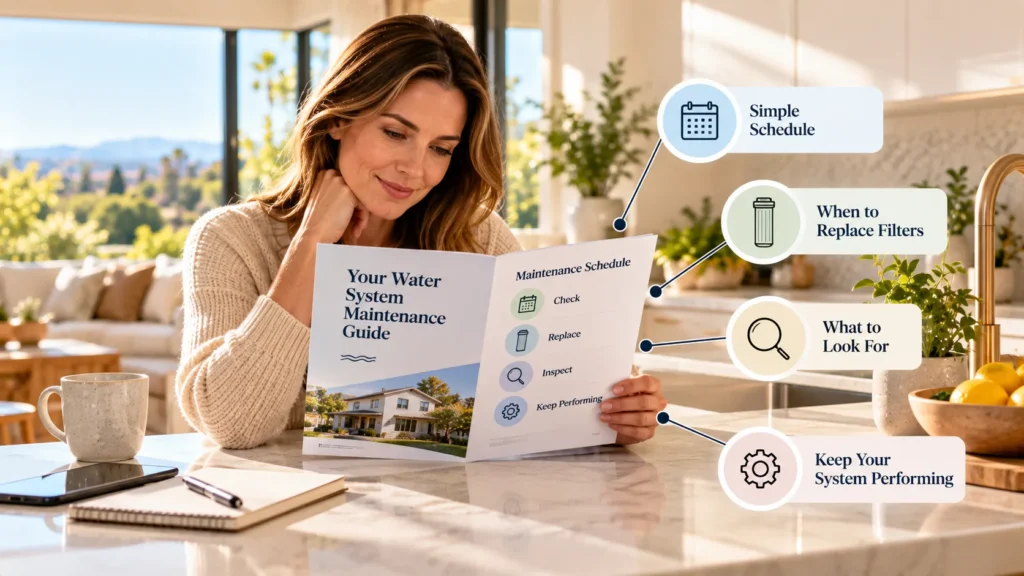
Preparing your home also means knowing what to expect once the equipment is connected. The installer should explain how the system operates, which parts require maintenance, and when filters or other components need servicing. Ask where the shut-off and bypass valves are located, if your system has them, and how to identify any warning indicators or changes in performance.
Do not assume every system is ready for use the moment installation is complete. Follow the manufacturer’s instructions and your installer’s guidance. It is also worth keeping the product information, installation details and maintenance schedule in one accessible place. These records make future servicing easier and help you understand what has been installed in your home.
Why Irvine homeowners have trusted the McCowin family since 1972
I’m Brian McCowin. My family has been solving water problems in Orange County since 1972, one home and one honest answer at a time. Preparing a home for water treatment is easier when the installation plan is based on the actual water conditions and the layout of the property.
At McCowin Water, we start by understanding what is happening with your water. We test it, explain the results and recommend equipment that addresses the specific concerns. The equipment should fit the water, the home, and the household’s needs. We also consider where the system can be installed, how it will connect to your plumbing and what will be needed to maintain it.
We’re a licensed California water treatment contractor (CSLB C-55 #1022717), serving Irvine and the surrounding communities: Tustin, Santa Ana, Newport Beach, Costa Mesa, Lake Forest, Mission Viejo, Orange, Anaheim, Huntington Beach, Fountain Valley, Yorba Linda, Laguna Niguel, Laguna Hills, Aliso Viejo, Rancho Santa Margarita, San Juan Capistrano, and San Clemente.
The McCowin Promise
For more than fifty years, we’ve helped Orange County homeowners understand their water through professional testing, honest recommendations, and customized solutions.
“If the system we install doesn’t perform the way we promised… If your water doesn’t taste, feel, or behave the way we said it would… We’ll pull the whole system out. And either replace it or make it right. No fine print. Because your trust is worth more than the sale.”
Start with your water
If you’re planning a new water treatment system, you don’t have to figure out every installation detail on your own. We can help you understand your water test results, identify the right equipment and plan the installation around your home’s plumbing and available space.
Book your free, in-home water test today, or call (949) 569-5736.
Frequently Asked Questions
How long does a water filtration system installation take?
The time depends on the type of system, the plumbing layout and the work required. An under-sink system may take less time than a whole-house system that needs new plumbing connections or additional drain work. Your installer should provide an estimated installation window before the appointment.
Do I need to turn off my water before installation?
You generally do not need to turn off the water yourself. The installer will usually shut off the supply when required to make the plumbing connections. Ask your provider whether you need to do anything before the appointment.
Does a whole-house water filter need a drain?
Not every whole-house filter needs a drain. Some filtration systems operate without a drain connection, while water softeners and certain other treatment systems require one. The requirements depend on the equipment.
Can a water filtration system be installed in a garage?
Yes, many whole-house filtration systems and water softeners are installed in garages. The location must have suitable space, plumbing access and any required drain or electrical connections. The equipment must also be protected according to the manufacturer’s installation requirements.
What should I do after my water filtration system is installed?
Follow the installer’s instructions for flushing, initial operation and maintenance. Make sure you know when filters need replacing, how to recognise changes in performance and whom to contact if you notice a leak or problem.