
• Home /
  • Blog /
  • How Water Softeners Differ from Water Conditioners in Orange County
Water Softeners vs Conditioners Orange County

How Water Softeners Differ from Water Conditioners in Orange County

Table of Contents

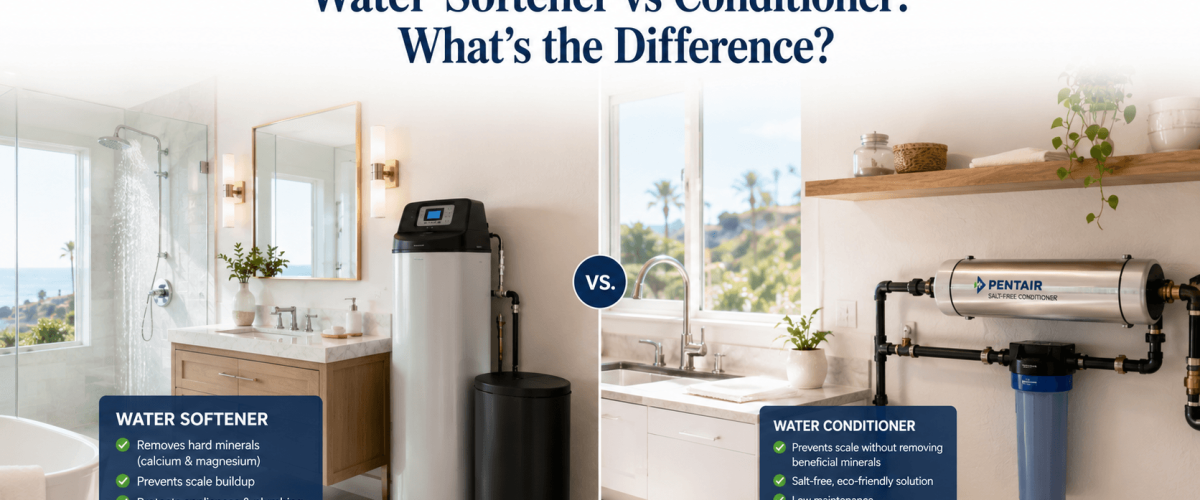
If you’re comparing a water softener vs conditioner in Orange County, the biggest difference is this: a water softener removes hardness minerals like calcium and magnesium from the water, while a water conditioner typically changes how those minerals behave without actually removing them. Both technologies may have a place depending on your goals, but they are not the same thing. The best choice depends on your water chemistry, plumbing, appliances, and what you’re trying to accomplish.


Water Softeners vs Conditioners Orange County

Here’s a truth that confuses more Orange County homeowners than almost any other water treatment topic: Many people think water softeners and water conditioners are the same thing. They’re not and that misunderstanding has cost some homeowners thousands of dollars.

I’m Brian McCowin. My family has been helping Orange County homeowners solve water problems since 1972.Over the years, I’ve had countless homeowners call us after buying a “salt free water softener” online. A few months later, they’re frustrated because the water spots are still there, the scale buildup is still growing, and the fixtures still look the same. And they unable to figure out why.

The reason is simple. Many of those systems weren’t actually water softeners but they were water conditioners. Now, that doesn’t automatically make them bad products. But it does mean they work differently. And if you don’t understand the difference before you buy, you may end up solving the wrong problem. Let’s clear up the confusion.


What is a water softener?

A water softener is a treatment system designed to remove hardness minerals from water.

The primary minerals involved are:

  • Calcium
  • Magnesium

These minerals are responsible for what we commonly call hard water. A traditional water softener works through a process called ion exchange. Without getting overly technical, the system removes hardness minerals before the water travels through your home. The result is water that contains significantly fewer hardness minerals.

This is why water softeners are often used to help address:

  • Scale buildup
  • Hard water spots
  • Appliance efficiency concerns
  • Soap performance issues

What is a water conditioner?

A water conditioner is a treatment system that generally changes how hardness minerals behave rather than removing them. This is where many homeowners get confused. The hardness minerals remain in the water. The goal is to reduce some of the effects associated with those minerals.Different conditioning technologies use different approaches.

Depending on the product, manufacturers may market benefits related to:

  • Scale management
  • Plumbing protection
  • Maintenance reduction

However, the minerals themselves typically remain present in the water. That’s a very important distinction.


What is the difference between a water softener and a water conditioner?

The biggest difference is whether hardness minerals are removed from the water.

Here’s a simple comparison:

Water SoftenerWater Conditioner
Removes hardness mineralsTypically does not remove hardness minerals
Uses ion exchange technologyUses alternative conditioning technologies
Reduces calcium and magnesium levelsChanges how minerals behave
Addresses traditional hard water concernsFocuses on conditioning rather than removal
Water chemistry changes significantlyWater chemistry changes differently

Neither approach is automatically right or wrong. The question is which approach best matches your goals.


Why is this especially important in Orange County?

Orange County is known for having hard water. This is one of the most common water quality concerns we encounter.

Homeowners frequently notice:

  • White scale buildup
  • Water spots on glass
  • Mineral deposits around fixtures
  • Reduced appliance efficiency

Because hard water is so common in Southern California, understanding the difference between softening and conditioning becomes particularly important.

The solution you choose should match the problem you’re trying to solve.


Which is better: a water softener or a water conditioner?

Neither system is universally better. The better system is the one that aligns with your home’s water conditions and treatment goals. This is where many homeowners get frustrated.

They search online, read reviews, and watch videos. And discover people passionately arguing for both sides. The reality is simpler. Before asking which technology is better, ask: “What am I trying to accomplish?”

Different goals may lead to different recommendations. That’s why professional testing matters.


Will a water conditioner eliminate hard water spots?

Some homeowners choose water conditioners to help manage scale-related concerns, but expectations should be based on how the specific technology works. This is where marketing often creates confusion.

Many homeowners assume scale buildup, water spots, and hard water issues will completely disappear. Those expectations may not always match reality. Understanding exactly what a system is designed to do is one of the most important parts of the buying process.


Can a water softener help protect appliances?

Yes. Many homeowners install water softeners partly to help protect plumbing systems and water-using appliances.

Common examples include:

  • Water heaters
  • Dishwashers
  • Washing machines
  • Coffee makers
  • Ice makers

Hard water minerals can contribute to scale accumulation over time. Reducing those minerals may help improve long term equipment performance and efficiency. This is one reason softeners remain popular throughout Orange County.


Why do different water companies recommend different solutions?

Many water companies only sell one type of equipment. This creates one of the biggest challenges homeowners face. Imagine visiting a dealership that only sells sports cars. Even if you need a truck, they’re probably going to recommend a sports car.

At McCowin Water, we’re like an Auto Mall for water treatment.

We’re not tied to one manufacturer. We carry a broad range of premium technologies because every home’s water is different. Some homeowners benefit from softening. Some may prefer conditioning while others might need a combination approach.

The recommendation should come from the water and not the inventory itself.


How do I know which option is right for my home?

The best way to determine whether a softener or conditioner makes sense is through professional water testing.

Before investing in equipment, you should know:

  • How hard your water is
  • What concerns exist
  • What treatment goals you have
  • Which technologies fit those goals

Without testing, homeowners are often guessing but with testing, they’re making informed decisions. That’s a much better strategy.


Why is testing more important than shopping for equipment?

Testing tells you what problem you’re actually solving.

A professional evaluation helps answer important questions:

  • How hard is my water?
  • What is causing my concerns?
  • Which treatment technologies make sense?
  • Which options may be unnecessary?

Once you understand the water, choosing equipment becomes much easier and much less expensive.


What is the smartest first step before choosing a softener or conditioner?

The smartest first step is scheduling a professional in-home water test. And not comparing marketing claims, watching online sales videos, or relying on assumptions.

Start with facts, because the right treatment system begins with understanding your water.


The McCowin Promise

For more than fifty years, we’ve helped Orange County homeowners separate water treatment facts from water treatment marketing.

Water Softeners vs Conditioners Which Is Right for Your Home

“If the system we install doesn’t perform the way we promised… If your water doesn’t taste, feel, or behave the way we said it would… We’ll pull the whole system out. And either replace it or make it right. No fine print. Because your trust is worth more than the sale.”


Schedule Your Free, In-Home Water Test

If you’re comparing a water softener vs conditioner in Orange County, don’t start with product brochures. Start with your water.

We do NOT send tests out to a lab and make you wait.

We perform professional, on-site testing right at your kitchen sink. We’ll show you exactly what’s in your water, explain how softeners and conditioners differ, and provide honest recommendations with absolutely zero sales pressure.

Call us at (949) 569-5736 or Schedule a Free, In-Home Water Test today and discover which solution truly fits your home’s needs.

CSLB: C-55 #1022717

  1. What is a water softener?

    A water softener is a treatment system that removes hardness minerals such as calcium and magnesium from water through an ion exchange process. It is commonly used to address hard water concerns and reduce scale buildup.

  2. What is the difference between a water softener and a water conditioner?

    A water softener removes hardness minerals from water, while a water conditioner typically changes how those minerals behave without removing them. The two technologies address hard water differently.

  3. How do I know whether I need a water softener or a water conditioner?

    The best way to determine which option is appropriate is through professional water testing. Testing helps identify water hardness levels, treatment goals, and which technology best matches the homeowner’s needs.

What You’ll Notice Within
24 Hours
of the Right System