


By Brian McCowin, McCowin Water. Serving Irvine and Orange County since 1972.
You fill a glass of water before heading out for the day, but something about the taste seems different. Perhaps the water has a faint chemical smell, or your morning coffee does not taste quite the same. You check the faucet, the glass, and even the filter in your refrigerator, but nothing seems obviously wrong.
A question then comes up: “What is chloramine in drinking water, and could it be affecting the water in my home?” Chloramine is a disinfectant used by some water suppliers to help protect drinking water as it travels through pipes to homes and businesses. It is made by combining chlorine with ammonia. Like chlorine, it helps control harmful microorganisms, but it behaves differently in water and can be harder to remove with certain basic filters.
Understanding that difference helps homeowners make better decisions about water filtration.
What Is Chloramine In Drinking Water?
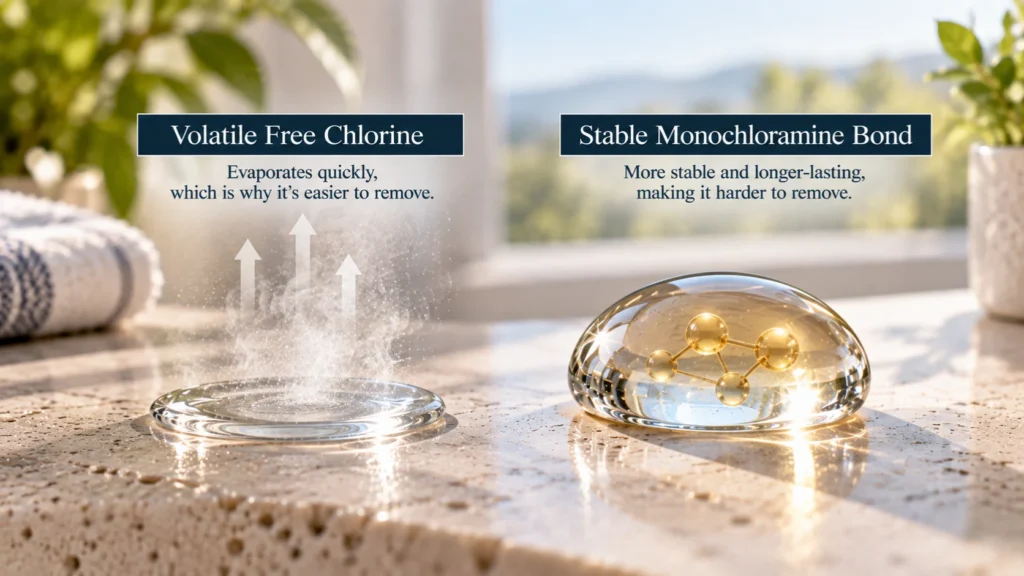
Chloramine is a chemical disinfectant used to help keep drinking water safe as it moves through a public water system. The most common type used for this purpose is called monochloramine. Water suppliers use disinfectants because water can travel a long way before it reaches your home. Without protection during that journey, harmful microorganisms may enter or multiply within the distribution system. Chloramine is often used because it remains active in water for longer than free chlorine. This helps maintain disinfection as water moves through public pipes.
Imagine putting a protective seal on a package before sending it across the country. The seal helps protect the contents during the journey, not just at the moment the package leaves the warehouse. Chloramine serves a similar protective purpose as treated water travels from the supplier to your tap. The presence of chloramine does not automatically mean that your water is unsafe. Drinking water treated with chloramine within applicable regulatory limits is considered safe for normal household uses.
Why Do Water Suppliers Use Chloramine?
Chlorine and chloramine both help control harmful microorganisms in drinking water, but they behave differently. Free chlorine works quickly, while chloramine remains stable for longer periods. This lasting effect can help water suppliers maintain protection across large distribution networks.
Chloramine is also used by some water systems to help manage certain disinfection byproducts that can form when disinfectants react with naturally occurring materials in water. The choice between chlorine and chloramine depends on the water supplier’s treatment process, water sources, distribution network, and regulatory requirements. For homeowners, the main point is simple. Chloramine is not added to make water taste different. It is used to help protect water quality as the water travels through the system.
Why Can Chloramine Affect The Taste of Tap Water?
Some homeowners notice a change in taste or smell when their water contains chloramine. Others may not notice any difference at all. The experience can depend on the water chemistry, the concentration of the disinfectant, the condition of the plumbing, and personal sensitivity to taste and odor.
You may notice it when you fill a glass at the kitchen sink, make tea, or prepare your morning coffee. The smell may remind you of a swimming pool, although chloramine-treated water does not always have the same smell as heavily chlorinated pool water. Coffee is a useful example because water makes up most of the finished drink. Even when you use high-quality coffee beans, an unwanted taste in the water can affect the final cup. The same applies to cooking, drinking, and preparing food.
If the taste or odor bothers you, the next step is to identify whether chloramine is responsible and whether the right filtration system can reduce it.
Can a Regular Water Filter Remove Chloramine?
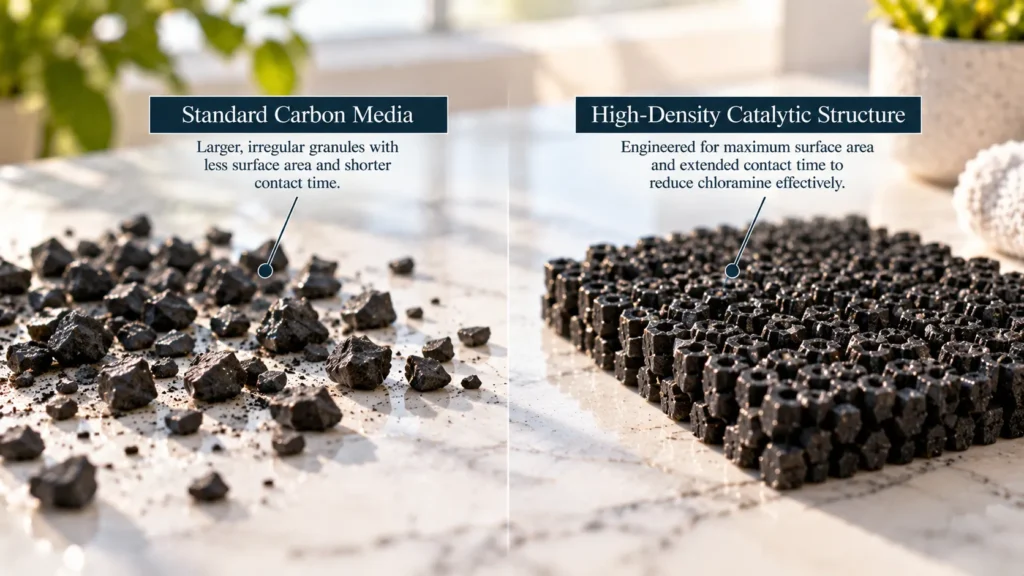
Not every water filter is designed to remove chloramine. Some basic carbon filters can reduce chlorine, but chloramine is more difficult to remove. A filter that works well for chlorine may not provide the same results when chloramine is present.
The type of carbon, the amount of filtration media, the contact time, and the overall system design can all affect performance. Some systems use specialized filtration media or multiple treatment stages to target chloramine. This is why reading the word “carbon” on a filter package is not always enough.
Think of two cleaning products. One is designed to remove grease from a kitchen surface, while the other is designed to remove limescale from a bathroom fixture. Both are cleaning products, but they are not interchangeable. Water filters work in much the same way. The equipment needs to be designed for the substance you want to reduce. Homeowners should look for clear performance information and relevant certification when choosing a product that claims to reduce chloramine.
Does Reverse Osmosis Remove Chloramine?
Reverse osmosis is useful for reducing many dissolved substances, but reverse osmosis alone should not automatically be treated as a complete chloramine solution. Chloramine can pass through some reverse osmosis systems unless the system includes suitable pretreatment. A properly designed system may use carbon or other treatment stages before the reverse osmosis membrane to help protect the membrane and address disinfectants in the water.
The design matters more than the name of the equipment. A reverse osmosis system installed without considering the home’s water chemistry may not deliver the results the homeowner expects. Testing the water and reviewing the equipment specifications can help determine which treatment stages are appropriate.
Does Chloramine Affect the Whole House?
Chloramine is present in the water entering the property, so it can reach multiple fixtures throughout the home. A small filter installed beneath the kitchen sink treats only the water supplied to that particular fixture. It may be suitable for a household that mainly wants to improve drinking and cooking water.
A whole-home filtration system takes a different approach. It treats water at the main entry point before it travels through the home’s plumbing. The system can therefore address water used in bathrooms, showers, laundry rooms, and other connected fixtures, depending on its design.
The right choice depends on what you want to improve. If the main concern is the taste of drinking water, point-of-use filtration may be sufficient. If you want to address chloramine throughout the property, a whole-home system designed for that purpose may be more appropriate.
Start with the water before choosing a filter
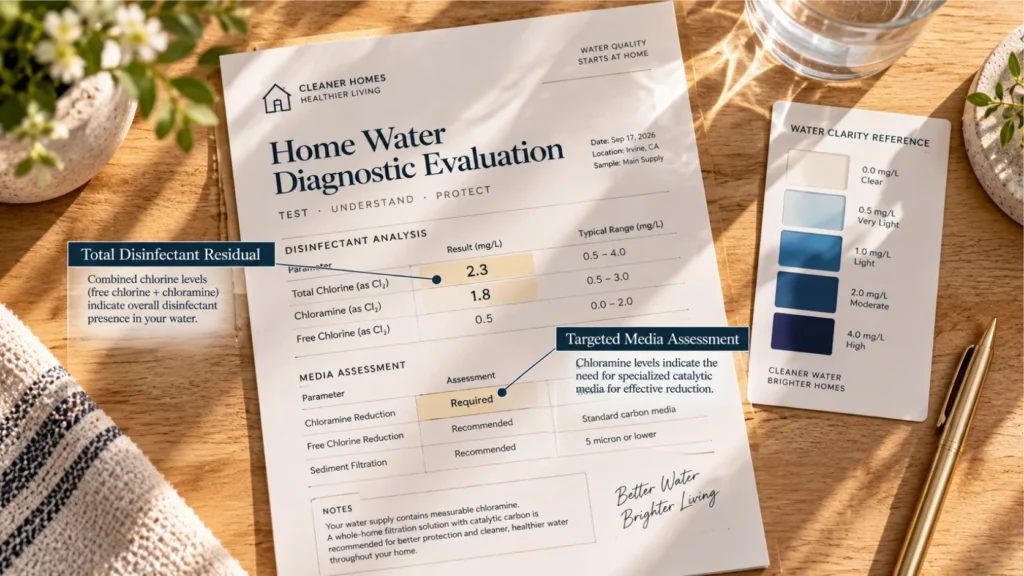
A homeowner may spend hours comparing filter brands and reading product descriptions without knowing whether chloramine is actually the main concern. A professional water test and in-home assessment can help clarify the situation. The process should consider the water entering the property, the existing plumbing, the household’s water usage, and the results you want from filtration.
A home with a strong chlorine-like smell may need a different solution from a home with sediment or hard water. A filter designed for chloramine may not solve mineral scale, and a water softener is not designed to remove chloramine. Each water concern requires the right treatment approach.
Why Irvine Homeowners Have Trusted The McCowin Family Since 1972
For more than fifty years, the McCowin family has been installing and caring for Orange County’s water systems. The process begins by understanding the water and listening to what homeowners notice in their daily routines. A homeowner in Irvine may have different concerns from someone in Newport Beach, Tustin, or Laguna Niguel. Household size, plumbing, water usage, and the type of municipal water supply can all influence the right recommendation.
We’re a licensed California water treatment contractor (CSLB C-55 #1022717), serving Irvine and the surrounding communities: Tustin, Santa Ana, Newport Beach, Costa Mesa, Lake Forest, Mission Viejo, Orange, Anaheim, Huntington Beach, Fountain Valley, Yorba Linda, Laguna Niguel, Laguna Hills, Aliso Viejo, Rancho Santa Margarita, San Juan Capistrano, and San Clemente.
The goal is not to add equipment simply because it is available. The goal is to identify the concern and choose a system that is designed to address it.
The McCowin Promise
For more than fifty years, we’ve helped Orange County homeowners understand their water through professional testing, honest recommendations, and customized solutions.
“If the system we install doesn’t perform the way we promised… If your water doesn’t taste, feel, or behave the way we said it would… We’ll pull the whole system out. And either replace it or make it right. No fine print. Because your trust is worth more than the sale.”
What the Right Chloramine Filtration System Should Provide
The right system should match the water entering your home and the results you want to achieve. If chloramine affects the taste or smell of your drinking water, a suitable filtration system may help improve the experience. If you want to treat water throughout the house, whole-home equipment designed for chloramine reduction may be worth considering.
Filter maintenance also matters. Filtration media can lose effectiveness over time, particularly when the system handles a large amount of water. Replacing filters according to the manufacturer’s instructions helps support consistent performance.
Book your free, in-home water test today, or call (949) 569-5736.
The first step is to understand your water and choose a filtration system that fits your home.
Frequently Asked Questions
What is chloramine in drinking water?
Chloramine is a disinfectant made by combining chlorine and ammonia. Some water suppliers use it to help protect drinking water as it travels through public pipes.
Is chloramine in drinking water safe?
Drinking water treated with chloramine within applicable regulatory limits is considered safe for normal household uses, including drinking, cooking and bathing.
Why do water suppliers use chloramine instead of chlorine?
Chloramine remains active in water for longer than free chlorine. This helps some water suppliers maintain disinfection as water travels through large distribution systems.
Can a carbon filter remove chloramine?
Some carbon filtration systems can reduce chloramine, but not every carbon filter is designed for that purpose. Performance depends on the type and amount of filtration media and the system’s design.
Can reverse osmosis remove chloramine?
Reverse osmosis alone should not automatically be relied on to remove chloramine. A system may require suitable pretreatment to address chloramine and protect the reverse osmosis membrane.