
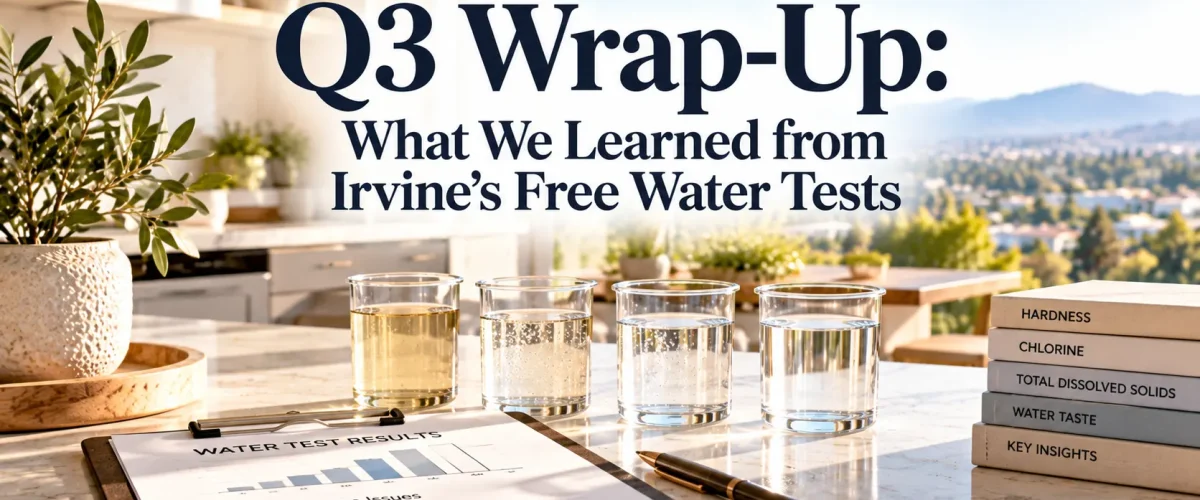

By Brian McCowin, McCowin Water. Serving Irvine and Orange County since 1972.
If you’re wondering what to expect from a water test in Irvine, the process is simpler than most homeowners imagine. During a free in-home water test in Irvine, we look at your water, check for common quality concerns, explain what the results mean, and help you understand whether any treatment is needed. You don’t need to know anything about water chemistry before we arrive. The purpose of the visit is to give you a clearer picture of the water coming into your home.
Over the past few months, we’ve had conversations with Irvine homeowners who had all sorts of questions. Some noticed white spots on their shower glass. Others were concerned about the taste of their drinking water, while a few simply wanted to know what was coming out of their taps. Interestingly, many had lived with these concerns for years without knowing what was causing them. A water test is a good place to start.
Why do homeowners get their water tested?
Most people don’t think much about their water until something changes. A glass of water tastes different, soap stops lathering properly, or mineral spots keep appearing on bathroom fixtures. Sometimes the signs are obvious. Sometimes there is no visible indication of a water-quality concern at all.
A home water test helps move the conversation beyond guesswork. Instead of buying a filter because a neighbour recommended it or choosing a softener because of hard-water stains, you can first understand what is happening with your own water.
For Irvine homeowners, this is particularly useful because water conditions can vary with the supply, plumbing, and treatment setup in an individual home. Two houses in the same neighbourhood may not have identical water concerns.
What happens when we visit your home?
The first part of a water test is simply a conversation. We usually begin by asking what prompted you to schedule the visit. Have you noticed a change in taste? Are there white deposits around your faucets? Does your water leave spots on glassware? Are you concerned about what your family drinks? These details help us understand what you want to investigate.
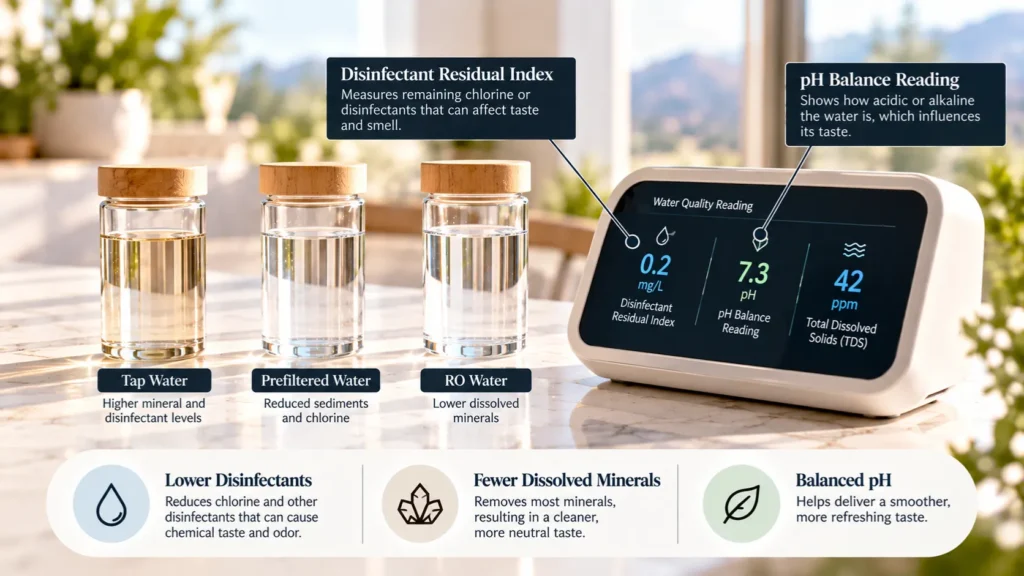
Next, we look at the water itself and carry out the relevant checks. Depending on the equipment and testing method, this may include checking water hardness, pH, chlorine levels, and other selected water-quality indicators.
The exact checks depend on the reason for the visit. There is little value in running through a collection of measurements without understanding what questions they are supposed to answer.
What does a water test actually check?
This is usually where homeowners become more curious. They want to know what the numbers mean and whether something in their water needs attention.
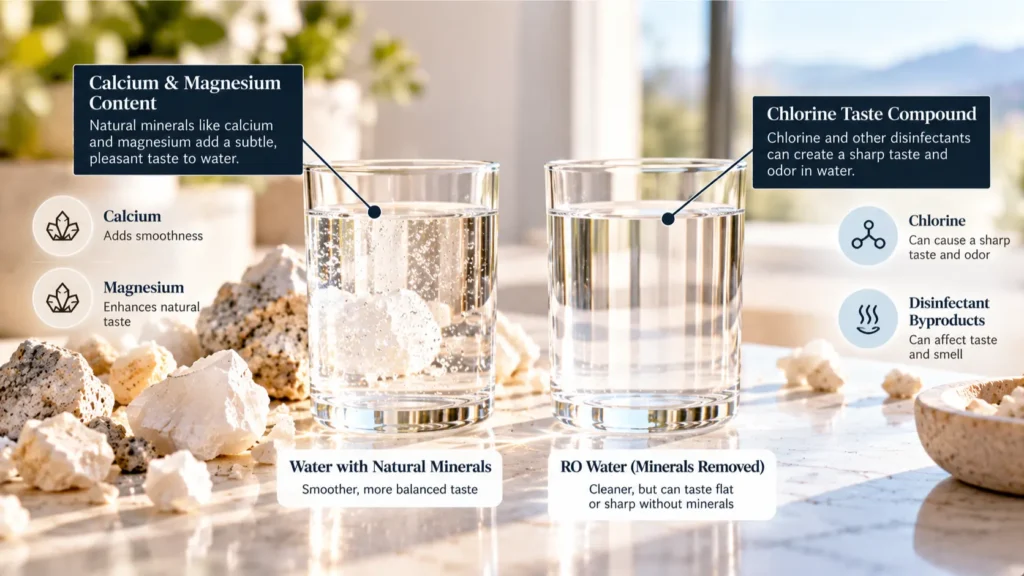
Water hardness tells us about the presence of dissolved calcium and magnesium. Higher hardness can contribute to scale on faucets, shower glass, water heaters, and other surfaces. It can also affect how soap behaves.
Chlorine levels help us understand the disinfectant present in the water. Chlorine is commonly used in municipal water treatment, but some homeowners notice its taste or smell more than others.
pH indicates how acidic or alkaline the water is. It is one part of understanding water chemistry and can help provide context when evaluating potential plumbing or water-quality concerns.
Other tests may be appropriate depending on the home, the water source, and the homeowner’s specific concerns. For example, a standard in-home screening is not the same as a comprehensive laboratory analysis for every possible contaminant. This distinction is important. A useful water test should make clear what was measured, what was not measured, and what the results can actually tell you.
What happens after the test?
Once the checks are complete, we go through the findings with you. This is often the most useful part of the visit because a number on a testing device doesn’t mean much until someone explains it in the context of your home.
For example, if the water has elevated hardness, we’ll explain what that can mean for your fixtures, plumbing, and appliances. If chlorine is the main concern, we’ll discuss how carbon filtration works and where it may be useful.
If you’re considering drinking-water treatment, we can explain where reverse osmosis fits into the picture and what it is designed to reduce.
The aim is to connect the results with the concerns you originally brought up. You should leave the conversation understanding your water better, not feeling overwhelmed by technical terms.
Will you be asked to buy a water treatment system?
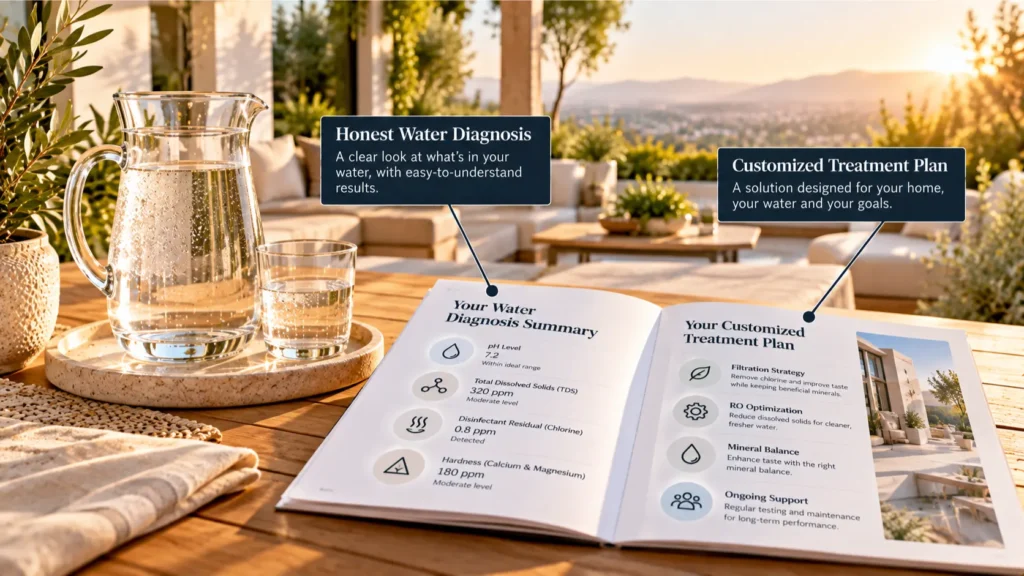
A water test should help you make an informed decision. It should not leave you feeling that you must purchase equipment simply because someone has tested your water. Sometimes the results point towards a treatment option. A water softener may be worth considering for a home with a hard-water problem. Carbon filtration may help when chlorine taste or odor is the main concern. Reverse osmosis may be appropriate when you want additional treatment for drinking and cooking water.
Other times, the results may show that a particular concern does not require the system you had in mind. We believe homeowners should understand the reason behind a recommendation before deciding whether to move forward. The equipment should match the water, not the other way around.
How should you prepare for a free in-home water test?
You don’t need to do much before the appointment. Think about the things you’ve noticed around your home. Perhaps your shower glass develops white marks, your water has an unusual taste, or your appliances seem to collect scale more quickly than expected. It also helps to know whether your home uses municipal water or a private well, if applicable, and whether you already have a water softener or filtration system installed.
If you have an existing system, let us know when the filters were last replaced, if you know. This can help put the results into context. Most importantly, bring your questions. You don’t need to prepare a list of technical terms or understand filtration equipment before the visit.
What a water test cannot tell you
A quick in-home water test is useful, but it has limits. It does not automatically identify every possible contaminant, determine the complete chemical composition of your water, or replace certified laboratory testing where that level of analysis is needed.
For instance, if you have a specific concern about lead, bacteria, or another contaminant that requires specialised testing, additional sampling and laboratory analysis may be necessary. A responsible assessment should explain these limitations rather than suggest that a handful of readings tells you everything about your water.
Understanding what to expect from a water test is just as important as understanding the results themselves.
Why Irvine homeowners have trusted the McCowin family since 1972
I’m Brian McCowin. My family has been solving water problems in Orange County since 1972, one home and one honest answer at a time. Our approach has always started with testing, diagnosis, and education. We want to understand what is happening before recommending equipment. A water softener, whole-home filtration system, or reverse osmosis unit should have a clear purpose in your home.
When homeowners ask what to expect from a water test, our answer is simple: expect an honest conversation, an explanation of the findings, and guidance based on your actual water conditions.
We’re a licensed California water treatment contractor (CSLB C-55 #1022717), serving Irvine and the surrounding communities: Tustin, Santa Ana, Newport Beach, Costa Mesa, Lake Forest, Mission Viejo, Orange, Anaheim, Huntington Beach, Fountain Valley, Yorba Linda, Laguna Niguel, Laguna Hills, Aliso Viejo, Rancho Santa Margarita, San Juan Capistrano, and San Clemente.
The McCowin Promise
For more than fifty years, we’ve helped Orange County homeowners understand their water through professional testing, honest recommendations, and customized solutions.
“If the system we install doesn’t perform the way we promised… If your water doesn’t taste, feel, or behave the way we said it would… We’ll pull the whole system out. And either replace it or make it right. No fine print. Because your trust is worth more than the sale.”
Let’s take a closer look at your water
You don’t have to wait until mineral deposits become difficult to remove or your drinking water develops an unpleasant taste to understand what’s coming out of your taps.
Book your free, in-home water test today, or call (949) 569-5736.
A free in-home water test is a straightforward way to start. We’ll look at your water, explain the findings, and help you understand whether any treatment makes sense for your home.
Frequently Asked Questions
How long does a free in-home water test take?
The time depends on the concerns being investigated and the checks required. A basic visit generally involves a conversation, selected water-quality checks, and an explanation of the findings.
Is the water test really free?
McCowin Water offers free in-home water testing. You can discuss your water concerns and understand the findings without committing to purchasing a treatment system.
Do I need to prepare anything before the appointment?
No special preparation is usually needed. It helps to think about any taste, odor, staining, or scale concerns you’ve noticed and tell us about existing filtration equipment.
Does a home water test check for every contaminant?
No. The checks performed during an in-home screening depend on the testing method and equipment. Some contaminants require specialised sampling and laboratory analysis.
Will I receive a water treatment recommendation after the test?
If the findings indicate a water-quality concern, we can explain suitable treatment options. Recommendations should be based on the results and your household’s needs rather than a one-size-fits-all system.