


Boiling alone does not reliably remove microplastics in water. It may help reduce some particles under certain conditions, especially in very hard water, but it is not a reliable solution and does not remove nanoplastics or chemical contaminants attached to plastics. The safest way to remove microplastics is with a properly designed home filtration system, not a pot on the stove.
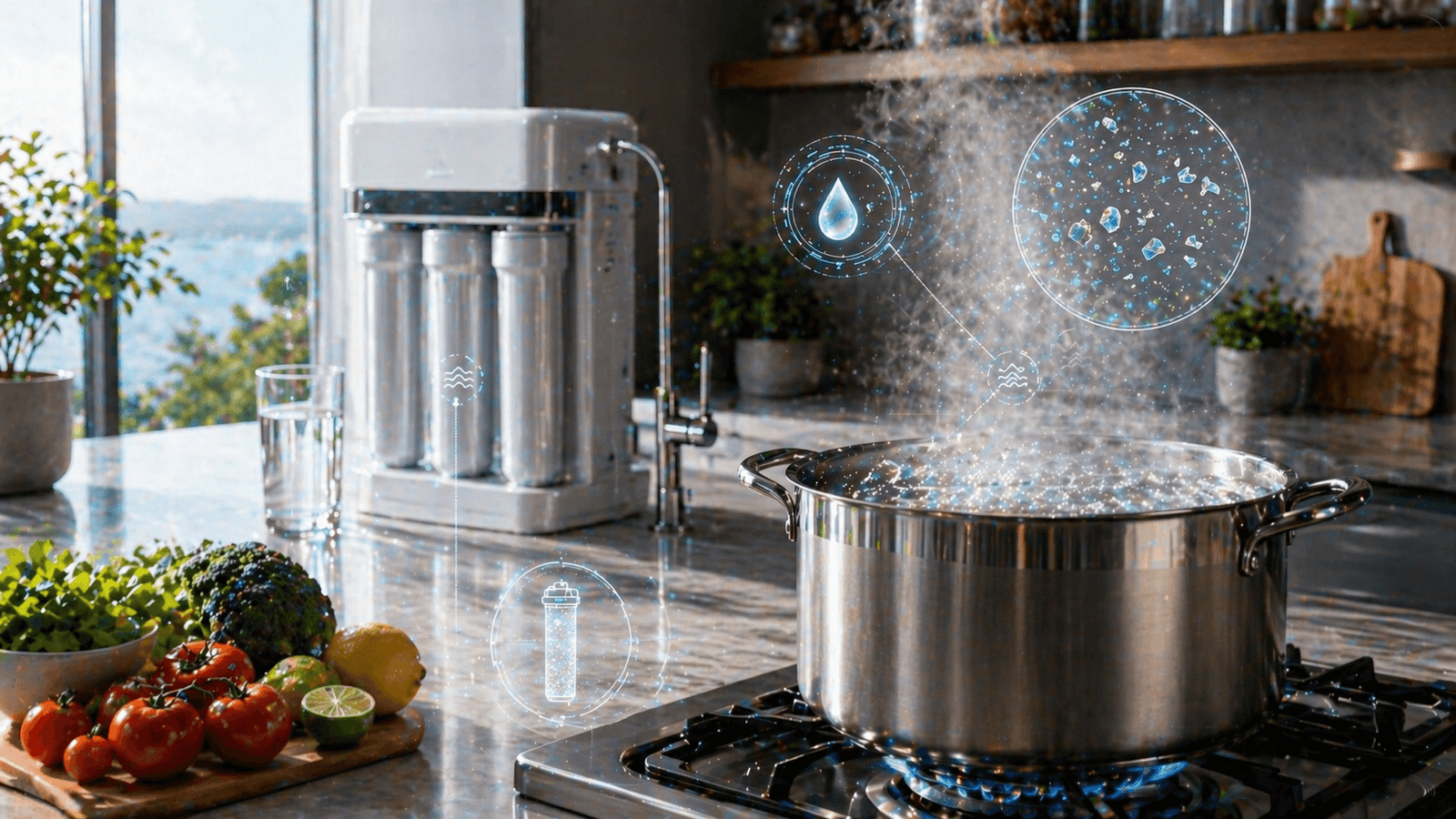
What’s the shocking truth about boiling water?
Boiling water may kill bacteria.
But boiling is not a magic eraser for modern contaminants.
That is where people get misled.
I have been in this business since 1972, and I have watched old survival advice get applied to new problems.
That is dangerous.
Boiling can make unsafe water biologically safer. It does not make contaminated water chemically clean.
Those are two different battles.
Will boiling water remove microplastics from water?
Not reliably. Boiling water does not consistently remove microplastics, especially the smallest particles.
Here is the simple truth:
- It does not filter out most microplastics
- It does not remove nanoplastics effectively
- It does not remove chemicals riding on plastics
Some research suggests boiling hard water may help certain particles clump together and settle. But that is not dependable treatment.
That is not a strategy I would trust for my own family.
Why doesn’t boiling remove microplastics in water?
Because heat is not filtration.
What boiling can do:
- Kill microbes
- Reduce some biological risks
What boiling does not do:
- Capture plastic particles
- Remove dissolved contaminants
- Eliminate PFAS or chemical residues
Trying to remove microplastics by boiling is like trying to remove sand from soup by heating it.
Heat is not separation.
Can boiling water make microplastics in water worse?
Sometimes, yes, it can create new problems. Here is why.
Possible issues:
- Water evaporates while contaminants remain
- The concentration of some contaminants can increase
- If you boil in plastic-containing kettles, you may add exposure. That is the part nobody talks about.
Some “solutions” can move you backward.
Does boiling help with nanoplastics?
No. Boiling does not reliably remove nanoplastics, which may be the bigger concern.
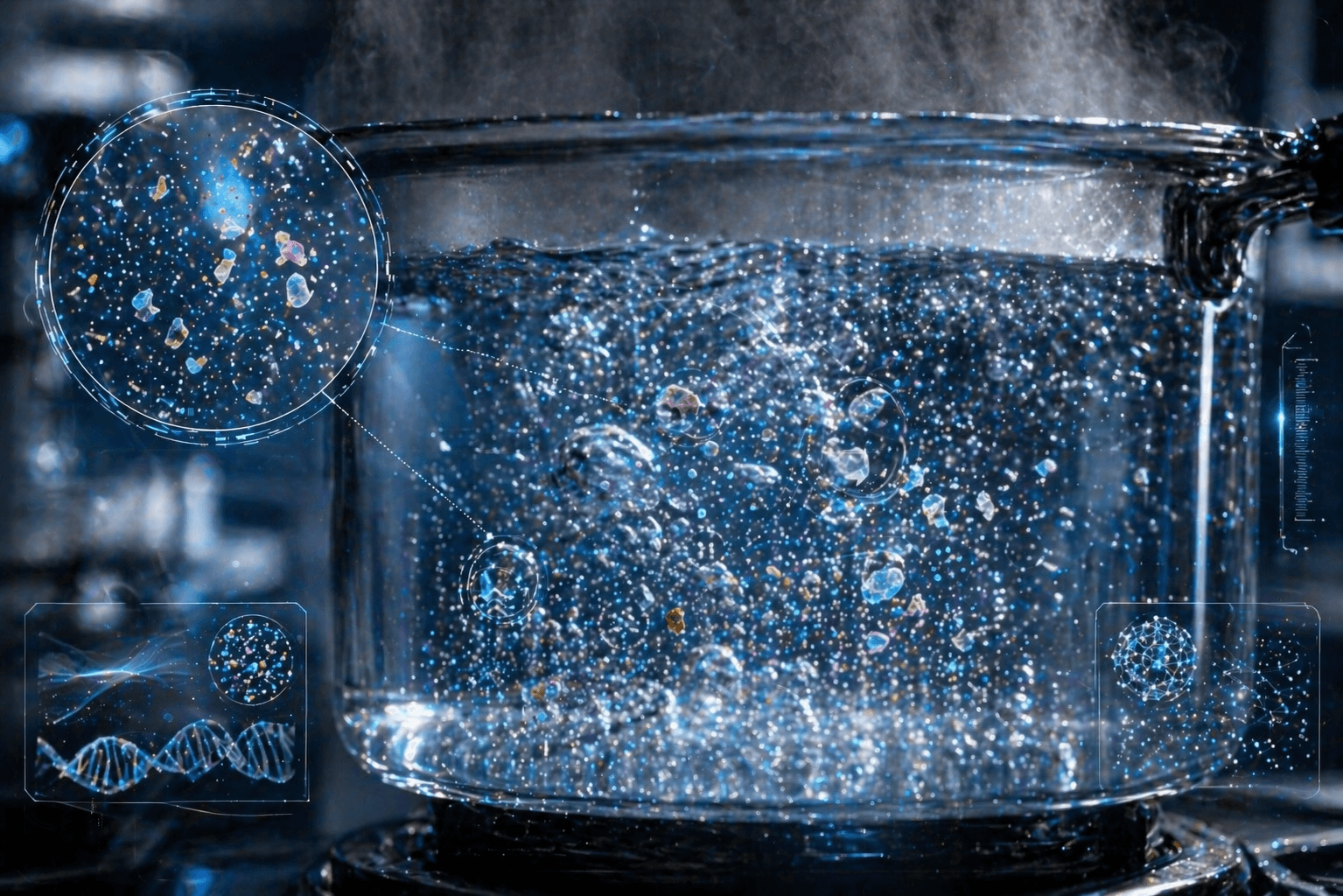
And this matters. Nanoplastics are:
- Smaller than microplastics
- Harder to capture
- More likely to move through the body. These are not contaminants you boil away. They need proper filtration.
What actually removes microplastics in water better than boiling?
This is where real solutions begin.
Effective options:
- Reverse osmosis systems
- Multi-stage filtration
- Whole-home water treatment. Here is how they compare:
| Method | Removes Microplastics | Removes Nanoplastics | Reliable Long-Term Solution |
| ➤ Boiling | Very limited | No | No |
| ➤ Pitcher Filters | Limited | Very limited | No |
| ➤ Refrigerator Filters | Limited | Limited | No |
| ➤ Reverse Osmosis | Very high | High | Yes |
Big difference.
One is kitchen folklore.
One is engineered protection.
Why do people still believe boiling solves this?
Because boiling is used to solve many water problems. And old advice sticks.
I understand why people believe it.
But modern contaminants require modern solutions.
Today’s water problems are not frontier problems.
Plastic pollution did not exist in Grandpa’s well.
What is the safest way to reduce microplastics in water?
Treat your water at the source. That is always the smarter move.
And this is where I explain it the way I have for years.
We are the Auto Mall of water treatment.
We do not push one captive-brand system.
We carry multiple top-tier options so we can fit the right system to your home. Because water in Irvine is not the same as water in Newport Beach or Laguna Niguel. And one-size-fits-all solutions often fail.
How do you know if your water needs treatment?
You test it properly.
We offer a Free, In-Home Water Test where:
- We test your water on-site
- You see results immediately
- We explain what is happening in simple terms
- There is zero sales pressure
And we do not send your water out to a lab and make you wait. You get clarity in real time.
Why trust McCowin Water to solve this?
Because we have been doing this for over 50 years.
And because we put our reputation behind what we install.
“If the system we install doesn’t perform the way we promised… If your water doesn’t taste, feel, or behave the way we said it would… We’ll pull the whole system out. And either replace it or fix it. No fine print. Because your trust is worth more than the sale.”
That is not a slogan. That is our standard.
What should you do next if you are worried about microplastics in water?
Stop relying on boiling. Fix the source.
Call us at (949) 569-5736 or Schedule a Free, In-Home Water Test Today.
You will:
- Learn what is actually in your water
- See solutions tailored to your home
- Get real answers with no pressure
Because your family deserves more than guesswork.
Final Thought
Boiling has its place.
Removing microplastics from water is not that place. For this problem, you need filtration, not folklore.
McCowin Water Solutions
222 Goddard, Irvine, CA 92618
(949) 569-5736
CSLB Licensed C-55 #1022717
Three generations of McCowin Water. Trusted Orange County water expertise since 1972.