


By Brian McCowin, McCowin Water. Serving Irvine and Orange County since 1972.
Reverse osmosis removes many dissolved substances from water, including a wide range of minerals, salts, metals, and other contaminants, depending on the membrane and overall system design. Unlike a basic carbon filter that mainly targets taste, odor, and certain chemicals, an RO system uses a semipermeable membrane to separate water from many dissolved impurities. It can reduce substances such as lead, arsenic, fluoride, nitrate, sodium, and dissolved solids, although the exact performance depends on the system and the water being treated.
That is why reverse osmosis is often used when homeowners want more than improved taste. It is designed to provide a deeper level of filtration for drinking and cooking water. This guide answers the question, “What Does Reverse Osmosis Remove?” and explores common contaminants and dissolved impurities.
How does reverse osmosis remove contaminants?
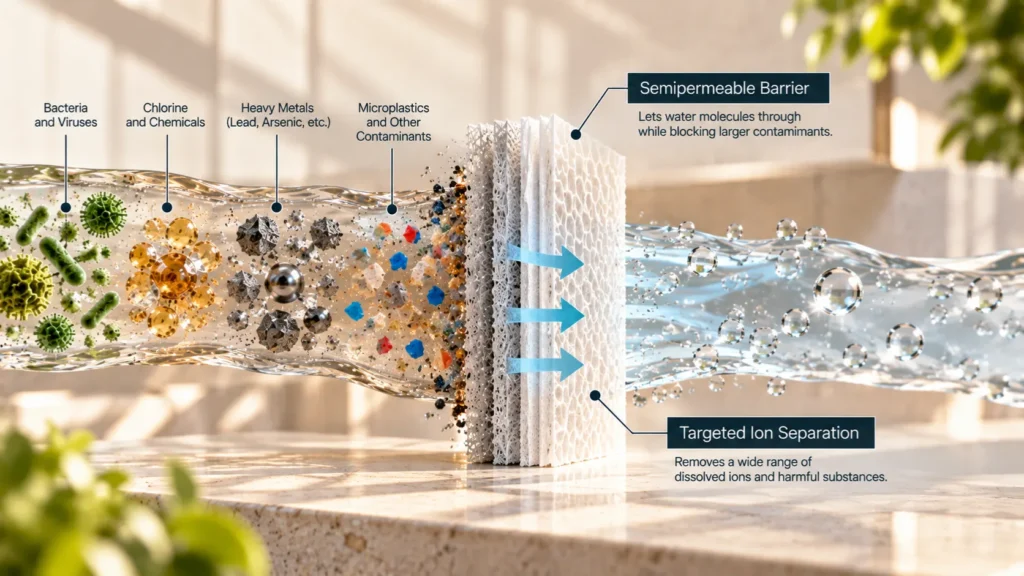
Reverse osmosis works differently from many household filters. Water is pushed through a very fine semipermeable membrane under pressure. Water molecules can pass through the membrane, while many larger dissolved substances are rejected and sent away as wastewater. The membrane is the part that gives reverse osmosis its ability to reduce a broad range of dissolved contaminants.
Most residential RO systems also have other filtration stages before and after the membrane. A sediment filter can capture particles, while carbon filters can help reduce chlorine and improve taste. A final polishing filter may then improve the taste of the treated water before it reaches the faucet. The result is not simply “filtered water.” It is water that has gone through several different treatment steps, each with a particular job.
What does reverse osmosis remove?
One of the biggest differences between reverse osmosis and a standard carbon filter is its ability to reduce many dissolved minerals. RO can reduce minerals such as calcium, magnesium, sodium, and other dissolved salts. This can be useful when the goal is to reduce total dissolved solids or address specific dissolved substances in drinking water.
It is also important to understand that removing minerals is not automatically better for every household water application. Calcium and magnesium are responsible for hardness, so an RO system can reduce hardness in the water it treats. However, an under-sink RO system only treats the water sent through that particular system. It does not soften all of the water entering your home. For whole-home hard water, a water softener may be a more appropriate treatment because it is designed specifically to address hardness throughout the house.
Does reverse osmosis remove fluoride?
Reverse osmosis can reduce fluoride from water. The effectiveness depends on the RO membrane, system design, operating conditions, and the concentration entering the system. This is why it is important to look at the specifications of the actual system rather than assuming every RO unit performs identically.
For homeowners specifically concerned about fluoride, testing the source water and choosing an RO system designed to address the concern is a better approach than choosing a system simply because it has several filtration stages. The number of stages does not tell you everything about how well an RO system performs.
Does reverse osmosis remove lead and other metals?
Reverse osmosis can reduce several metals from water, including lead, depending on the system and membrane performance. This is one reason RO is often considered for drinking and cooking water when homeowners want additional treatment beyond conventional filtration.
However, the presence of a particular contaminant should ideally be confirmed through testing. A treatment system should be selected according to what is actually present in the water rather than based on a long list of possible contaminants. If a homeowner is concerned about a specific substance, the question should not simply be, “Does RO remove it?” It should also be, “Does this particular RO system reduce it effectively under my home’s conditions?”
Does reverse osmosis remove chlorine?
Chlorine is generally handled by the carbon filtration stages found in many RO systems rather than by the RO membrane itself. This is an important distinction. The carbon prefilters help protect the membrane while also reducing chlorine and certain compounds that can affect taste and odor.
The RO membrane then performs the deeper separation of many dissolved substances. This is why a properly designed reverse osmosis system is more than just one membrane. The different stages work together.
Does reverse osmosis remove bacteria and viruses?
Reverse osmosis membranes can provide a significant barrier to many microorganisms because of the extremely small structure of the membrane. However, an RO system should not automatically be considered a complete disinfection system for every water source. The source of the water matters.
A residential system connected to treated municipal water is a different situation from a private water source with known microbiological concerns. If bacteria or viruses are a concern, water testing and appropriate disinfection should be considered alongside RO. RO is a powerful treatment technology, but it should be matched to the actual water problem.
Does reverse osmosis remove everything from water?
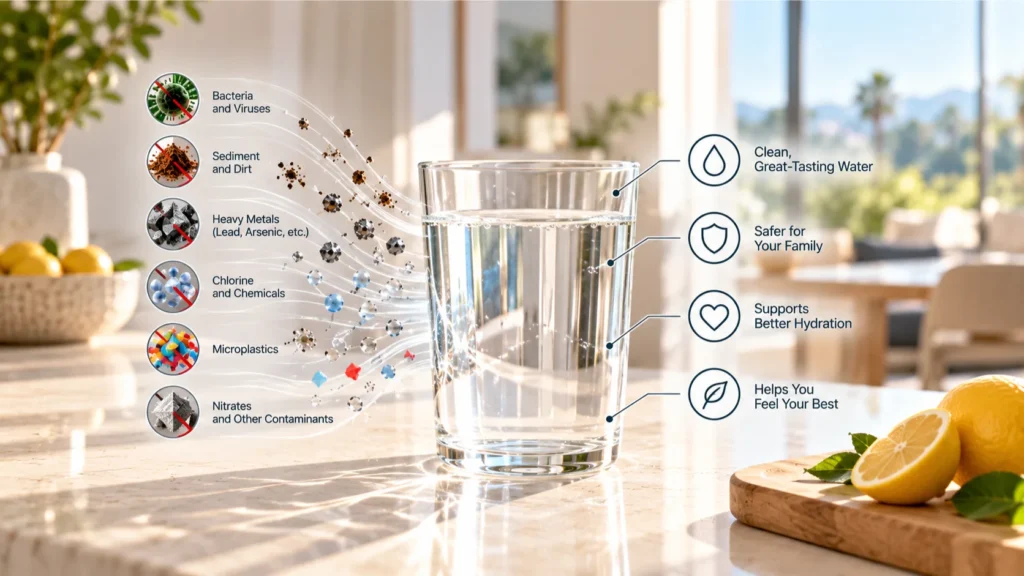
No. This is one of the most important things to understand about reverse osmosis. RO can reduce a broad range of dissolved substances, but no residential treatment system should be described as removing absolutely everything.
Performance varies according to the membrane, water chemistry, pressure, temperature, system condition, and the specific contaminant. The filters surrounding the membrane matter too. A neglected prefilter can affect overall system performance, while an old membrane may not perform as well as a properly maintained one. Good water treatment starts with knowing what you are trying to remove.
What does reverse osmosis not remove well?
Reverse osmosis is not designed to solve every possible water problem. Some substances may require different treatment technologies, and some contaminants may require a combination of treatment methods. RO also produces wastewater as part of the separation process. The amount varies between systems and operating conditions.
It is also important to remember that an under-sink RO system does not treat every faucet in your home. The treated water normally goes to a dedicated drinking water faucet and may also supply an appliance such as a refrigerator. If your concern is whole-home water quality, you may need a combination of treatment systems rather than relying on RO alone.
Is reverse osmosis good for drinking water?
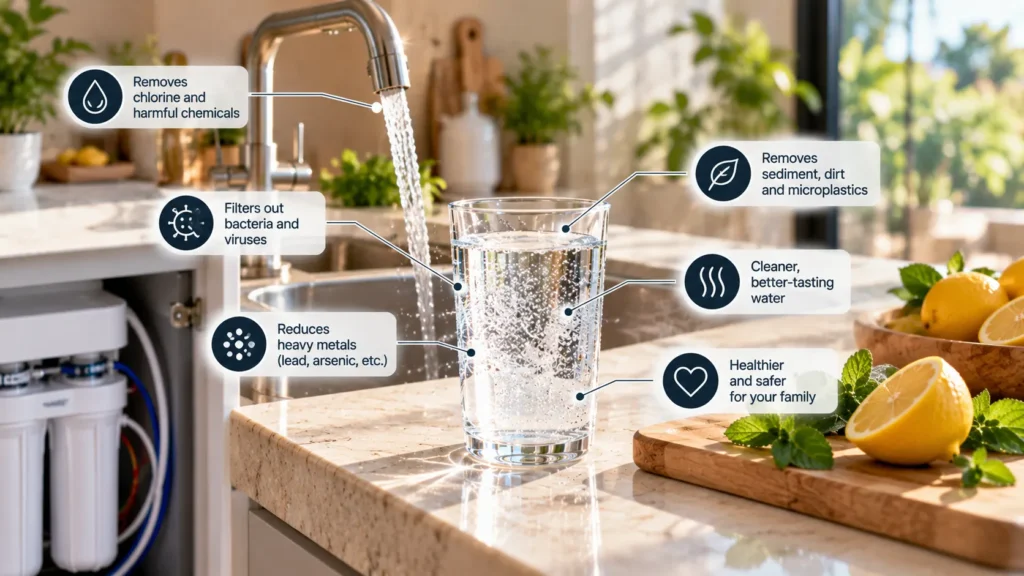
For homeowners who want additional treatment for drinking and cooking water, reverse osmosis can be a useful option. It is particularly relevant when testing shows dissolved substances that you want to reduce or when a homeowner wants a more comprehensive drinking water treatment system.
The key is choosing the system according to the water rather than assuming that the most expensive or highest-stage system is automatically the right one. A good RO system should be matched to the source water, household usage, available installation space, and treatment goals.
Why Irvine homeowners have trusted the McCowin family since 1972
I’m Brian McCowin. My family has been solving water problems in Orange County since 1972, one home and one honest answer at a time. Reverse osmosis is a good example of why this approach matters. There are many different RO systems available, and they do not all perform in exactly the same way. The right choice depends on the water entering your home and what you actually want the system to accomplish.
We start with the water. A free, in-home water test can help identify hardness, dissolved solids, and other characteristics that may influence which treatment approach makes sense. From there, we can explain whether reverse osmosis, whole-home filtration, water softening, or a combination is appropriate.
We’re a licensed California water treatment contractor (CSLB C-55 #1022717), serving Irvine and the surrounding communities: Tustin, Santa Ana, Newport Beach, Costa Mesa, Lake Forest, Mission Viejo, Orange, Anaheim, Huntington Beach, Fountain Valley, Yorba Linda, Laguna Niguel, Laguna Hills, Aliso Viejo, Rancho Santa Margarita, San Juan Capistrano, and San Clemente.
The McCowin Promise
For more than fifty years, we’ve helped Orange County homeowners understand their water through professional testing, honest recommendations, and customized solutions.
“If the system we install doesn’t perform the way we promised… If your water doesn’t taste, feel, or behave the way we said it would… We’ll pull the whole system out. And either replace it or make it right. No fine print. Because your trust is worth more than the sale.”
Find out what your water actually needs
Knowing what reverse osmosis removes is useful, but knowing what is actually in your home’s water is even more important. A water test can help identify whether you need RO and what you want the system to address. It can also prevent you from paying for treatment that does not solve your particular water concern.
Book your free, in-home water test today, or call (949) 569-5736.
If you are considering reverse osmosis for drinking and cooking water, start with the water itself and build the treatment around what you find.
Frequently Asked Questions
What does reverse osmosis remove from water?
Reverse osmosis can reduce many dissolved substances, including various minerals, salts, metals, and other contaminants. The exact substances and reduction levels depend on the membrane and system design.
Does reverse osmosis remove calcium?
Yes. Reverse osmosis can significantly reduce calcium and other dissolved minerals from the water it treats. However, an under-sink RO system does not soften all the water in your home.
Does reverse osmosis remove sodium?
RO can reduce sodium from the water it treats. This is one reason it can be useful when dissolved salts are a concern.
Does reverse osmosis remove fluoride?
Yes, reverse osmosis can reduce fluoride. Performance depends on the specific membrane, system, and water conditions.
Does reverse osmosis remove chlorine?
The carbon filters used with many RO systems are primarily responsible for reducing chlorine. The RO membrane itself is designed mainly to reduce dissolved substances.
Does reverse osmosis make water completely pure?
No residential RO system should be described as removing absolutely everything. RO provides substantial reduction of many dissolved substances, but performance varies by contaminant and system conditions.
Does RO treat all the water in a house?
A typical under-sink RO system treats only the water directed through it. Whole-home water concerns may require other treatment equipment.
Want to understand the different stages of RO filtration? Check out our How Many Stages Does an RO System Have: What Each Stage Really Does for a clear breakdown.