
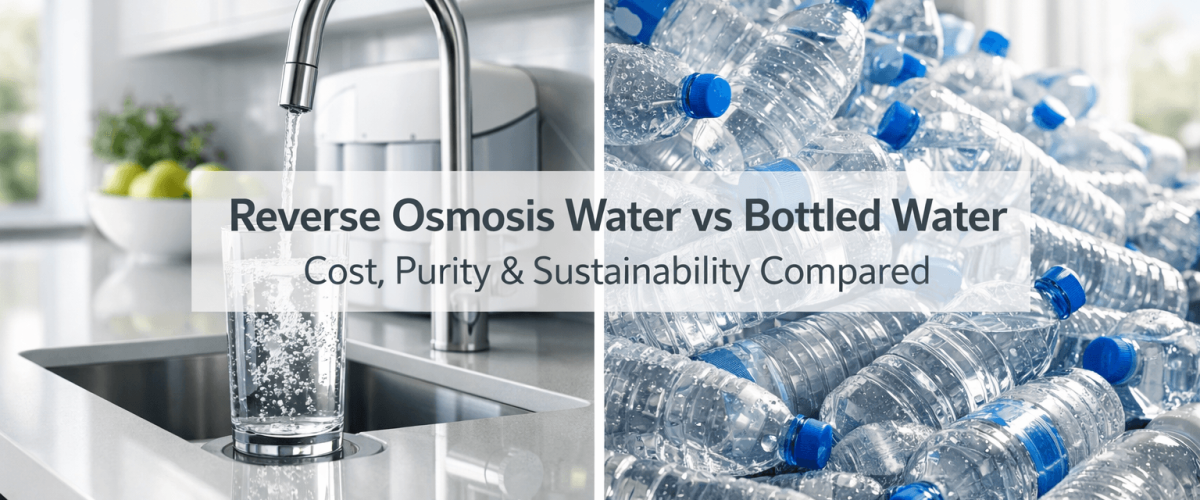

Bottled water feels cheap because you buy it a case at a time. Add those cases up over a year and the picture changes. Here’s an honest way to compare bottled water to a reverse osmosis system, using math you can run yourself.
The short answer: Reverse osmosis makes drinking water for pennies per gallon after it’s installed, while bottled water keeps costing money every single week. For most daily bottled-water households, RO pays for itself and then keeps saving, without the plastic.
The hidden cost of bottled water
The trouble with bottled water is that the cost hides in plain sight. A case here, a flat there, a delivery every couple of weeks. It never feels like much, but it never stops either. And a good share of bottled water is literally reverse osmosis water that someone else made, bottled in plastic, and sold back to you at a markup.
Run your own numbers
Instead of quoting a headline figure, here’s the simple formula. Plug in what’s true for your household:
Your bottled cost: (bottles per day) x (price per bottle) x 365 = what you spend a year.
Then compare that yearly number to a one-time reverse osmosis system plus its annual filter changes. For a household drinking several bottles a day, the yearly bottled number climbs quickly, while the RO water works out to a few cents per gallon after install.
We’re not going to hand you a savings figure with your name on it, because it depends on your habits. But run the formula honestly and most daily bottled-water buyers are surprised how fast the system comes out ahead.
| Factor | Bottled water | Reverse osmosis at home |
|---|---|---|
| Cost over time | Recurring, forever | One-time system, then pennies per gallon |
| Quality control | You trust the label | You control it with fresh filters |
| Plastic waste | Hundreds of bottles a year | None |
| Convenience | Haul, store, and restock | On tap at the kitchen sink |
| Taste | Depends on brand | Clean, with minerals added back |
The convenience nobody prices in
There’s also the hauling, the storage, the running out at the worst moment, and the recycling. An RO tap ends all of that. You turn the handle and clean water is there. For a lot of families, that alone is worth more than the dollar savings.
Vertex IsoTwist reverse osmosis
A five-stage under-sink reverse osmosis system that gives you bottled-quality water at the kitchen tap, with an optional remineralization stage that puts good minerals back for taste.
Keep learning about your water. Start with whether reverse osmosis water is healthy Then the best water filter for drinking. For the full cost breakdown, see what water filtration really costs.
RO vs bottled water: quick answers
Is reverse osmosis cheaper than bottled water?
For most households that drink bottled water daily, yes, and often by a wide margin, because RO costs pennies per gallon once installed. The exact savings depend on how much you drink and what you pay per bottle, so it’s worth running your own numbers.
Is bottled water higher quality than reverse osmosis?
Often it’s the same thing. A lot of bottled water is reverse osmosis water in a plastic bottle. Making it at home gives you the same purity with fresh filters and no plastic.
What about the plastic waste from bottled water?
That’s one of the biggest reasons households switch. An RO system replaces hundreds or thousands of single-use bottles a year with water on tap.
Does reverse osmosis water taste as good as bottled?
With an optional remineralization stage, yes. That optional stage adds the minerals back that give bottled water its taste, so home RO water tastes clean and round, not flat.
See the numbers for your household
A free in-home test confirms whether reverse osmosis fits your water, and we’ll walk through the real cost against what you’re spending on bottled today.
Book your free in-home water test
Prefer to talk it through first? Call us at (949) 569-5736. Family owned in Irvine since 1972, licensed and insured, California CSLB C-55 #1022717, serving all of Orange County.