
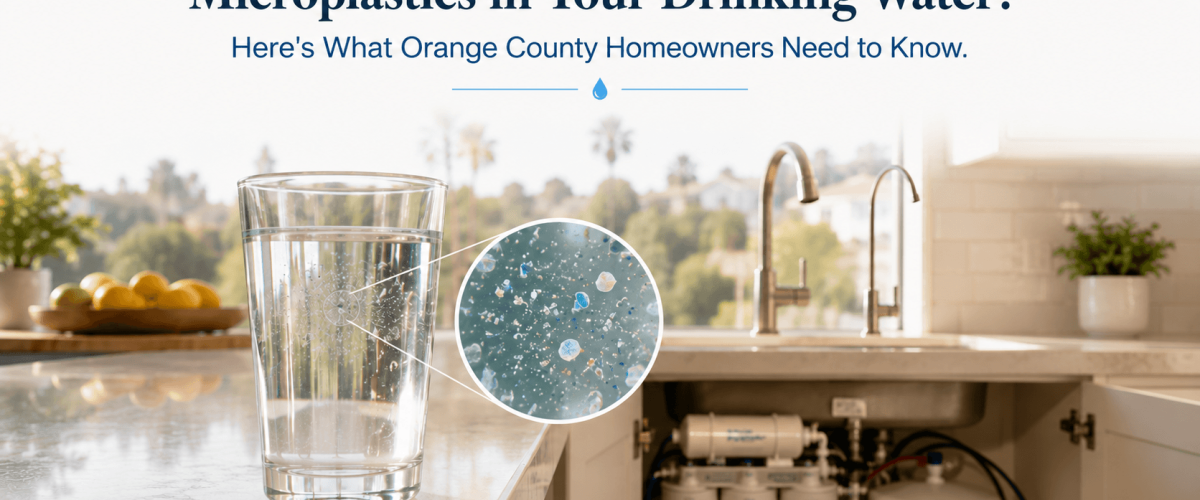

If you’re searching for a microplastics water filter in Orange County, you’re not alone. More homeowners are asking about microplastics in drinking water and what filtration options may help reduce them. While research into microplastics continues to evolve, advanced water treatment solutions such as reverse osmosis and certain multi-stage filtration systems are commonly discussed as potential tools for improving drinking water quality.
The first step is understanding your water through professional, in-home testing and selecting a treatment system based on your home’s specific needs.
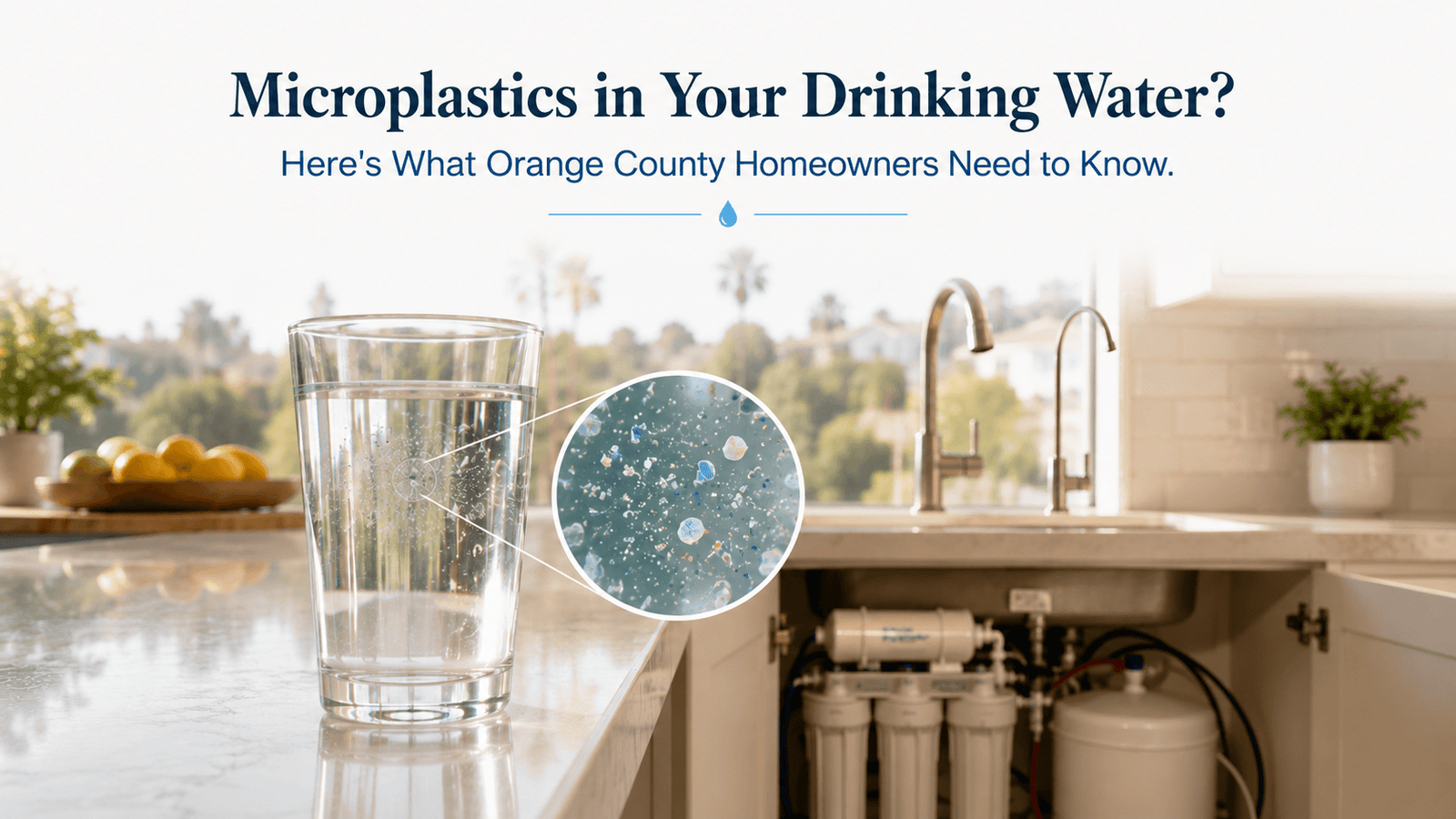
Here’s a truth that sounds like science fiction but isn’t:
Scientists are now finding tiny pieces of plastic in places nobody expected. They’ve been detected in oceans, rivers and rainwater. And yes, sometimes in drinking water.
I’m Brian McCowin. My family has been helping Orange County homeowners solve water problems since 1972.
And over the last few years, one topic has exploded in popularity: Microplastics. Homeowners hear the term on the news, see it online and even hear friends talking about it.
Then they start asking the obvious question: “Should I be concerned about my drinking water?”
That’s a fair question. But here’s the problem. The internet is full of fear. What most homeowners need are facts. Let’s separate what we know, what we don’t know, and what practical steps you can take if you’re concerned about microplastics in your water.
What are microplastics?
Microplastics are extremely small plastic particles that can enter the environment as larger plastic materials break down over time.
Think about all the plastic products used every day:
- Water bottles
- Food packaging
- Synthetic clothing
- Consumer products
- Industrial materials
Over time, larger plastic items can gradually break into smaller and smaller fragments. Some become so small they’re difficult to see with the naked eye. These tiny particles are commonly referred to as microplastics.
Are microplastics found in drinking water?
Researchers have identified microplastics in various water sources around the world, including some drinking water supplies. This is one reason microplastics have become such a major topic of discussion. The important thing to understand is that research is ongoing.
Scientists continue studying:
- Where microplastics come from
- How they move through the environment
- Potential exposure pathways
- Effective treatment technologies
As our understanding evolves, homeowners are naturally becoming more interested in water filtration options.
Why are Orange County homeowners asking about microplastics now?
Public awareness of drinking water quality has increased dramatically in recent years. Between 2023 and 2025, discussions surrounding drinking water quality expanded significantly.
Homeowners began paying closer attention to topics such as:
- PFAS
- Chloramines
- Total dissolved solids
- Emerging contaminants
- Microplastics
The result is that more families are asking questions about what’s actually in their water. And honestly, that’s a good thing because asking questions is how homeowners can make informed decisions.
What is the best microplastics water filter in Orange County?
The best microplastics water filter depends on your home’s water quality, treatment goals, and overall filtration needs. This is where many homeowners become frustrated.
They search online and immediately find hundreds of products claiming to solve the problem. Some are legitimate while some are mostly marketing.
Here’s an insider truth from more than fifty years in the water treatment industry: The best filter isn’t the one with the loudest advertisement. It’s the one that’s properly matched to your water.
Depending on your situation, treatment options may include:
- Reverse osmosis systems
- Multi-stage filtration systems
- Specialized drinking water filtration
- Whole home treatment strategies
- Combination systems
The right answer starts with understanding the water itself.
Can reverse osmosis help reduce microplastics?
Many homeowners explore reverse osmosis because it is one of the most advanced residential drinking water treatment technologies available.
Reverse osmosis works by pushing water through a highly specialized membrane. Think of it like a security checkpoint that’s far more selective than a standard filter. Water molecules pass through and many unwanted materials are left behind.
This is one reason reverse osmosis continues to be one of the most popular options for homeowners seeking advanced drinking water treatment.
Is a refrigerator filter enough to remove microplastics?
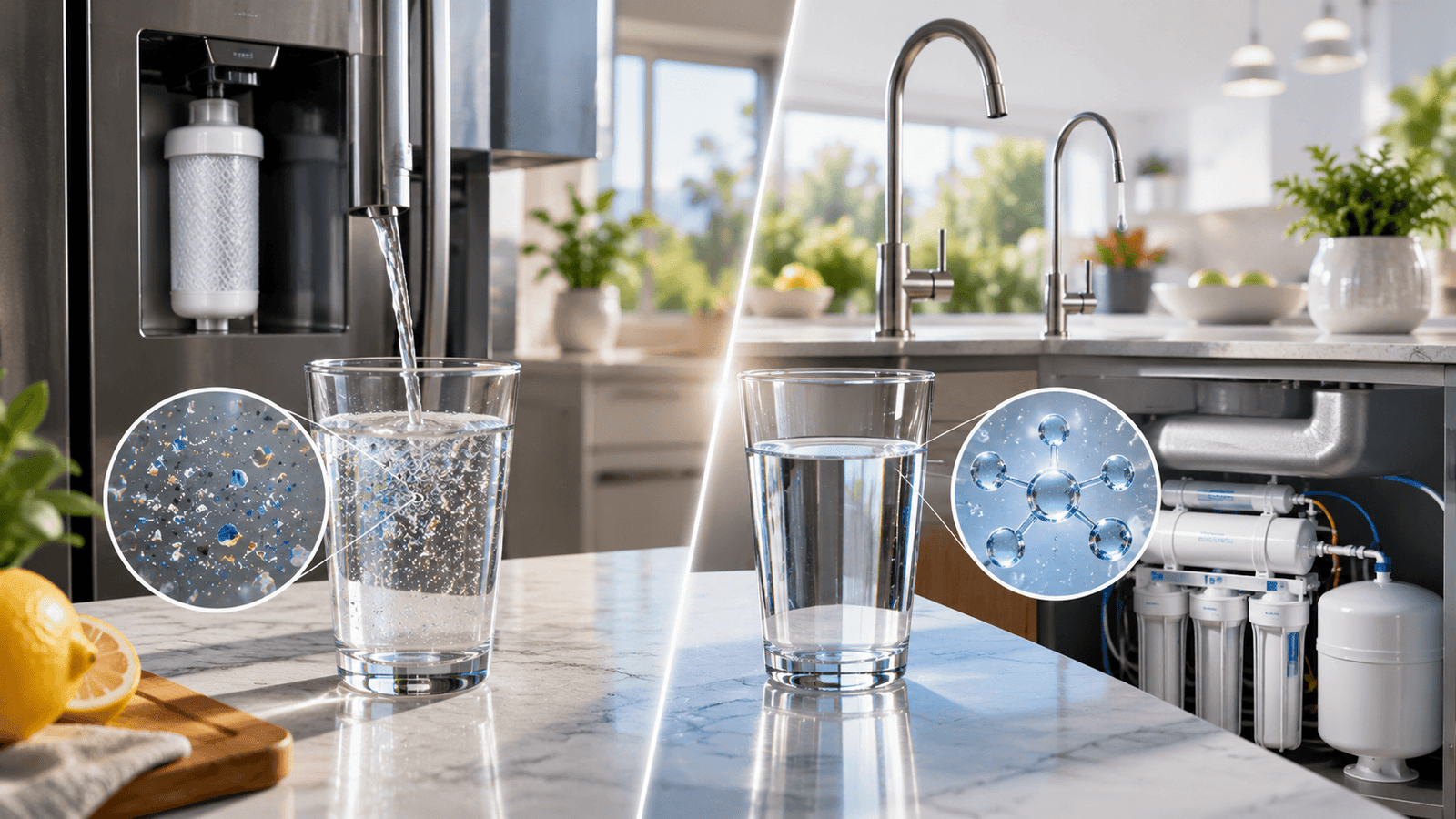
A refrigerator filter and a reverse osmosis system are designed to do very different jobs. This is one of the most common misunderstandings we encounter.
Many homeowners assume: “I already have a fridge filter, so I’m covered.” Maybe or Maybe not.
Most refrigerator filters are primarily designed to improve:
- Taste
- Odor
- Chlorine-related concerns
They generally aren’t intended to provide the same level of treatment as a properly designed reverse osmosis system. Think of it like comparing a screen door to a vault door. Both have a purpose but then they offer different levels of protection.
Why do different water companies recommend different solutions?
Many water companies only sell one type of equipment. This creates one of the biggest challenges for homeowners. Imagine visiting a dealership that only sells sports cars. Even if you need a truck, they’re still going to recommend a sports car.
At McCowin Water, we’re like an Auto Mall for water treatment.
We aren’t tied to one manufacturer, we carry a broad range of premium treatment technologies because every home’s water is different. Some homes need reverse osmosis while others need filtration. Some need a combination approach. The recommendation should come from the water not from the inventory.
How do I know if I need a microplastics water filter?
The smartest way to answer that question is through professional water evaluation.
Before investing in equipment, you should know:
- What’s in your water
- What concerns are most important
- Which treatment options make sense
- Whether advanced filtration is appropriate
Without testing, homeowners are often making decisions based on fear rather than facts. Testing provides clarity and clarity helps families make confident decisions.
What is the smartest first step if I’m concerned about microplastics?
The smartest first step is learning exactly what’s happening with your water. Not buying equipment or comparing online reviews or listening to scary headlines. Start with facts.
A professional water evaluation helps identify your water quality conditions and determine which treatment options deserve consideration. Everything else becomes easier once you understand the water.
The McCowin Promise
For more than fifty years, we’ve helped Orange County homeowners separate water treatment facts from water treatment marketing.
“If the system we install doesn’t perform the way we promised… If your water doesn’t taste, feel, or behave the way we said it would… We’ll pull the whole system out. And either replace it or make it right. No fine print. Because your trust is worth more than the sale.”
Schedule Your Free, In-Home Water Test
If you’re researching a microplastics water filter in Orange County, don’t start with product brochures.
Start with your water. We do NOT send tests out to a lab and make you wait.
We perform professional, on-site testing right at your kitchen sink. You’ll see what’s in your water, understand your options, and receive honest recommendations with absolutely zero sales pressure.
Call us at (949) 569-5736 or Schedule a Free, In-Home Water Test today and learn which filtration solutions make the most sense for your home and family.
CSLB: C-55 #1022717