
• Home /
  • Blog /
  • Data Report: What 500 Free Water Tests Revealed About Irvine’s Water
Data report graphics and diagnostic testing equipment for an in-home water test in Irvine.

Data Report: What 500 Free Water Tests Revealed About Irvine’s Water

Table of Contents

A free in-home water test in Irvine should give you more than a number on a test strip. I use an in-home evaluation to look at water characteristics such as hardness, TDS, chlorine or chloramines, and other factors that can affect how water behaves in a home. I then explain what the results mean, what they do not mean, and whether filtration, softening, reverse osmosis, or no treatment makes sense.

I do not believe homeowners should buy equipment before they understand their water. If you are asking what a free in-home water test in Irvine should look like, start with three things: clear testing, plain English explanations, and recommendations tied to your actual water instead of a preset package.


The number in a data report matters only if it is real

I want to make one point clear before discussing water testing data: I will not publish a claim that I personally analyzed 500 documented tests unless those records are available and verified. A data report should be built from real test records, not an impressive-sounding number.

That matters because homeowners deserve useful information, not marketing statistics. The practical lesson from professional testing is still valuable: your home’s water should be evaluated at the tap, and treatment should follow the problem rather than the other way around.

When I talk with a homeowner about a free in-home water test in Irvine, I start by understanding what they notice. Is there scale around faucets? Does water have a chlorine taste or odor? Are there concerns about drinking water? Are appliances being affected by mineral buildup? Those observations help put test results into context.


Why should you test your water at the tap?

Diagnostic comparison graphic explaining tap water analysis during an in-home water test in Irvine.

You should test your water at the tap because a utility water quality report describes the broader public water system, while an in-home evaluation can help you understand the water coming through your own fixtures and plumbing. The U.S. EPA provides guidance on home drinking water testing, while the CDC recommends understanding water quality before choosing a home treatment system. (US EPA)

I think this distinction is easy to miss. A public report is useful background information, but it does not tell me everything about what happens between the water source and your kitchen faucet. Household plumbing, fixtures, existing treatment equipment, and water use can all matter. That is why a free in-home water test in Irvine is useful as a starting point. It gives us a home-specific conversation instead of asking you to make a treatment decision from a general report alone.


What should I expect during a professional water test?

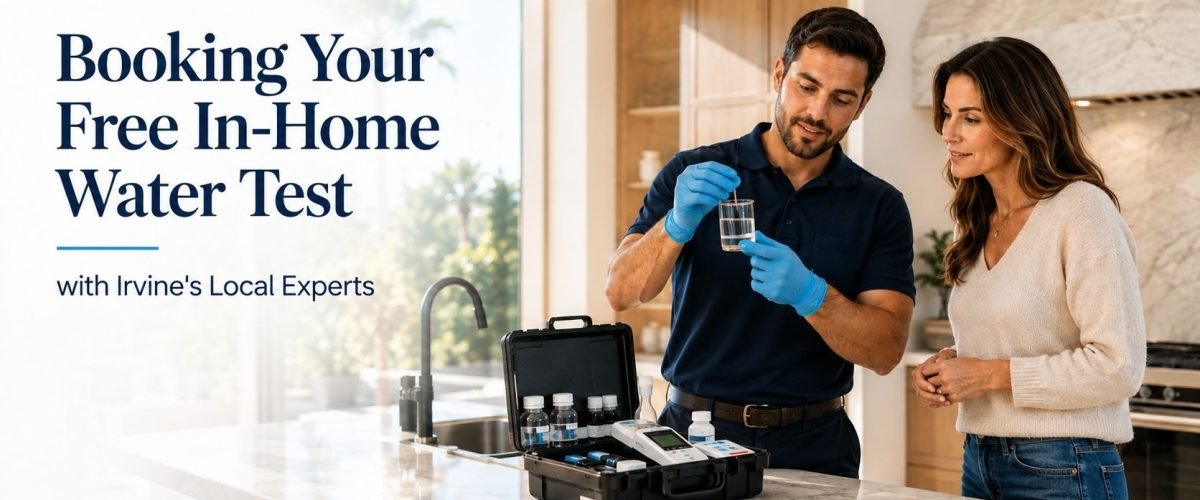
You should expect an on-site review, water testing, an explanation of the results, and a discussion of options that fit the findings. At McCowin Water, our free in-house testing is presented as a way to understand your water before recommending treatment.

A practical visit should cover questions such as:

  • What characteristics are being measured?
  • What do the results mean in plain English?
  • Which findings relate to taste, scale, or water behavior rather than a health claim?
  • Does the result point toward softening, carbon filtration, reverse osmosis, another treatment, or no equipment?
  • What maintenance would the proposed system require?

If you are preparing for a free in-home water test in Irvine, write down the problems you have noticed before the appointment. Bring up staining, scale, taste, odor, appliance concerns, or anything else that prompted you to call. Specific questions make the conversation more useful.


What can an in-home water test in Irvine actually tell you?

An in-home water test can help identify measurable water characteristics and guide the next step, but it cannot answer every possible water-quality question. Different tests measure different things, and no single screening should be treated as a universal contaminant analysis.

Here is how I think about the most useful categories for a homeowner:

Water characteristicWhat it can help explainPossible treatment discussion
HardnessScale and mineral buildupWater softener or scale-control approach
TDSOverall dissolved materialFurther testing or treatment evaluation
Chlorine/chloraminesTaste, odor, and water characteristicsCarbon filtration or appropriate treatment
SedimentVisible particles or plumbing concernsSediment filtration
Water balanceHow water behaves with plumbing and treatmentTreatment selection and setup

I want homeowners to understand an important limitation: a basic in-home screening is not automatically the same as a laboratory analysis for every regulated contaminant. If you have a specific contaminant concern, discuss the appropriate test with a qualified laboratory or local health authority.

The EPA also provides information about home water testing and certified drinking water laboratories. That honest distinction is part of what you should expect from a free in-home water test in Irvine. Good testing is not about making results sound worse. It is about knowing what was measured and what was not.


How do I know whether I need filtration, softening, or reverse osmosis?

Solution matching matrix outlining equipment choices after an in-home water test in Irvine.

You can narrow the right treatment category by matching the measured water condition to the job you want the system to perform. I never want a homeowner to choose equipment simply because a package looks impressive.

A softener is designed primarily to address hardness minerals such as calcium and magnesium. Carbon filtration can be useful for certain taste, odor, and chemical reduction goals, depending on the product and its certified claims. Reverse osmosis is a different treatment method that can reduce certain dissolved substances; the specific substances removed depend on the system. (CDC)

The CDC makes the broader point that different treatment systems remove different substances, so homeowners should understand their water and choose equipment based on the problem they are trying to address.

When I review a free in-home water test in Irvine, I ask a simple question: what are we trying to improve? The answer might be drinking water taste, mineral buildup, a specific contaminant concern, or several issues. Sometimes treatment is appropriate. Sometimes additional testing is the smarter step.


What mistakes should you avoid after a water test?

The biggest mistake is buying equipment before understanding the result and the system’s actual job. A close second is assuming that one test answers every water-quality question. I encourage homeowners to avoid these mistakes:

  1. Treating a single number as the whole story.
  2. Buying a system without asking what it removes.
  3. Ignoring filter or media replacement requirements.
  4. Assuming a whole home filter and drinking water RO system do the same job.
  5. Confusing better taste or less scale with proof that water is medically safer.
  6. Skipping professional or laboratory testing when a specific contaminant needs confirmation.

A good free in-home water test in Irvine should make you more informed, not more anxious. If a recommendation cannot be explained clearly, I believe you should slow down and ask more questions.


How can a water test help you make a better treatment decision?

A water test helps you compare treatment choices by giving the conversation a starting point based on your home rather than a generic sales package. I use the results alongside your water concerns, plumbing setup, household usage, and goals.

Before approving any system, ask for five clear answers:

  • What problem is this system designed to address?
  • What does it not address?
  • How often does it need service or replacement media?
  • What ongoing maintenance should I budget for?
  • What evidence supports the system’s contaminant-reduction claims?

The last question matters. The CDC advises homeowners to check a treatment system’s claims and make sure the system is designed to remove the specific substance of concern. For me, the real value of a free in-home water test in Irvine is clarity. It gives you a chance to understand the starting point before spending money on treatment.


What should you do after your water test?

After your test, you should review the results, separate confirmed findings from assumptions, and decide whether more testing or treatment is actually needed. I recommend keeping the results so you can compare them with future service or maintenance records. If treatment is appropriate, the system should be selected around the water conditions and the way your household uses water. Whole-home treatment and point-of-use drinking water treatment solve different problems, so the choice should be intentional.

If you are still asking what to expect from a free in-home water test in Irvine, my answer is simple: expect transparency. You should know what was tested, what the results mean, what the test does not prove, and why a proposed solution fits your home.

Key water quality parameters evaluated during an in-home water test in Irvine.


The McCowin Promise

I believe a water-treatment decision should be based on trust, clear communication, and a solution that matches the water and not on pressure. We explain what we find and why a treatment option may or may not make sense for your home.

“If the system we install doesn’t perform the way we promised… If your water doesn’t taste, feel, or behave the way we said it would… We’ll pull the whole system out. And either replace it or make it right. No fine print. Because your trust is worth more than the sale.”


Areas We Serve

As a trusted local water expert, we understand the unique water conditions across Southern California and provide solutions tailored to every home and business.

Anaheim · Santa Ana · Irvine · Huntington Beach · Costa Mesa · Orange County · Mission Viejo · Tustin · Lake Forest · Newport Beach · Yorba Linda · Laguna Niguel · San Clemente · Aliso Viejo · San Juan Capistrano

Whether you need water filtration, water softening, reverse osmosis, or another water treatment solution, McCowin Water serves homeowners throughout these communities.


Ready to turn your water questions into clear answers?

If you want to understand your own water instead of relying on assumptions, Call us at (949) 569-5736 or Schedule a Free, In-Home Water Test, and the next step is a free in-home water test. I can help you review what is happening at your tap and explain which treatment options, if any, deserve consideration.

CSLB: C-55 #1022717

  1. How long does a free in-home water test usually take?

    The time can vary by home and the scope of the evaluation. The important part is that the testing and explanation give you enough information to understand the findings and discuss next steps.

  2. Can a water test tell me which treatment system I need?

    A water test can help identify measurable water characteristics and guide treatment selection, but the right system also depends on your household goals, water use, plumbing, and the specific substances the system is designed to address.

  3. Should I review my utility water quality report too?

    Yes. A utility water quality report provides useful information about the broader public water system, while an in-home evaluation can help you understand conditions at your own fixtures. Using both sources can provide better context.

What You’ll Notice Within
24 Hours
of the Right System