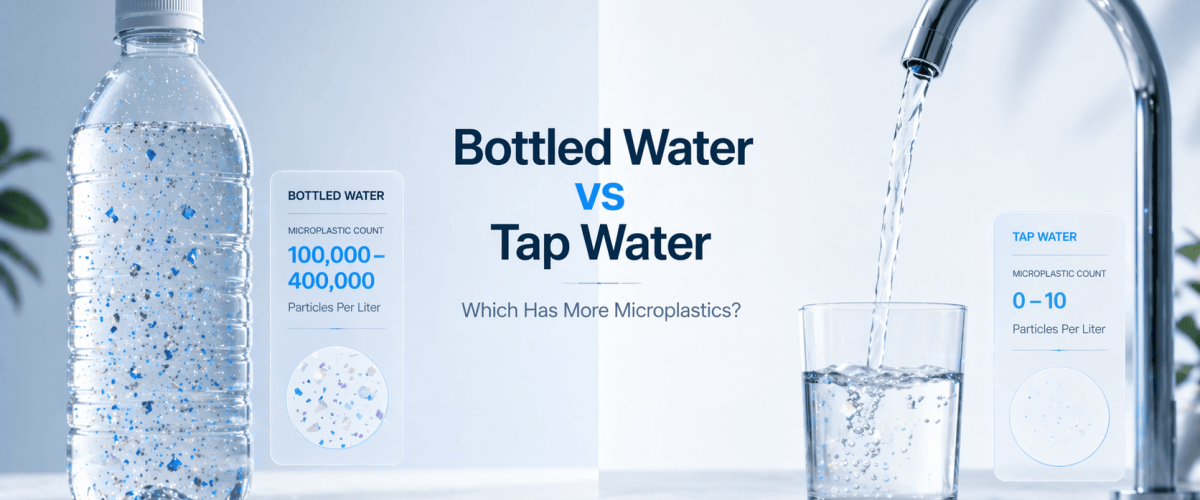

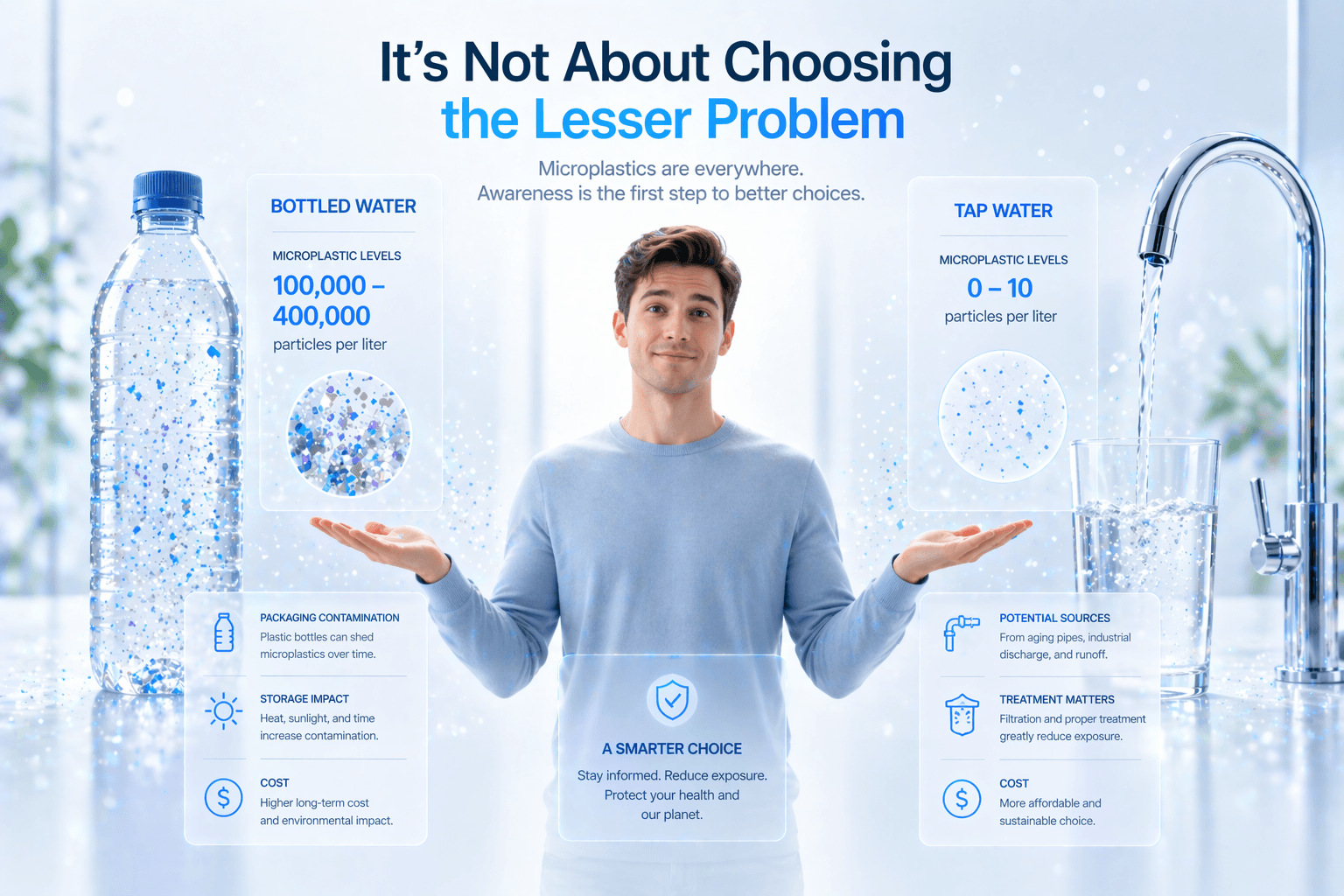
Both bottled and tap water can contain microplastic in water, but bottled water often has higher levels due to plastic packaging. Tap water may contain microplastics from environmental sources, but it avoids contamination from storage in plastic bottles. The safest option is not choosing between the two. It is installing a properly designed home filtration system that removes microplastics at the source.
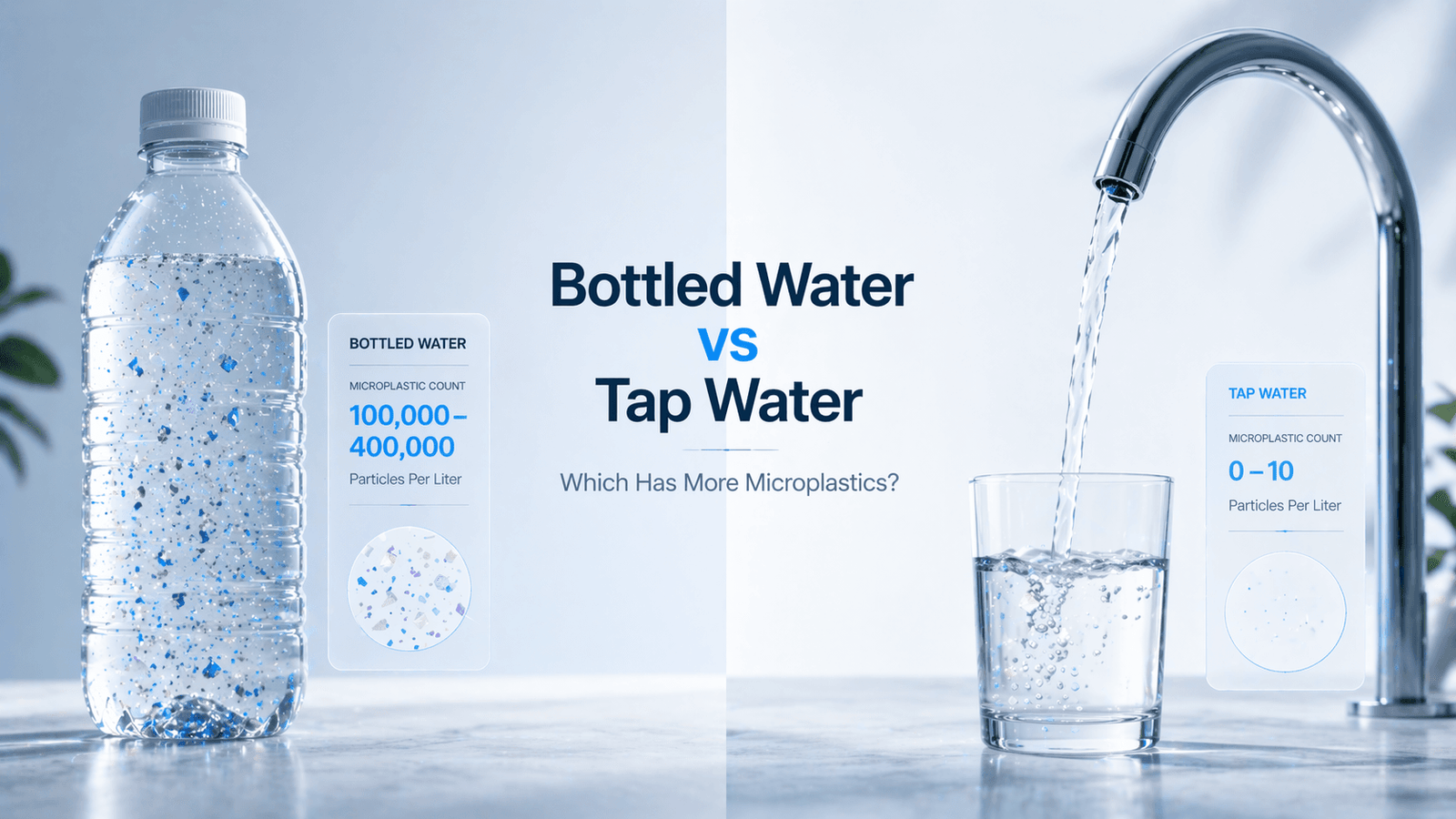
What’s the one truth about bottled vs tap water that most companies hide?
You are not choosing between clean and dirty.
You are choosing between two different types of contamination. That is the part nobody explains.
I have been testing water in Orange County homes since 1972. Here is what I tell my customers straight.
“Bottled water sells you peace of mind. Tap water gives you transparency. Neither gives you full control.”
Is microplastic in water worse in bottled water or tap water?
Yes, microplastic in water is usually higher in bottled water than tap water.
Recent studies from 2023 to 2025 show:
- Bottled water can contain significantly more plastic particles per liter
- Tap water contains microplastics, but often at lower levels
- Packaging is a major source of contamination in bottled water Let me simplify it.
Tap water starts cleaner in terms of plastic.
Bottled water often gets contaminated after it is packaged.
Why does bottled water have more microplastic in water?
Because the bottle itself is the source.
How contamination happens:
- Plastic bottles shed particles over time
- Heat speeds up breakdown inside the bottle
- Movement during shipping creates friction
- Caps and seals release additional particles
If you leave a bottle in your car in Irvine or Newport Beach for a day, you have accelerated the problem.
“The container becomes the contaminant.”
That is the irony most people miss.
How does microplastic get into tap water?
Tap water contamination comes from the environment and infrastructure.
Main sources:
- Breakdown of plastic waste in nature
- Runoff from urban and coastal areas
- Wear and tear in pipes and systems
- Synthetic fibers entering water supply
In coastal areas like Huntington Beach and Laguna Niguel, ocean exposure adds another layer. Microplastics cycle through the environment and eventually enter water systems.
Is bottled water safer than tap water overall?
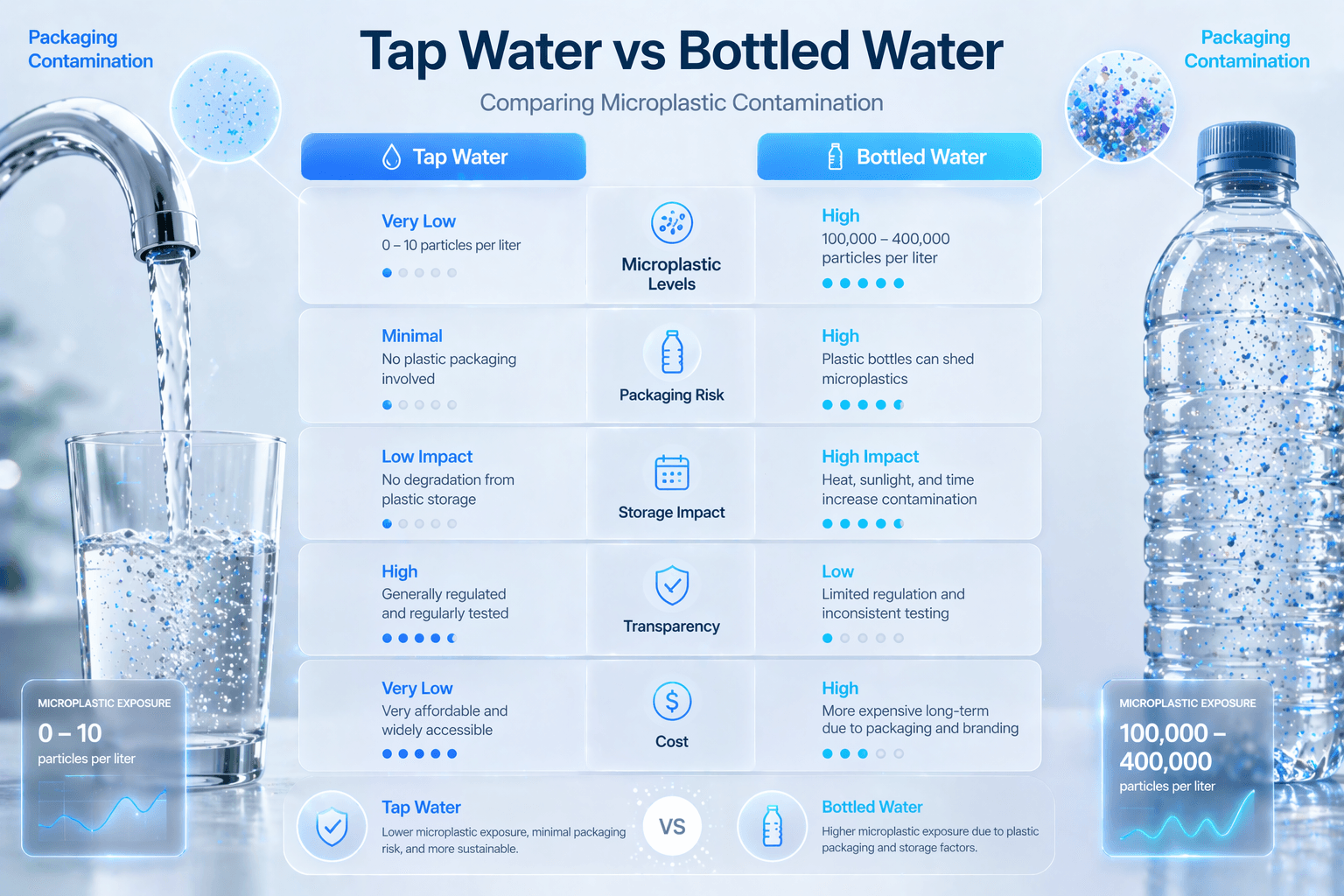
No. Bottled water is not inherently safer and often introduces new risks.
Here is a clear comparison:
| Factor | Tap Water | Bottled Water |
| ➤ Microplastic Levels | Moderate | High |
| ➤ Source Transparency | High | Low |
| ➤ Packaging Risk | None | High |
| ➤ Storage Impact | Minimal | Significant |
| ➤ Cost | Low | Very high |
Most people assume bottled water is cleaner.
In reality, it is often just tap water with added plastic exposure.
Why do people still trust bottled water more?
Because of marketing.
I see this every day with homeowners across Orange County.
What drives the belief:
- Clean-looking labels
- Words like “pure” and “premium”
- Fear of tap water
- Convenience But here is the truth.
Marketing is not filtration.
And your body does not care what the label says.
What is the real solution to microplastic in water?
You do not pick a side. You take control.
The only reliable solution:
- Install a properly designed home filtration system
- Remove microplastics at the point of use
- Customize the system to your specific water
Effective technologies:
- Reverse osmosis systems
- Multi-stage filtration
- Whole-home protection
Because the real goal is not choosing the lesser problem. It is eliminating the problem.
Why do most water systems fail to solve this?
Because they are not designed for your water. Most companies:
- Sell one brand
- Offer one system
- Ignore local water differences
That is like buying the same size shoe for every foot. It does not work.
We operate differently.
We are the Auto Mall of water treatment.
We test your water, understand your home, and build the right solution for you. Not the easiest one to sell.
How do you know what is actually in your water?
You test it the right way.
We offer a Free, In-Home Water Test where:
- We test your water on-site
- You see results immediately
- We explain everything clearly
- There is zero pressure
We do not send samples to a lab and leave you guessing. You get answers in real time.
What guarantee do you have this will actually work?
We stand behind everything we do.
“If the system we install doesn’t perform the way we promised… If your water doesn’t taste, feel, or behave the way we said it would… We’ll pull the whole system out. And either replace it or make it right. No fine print. Because your trust is worth more than the sale.”
That is how we have earned trust for over 50 years.
What should you do next if you are worried about microplastic in water?
Stop choosing between bottled and tap. Start solving the problem at the source.
Call us at (949) 569-5736 or Schedule a Free, In-Home Water Test Today.
You will:
- Understand your water clearly
- See real results instantly
- Get expert guidance without pressure
Because when it comes to your water, you deserve certainty.
Final Thought
Bottled water vs tap water is the wrong question. The right question is this.
How do you remove microplastic in water completely? That is where the real solution begins.
McCowin Water Solutions
222 Goddard, Irvine, CA 92618
(949) 569-5736
CSLB Licensed C-55 #1022717
Three generations of McCowin Water. Trusted Orange County water expertise since 1972.