
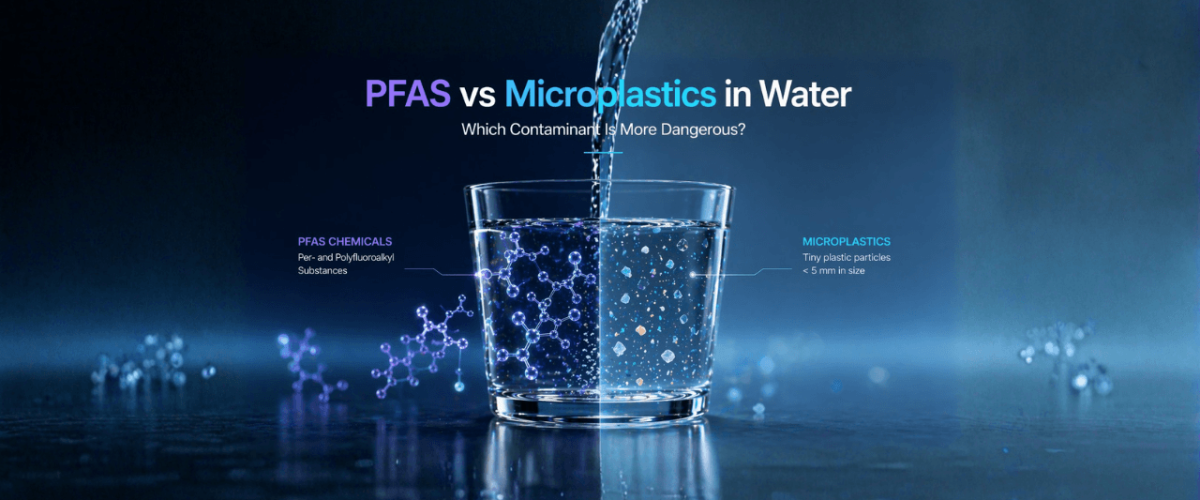

Both PFAS and microplastic in water are serious concerns, but PFAS are generally more dangerous because they are toxic, persistent, and build up in the body over time. Microplastics are widespread and can carry harmful chemicals, but PFAS are directly linked to health risks like cancer and hormone disruption. The real solution is not choosing which is worse. It is removing both with a properly designed home filtration system.
What’s the hard truth about PFAS and microplastics in your water?
You are not dealing with one problem.
You are dealing with a cocktail of contaminants working together. That is what most companies will not say out loud.
I have been in this industry since 1972. I have tested water all across Orange County. Here is what I can tell you clearly.
The danger is not just what is in your water. It is how these contaminants interact over time.
Which is worse in water PFAS or microplastics?
PFAS are generally worse. They are more toxic, more studied, and more directly linked to serious health issues.
But that does not make microplastic in water harmless. Here is the honest breakdown.
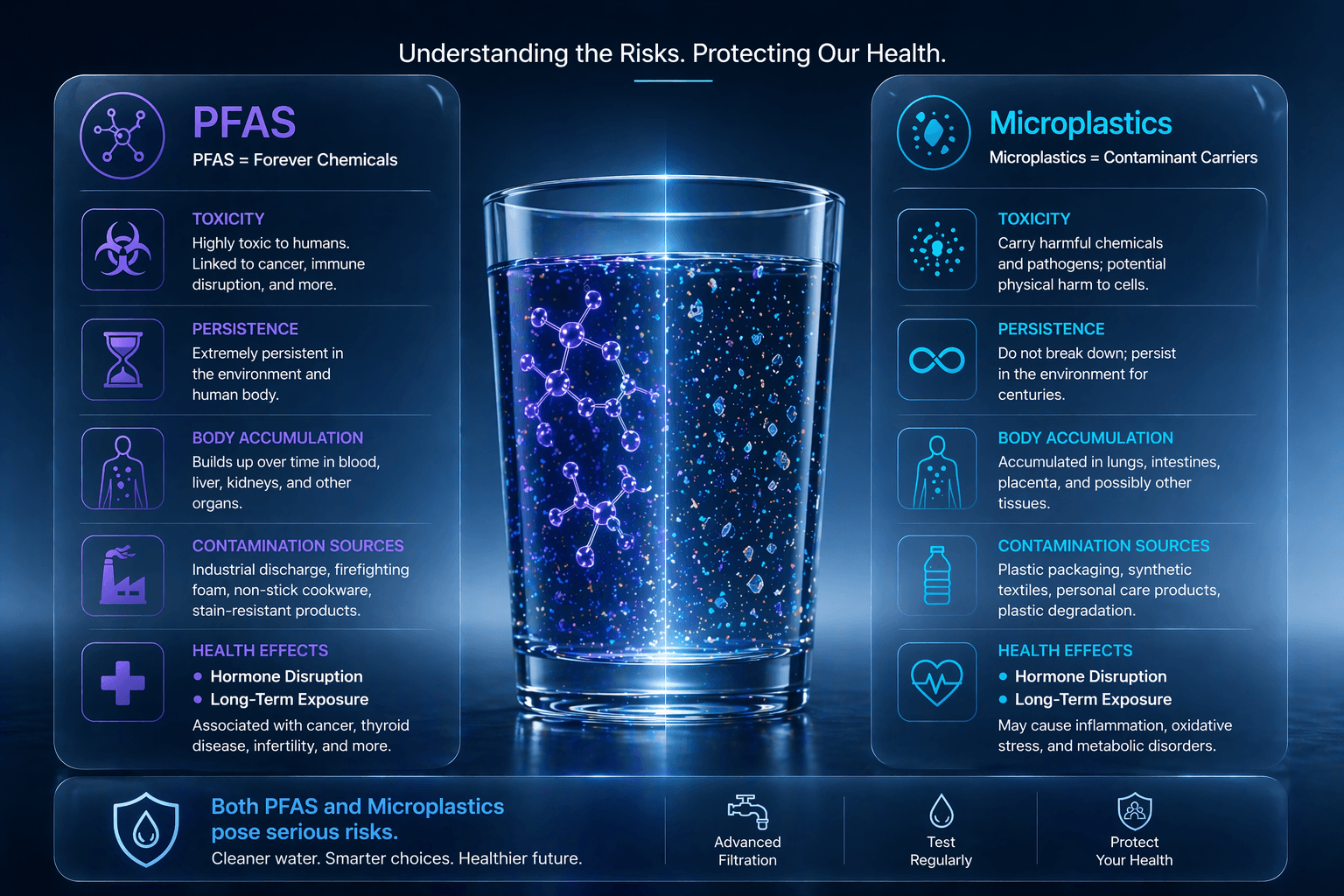
PFAS:
- Known as “forever chemicals”
- Do not break down in the environment or body
- Linked to cancer, hormone disruption, and immune issues
Microplastic:
- Tiny plastic particles found almost everywhere
- Can carry chemicals like PFAS and heavy metals
- Build up in the body over time
So the real answer is this. PFAS are the toxin.
Microplastics are often the carrier.
What exactly are PFAS and why are they so dangerous?
PFAS are man-made chemicals used in products like:
- Non-stick cookware
- Waterproof fabrics
- Food packaging
They entered water systems decades ago and have stayed there.
Why PFAS are a major concern:
- They do not break down
- They accumulate in your body
- Even very small amounts can matter over time Think of PFAS like a stain that never washes out. Once it is in your system, it tends to stay.
How is microplastic in water different from PFAS?
Microplastic are physical particles, not chemicals. But here is where it gets serious.
What microplastics do:
- Enter your body through drinking water
- Carry chemicals on their surface
- Act like tiny delivery systems for toxins
“If PFAS are the poison, microplastics can be the vehicle that carries it deeper into your body.”
That is why ignoring microplastic in water is a mistake.
Are PFAS and microplastic found in Orange County water?
Yes. Both PFAS and microplastic in water have been detected in various water sources across California, including Orange County.
In coastal areas like:
- Irvine
- Newport Beach
- Huntington Beach
You have multiple contributing factors:
- Historical industrial contamination
- Environmental runoff
- Ocean-related microplastic cycles
The water is treated and managed well. But these contaminants are part of a larger, modern challenge.
Why is comparing PFAS vs microplastics the wrong question?
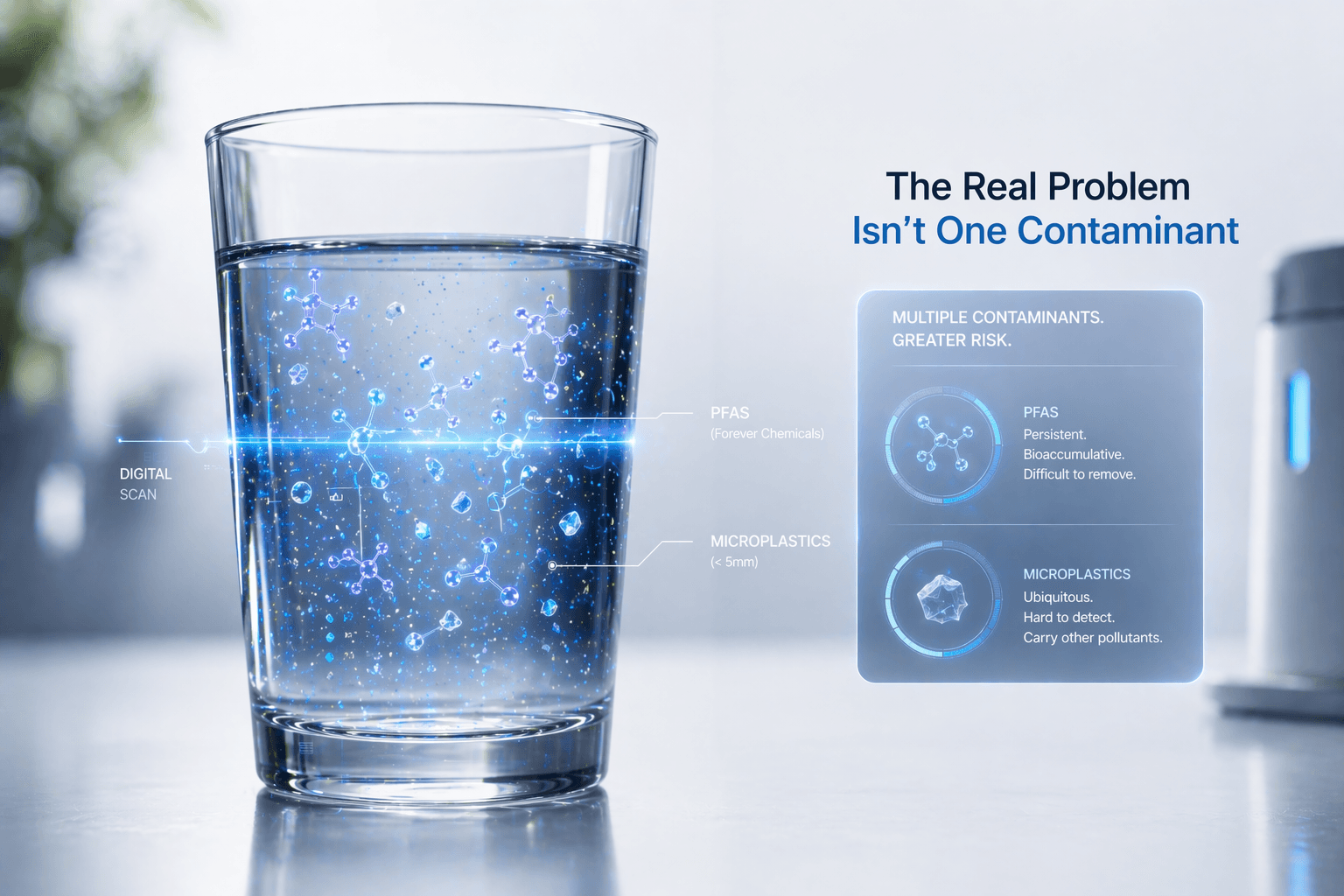
Because you are not exposed to just one. You are exposed to both.
And sometimes, they interact.
The real issue:
- PFAS can attach to microplastics
- Microplastics can carry other pollutants
- Combined exposure may increase long-term risk
It is not a competition. It is a combination. And that combination is what you need to address.
What actually removes PFAS and microplastic in water?
You need a system designed to handle both.
Proven solutions:
- Reverse Osmosis systems for PFAS and microplastics
- Advanced carbon filtration for chemical removal
- Multi-stage systems for complete coverage But here is the truth most companies avoid.
Not all systems are built to remove both effectively.
That is where expertise matters.
Why do most water systems fail to solve this problem?
Because they are built to sell, not to solve. Most companies:
- Offer one system for everyone
- Focus on one contaminant
- Ignore local water differences That is not how water works.
We approach it differently.
We are the Auto Mall of water treatment.
We do not push one brand. We analyze your water and match the right system to your home. Because water in Laguna Niguel is not the same as water in Irvine or Newport Beach.
How do you know if your water has PFAS or microplastics?
You start with proper evaluation.
We offer a Free, In-Home Water Test where:
- We test your water on-site
- You see results immediately
- We explain everything clearly
- There is zero pressure
We do not send samples away and leave you waiting. You get answers right there in your home.
What guarantee do you have that the solution will work?
We stand behind our work fully.
“If the system we install doesn’t perform the way we promised… If your water doesn’t taste, feel, or behave the way we said it would… We’ll pull the whole system out. And either replace it or make it right. No fine print. Because your trust is worth more than the sale.”
That is how we have done business for over 50 years.
What should you do next if you are concerned about PFAS or microplastic in water?
Do not try to choose which is worse. Fix both.
Call us at (949) 569-5736 or Schedule a Free, In-Home Water Test Today.
You will:
- Understand exactly what is in your water
- Get clear, expert guidance
- See results instantly with no pressure
Because when it comes to your water, partial solutions are not enough.
Final Thought
PFAS and microplastic in water are not separate problems. They are part of the same story.
And the only real solution is to take control of your water completely.
McCowin Water Solutions
222 Goddard, Irvine, CA 92618
(949) 569-5736
CSLB Licensed C-55 #1022717
Three generations of McCowin Water. Trusted Orange County water expertise since 1972.