
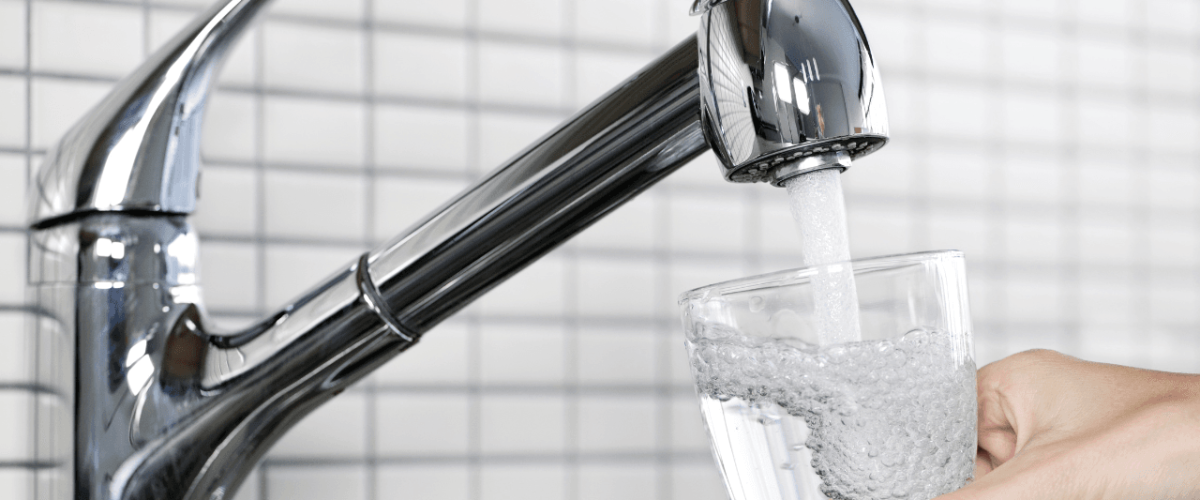

Your tap water is trying to tell you something. Metallic, chlorine, earthy, bitter, salty: each off taste is a clue about what’s dissolved in it. Match the taste to the cause and the fix is usually straightforward. Here’s the taste-by-taste guide.
The short answer: Metallic taste points to dissolved metals, chlorine taste to the city’s disinfectant, earthy or musty taste to natural organics, and bitter or salty taste to high dissolved solids or sodium. Carbon filtration fixes chlorine and earthy tastes; reverse osmosis handles metals, dissolved solids, and the rest. A test names the exact culprit.
Metallic taste: dissolved metals
If your water tastes like you’re licking a coin, the usual cause is dissolved metal, often iron, or trace copper and other metals picked up from your plumbing. Sometimes a low pH accelerates it. Carbon won’t fully fix this. Reverse osmosis, which removes dissolved metals, is the reliable answer for drinking water. See what RO removes in how reverse osmosis actually works.
Chlorine or pool taste: the city’s disinfectant
That swimming-pool taste is chlorine (or chloramine), added to keep the water safe on its way to you. It’s doing its job, but it doesn’t taste good. Activated carbon removes the chlorine taste and odor, whether in a whole-house filter for every tap or an under-sink system for drinking. If it’s specifically chloramine, you need catalytic carbon, which we cover in chlorine versus chloramine in Orange County water.
Earthy, musty, or dirt taste: natural organics
An earthy or musty taste, often stronger some seasons, usually comes from natural organic compounds in the source water. It’s not harmful, just off-putting. Activated carbon is excellent at pulling these taste-and-odor compounds out, which is why carbon is the workhorse of taste improvement.
Bitter or salty taste: dissolved solids and sodium
A bitter edge can come from high total dissolved solids or an elevated pH, while a salty note can mean higher sodium or chloride. Both are about what’s dissolved in the water. Reverse osmosis reduces total dissolved solids, so it’s the tool that addresses these tastes at the drinking tap.
| The taste | Likely cause | The fix |
|---|---|---|
| Metallic | Dissolved metals, low pH | Reverse osmosis |
| Chlorine / pool | City disinfectant | Carbon filter (catalytic for chloramine) |
| Earthy / musty | Natural organics | Activated carbon |
| Bitter / salty | High TDS or sodium | Reverse osmosis |
| Rotten egg | Hydrogen sulfide | See our sulfur-smell guide |
Smell, not taste? If it’s a rotten-egg smell rather than a taste, that’s a different culprit, covered in why water smells like rotten eggs. Either way, the honest first step is a test that names what’s actually in your water. Explore whole house water filtration and reverse osmosis systems.
Vertex IsoTwist reverse osmosis
A five-stage under-sink reverse osmosis system that gives you bottled-quality water at the kitchen tap, with an optional remineralization stage that puts good minerals back for taste.
The Blue Haven whole-home filtration
A whole-home filtration system that treats chlorine, taste, and sediment where the main line enters, so every tap in the house runs cleaner.
Keep learning about your water. Start with why water smells like rotten eggs Then chlorine versus chloramine in Orange County water Then how reverse osmosis actually works.
Bad-tasting tap water: your questions
Why does my tap water taste metallic?
A metallic taste usually points to dissolved metals like iron, or trace copper and other metals picked up from pipes. It can also come from a low pH. A test identifies the metal, and reverse osmosis is the reliable way to remove dissolved metals from drinking water.
Why does my tap water taste like chlorine or a pool?
That’s the disinfectant your city adds to keep water safe. It’s expected and harmless at tap levels, but unpleasant. A carbon filter removes the chlorine taste and smell, and reverse osmosis removes it too.
Why does my water taste earthy, musty, or like dirt?
Earthy or musty tastes often come from natural organic compounds in the source water, especially seasonally. Activated carbon filtration is very effective at removing these taste-and-odor compounds.
Why does my water taste bitter or salty?
A bitter taste can come from high total dissolved solids or elevated pH, while a salty taste can indicate high sodium or chloride. A test pinpoints it, and reverse osmosis reduces dissolved solids that cause both.
Find out exactly what’s behind the taste
A free in-home test measures your chlorine, dissolved solids, and more, so you fix the real cause instead of guessing. You keep every number.
Book your free in-home water test
Prefer to talk it through first? Call us at (949) 569-5736. Family owned in Irvine since 1972, licensed and insured, California CSLB C-55 #1022717, serving all of Orange County.