
Reverse Osmosis · Irvine and Orange County
Reverse Osmosis Systems in Orange County
If you want water that tastes clean and actually is clean, reverse osmosis is the most thorough way to get there. Here's how it works, what it removes from Orange County tap water, and how to choose the right system for your home or business.
Your free in-home test
- Performed on site by trained McCowin specialists
- Real numbers explained in plain language, no pressure
- Checks hardness, chlorine, TDS, and water balance
- Reviews your pressure, flow rate, and plumbing
Reverse osmosis, or RO, pushes your water through a membrane so fine that it strains out most of what you can't see: dissolved minerals, metals, and a long list of contaminants that a basic pitcher or fridge filter leaves behind. In Orange County, where a lot of the supply is imported and treated with chloramine, that thoroughness is the whole point. Below, we walk through the science in plain language, show you what RO actually pulls out of local water, and lay out how homeowners and businesses here choose a system they won't regret.
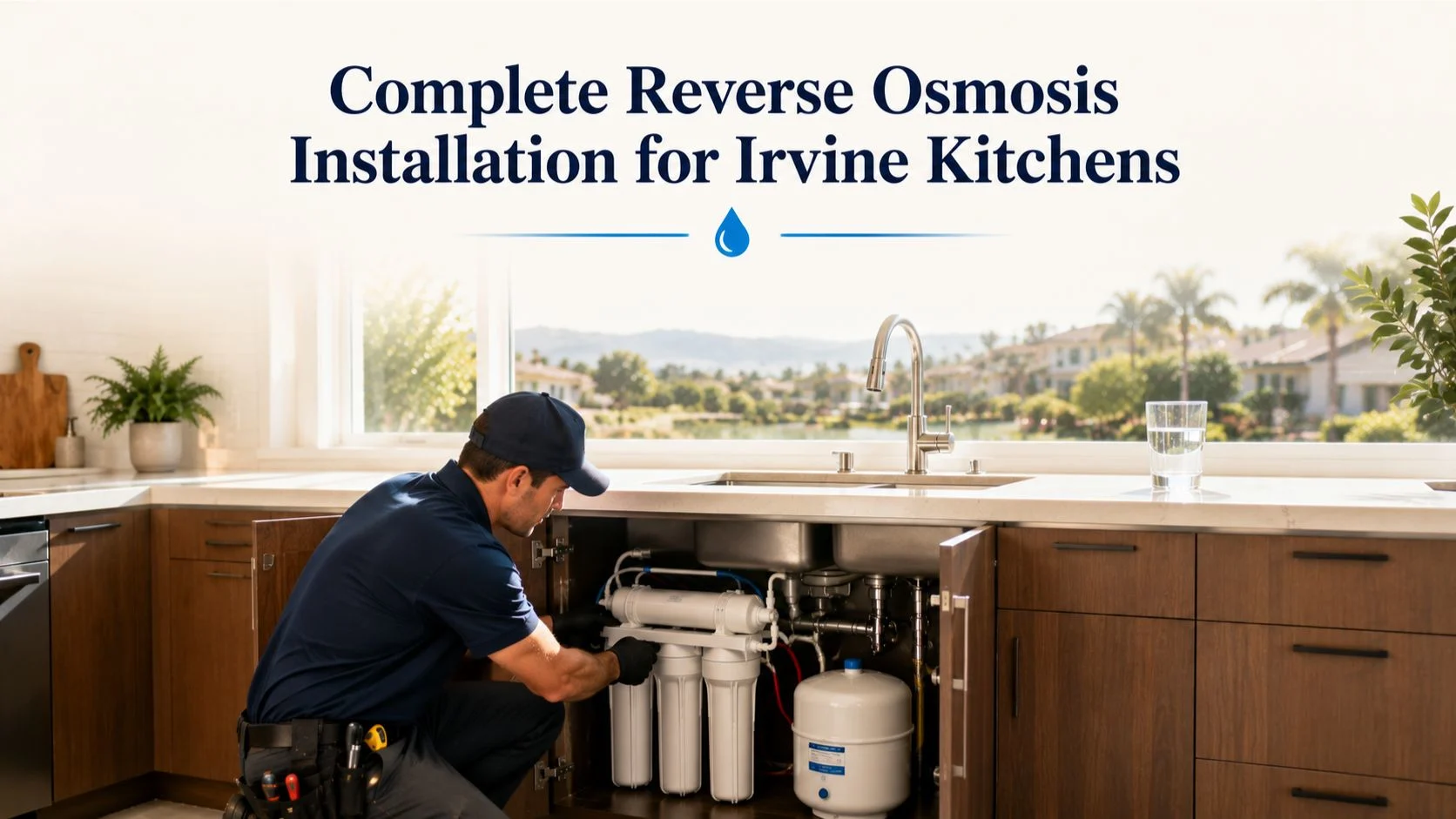
How it actually works
Reverse osmosis, one stage at a time
Water moves through a series of stages, each one handling a different job. Most quality residential systems run four to five stages.

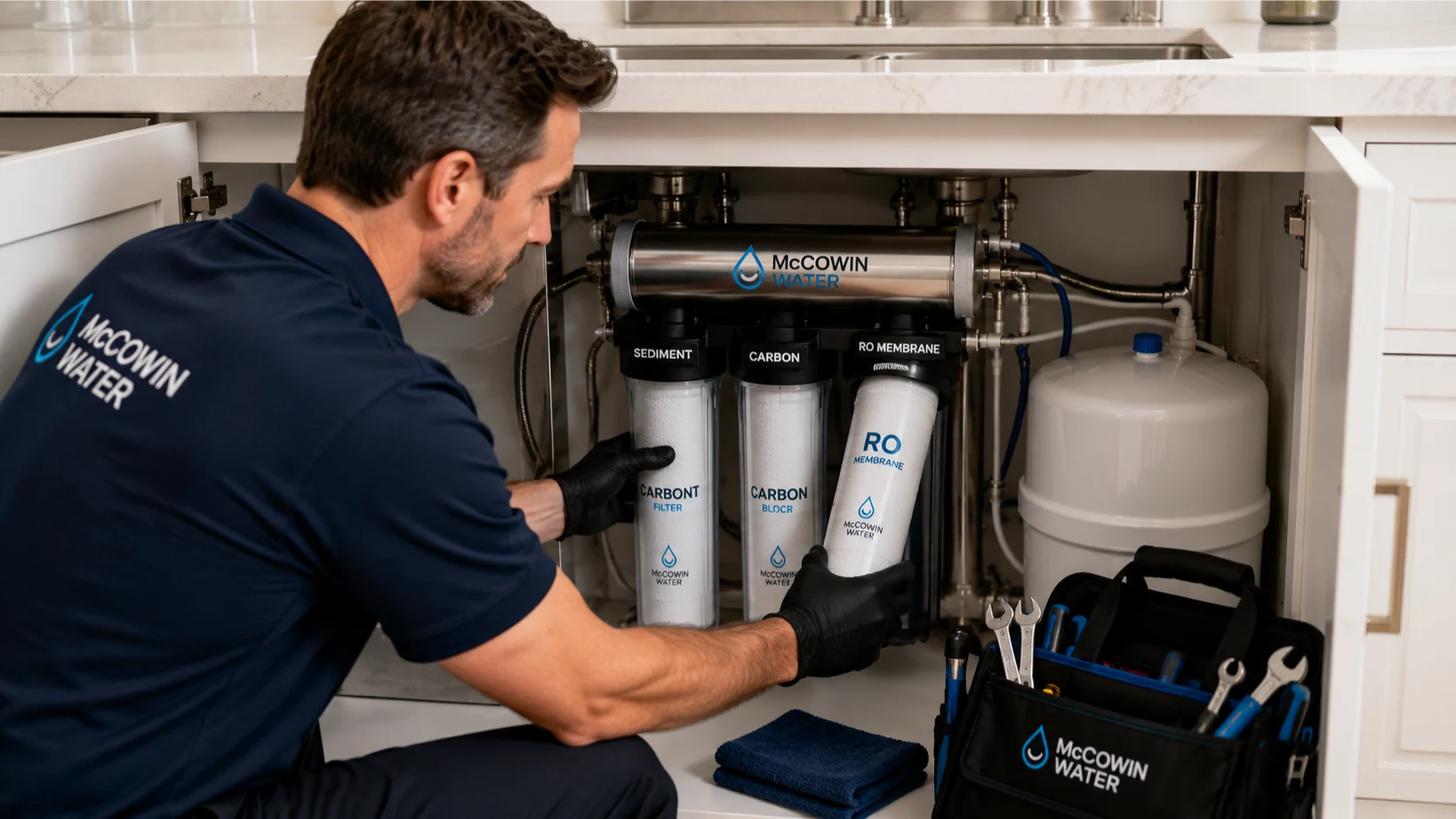
Sediment pre-filter
Catches the big stuff first: sand, rust, and grit that would otherwise clog the finer filters downstream.
Carbon pre-filter
Reduces chlorine and chloramine, which protects the delicate RO membrane and starts cleaning up taste and odor.
The RO membrane
The heart of the system. Its pores are small enough to block dissolved solids, metals, and most contaminants, letting clean water pass and sending the rest to drain.
Post-carbon polish
A final pass that removes any lingering taste before the water reaches your faucet, so every glass tastes fresh.
Optional remineralization
Some homeowners like a touch of minerals added back for taste and pH. It's a preference, not a requirement.
Curious about stage counts?
The number of stages isn't the whole story. What matters is how each stage is matched to your water.
How many stages does an RO system have →What comes out
What RO removes from Orange County water
A properly built RO system targets the contaminants that show up most often in local supplies. The only way to know exactly what's in your water is to test it, which is why we do that first and for free.

Contaminant reduction depends on your specific water and the system configuration. We confirm what your water actually contains with an in-home test before recommending anything. RO is a water-quality upgrade, not a medical device, and we don't make health claims about it.
Two different jobs
Residential or commercial RO
The right RO system depends on how much water you need and where it's going. Here's how we split it.
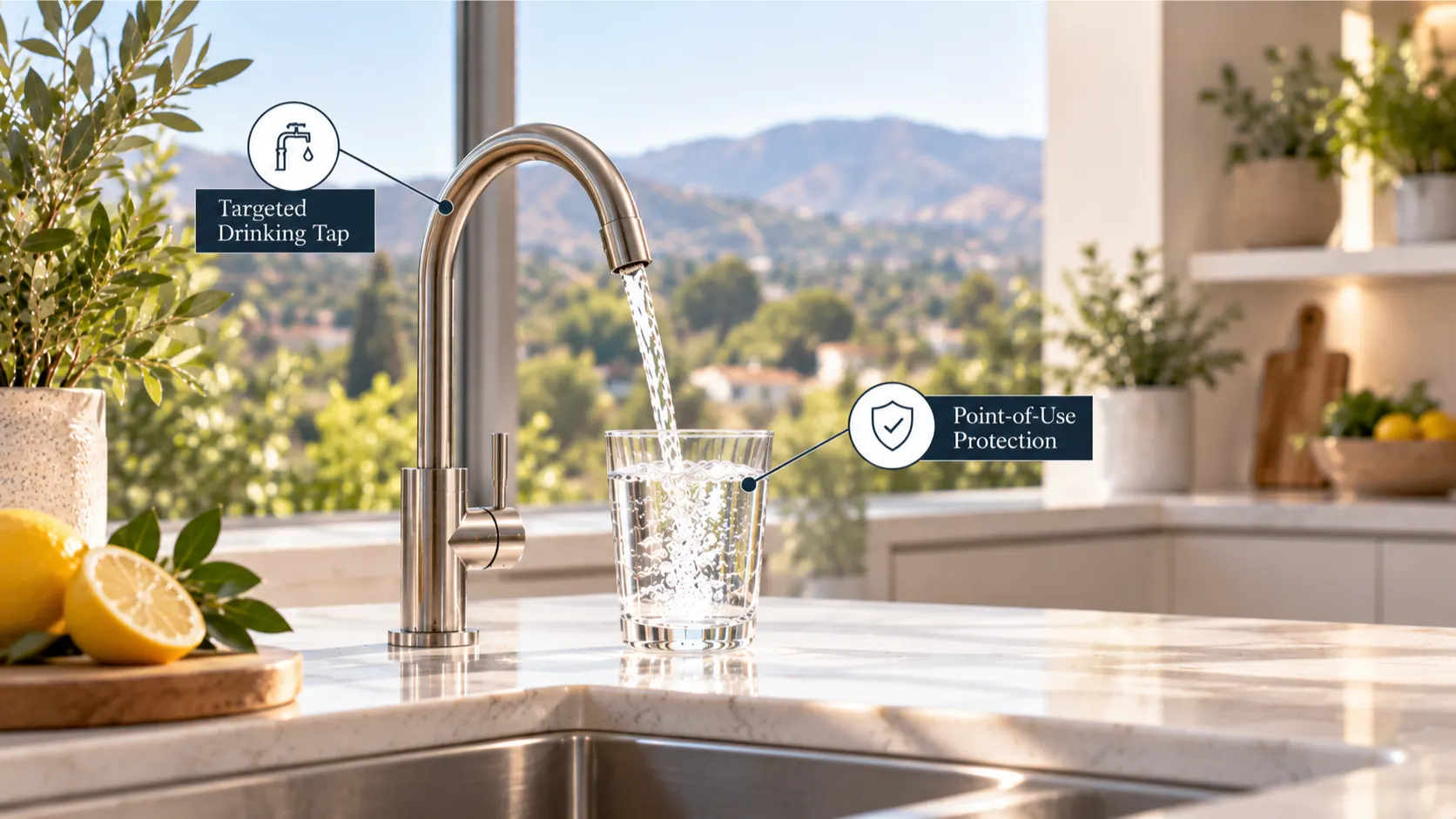
Residential Reverse Osmosis
Clean, great-tasting drinking and cooking water at your kitchen sink, sized for a household and built to be maintained for the long haul.
- Under-sink or whole-home configurations
- Custom-installed to your home, not one-size-fits-all
- Lifetime local support on the install
Commercial Reverse Osmosis
Higher-capacity RO for restaurants, cafes, breweries, salons, medical offices, and manufacturing across Irvine and Orange County.
- Scaled to your daily demand and equipment
- Protects ice machines, espresso, and process equipment
- Ongoing maintenance so you're never down
Skip the spec-sheet overwhelm
How to choose a reverse osmosis system
These are the questions that actually decide whether a system fits your home.
- Start with your real water, not a brochure. Get an in-home test so the system is matched to what's actually coming out of your tap, not an average.
- Match capacity to your household. A family of five uses more than a couple. Under-sizing means slow refills and a system working too hard.
- Ask who installs and services it. A great membrane installed carelessly underperforms. Local, lifetime support beats a box on the doorstep.
- Look at long-term filter cost, not just the sticker. Filters are the real ongoing expense. Know the schedule before you buy.
- Make sure there's no pressure. A good company tests, explains, and lets you decide. If you feel rushed, walk.
The honest picture
Cost, maintenance, and what to expect
What it costs
Pricing depends on the system, the stages, and your install. Rather than quote a number that won't fit your home, we test your water first and give you a real, transparent figure with no surprises. There's never an obligation.
What upkeep looks like
Filters get changed on a schedule, usually every several months to a year depending on the stage and your usage. The membrane lasts far longer. With lifetime support, we keep track so you don't have to.
Why local families choose us
Diagnostic-first, not sales-first
Local since 1972
Fifty-plus years serving Irvine and Orange County. We're not a call center, we're your neighbors.
We test before we recommend
We measure your actual water first. No guessing, no upselling, just what your water calls for.
Lifetime support
The install is the beginning, not the end. We stand behind our systems for the long haul.
Installed by our own crew
No rotating franchise teams. The people who size it are the people who install and service it.
Questions
Reverse osmosis, answered
Is it healthy to drink reverse osmosis water?
Yes. RO water is simply water with most of the dissolved contaminants removed. Some people prefer to add a small amount of minerals back for taste, which a remineralization stage handles. If you want the fuller picture, we cover it in our article on whether RO water is healthy.
Does reverse osmosis remove fluoride and lead?
A properly configured RO system reduces fluoride and, when present, lead and other heavy metals. The exact reduction depends on your water and the membrane, which is why we test first. More detail lives in what an RO system actually removes.
How many stages does an RO system need?
Most quality residential systems run four to five stages. The number matters less than whether each stage is matched to your water. We break it down in how many stages does an RO system have.
How often do the filters need changing?
Pre-filters are typically changed every several months to a year depending on usage, while the membrane lasts far longer. With lifetime support we track the schedule for you. See RO filter service in Irvine.
Is RO water better than bottled water?
For most families, yes, and it ends the cost and plastic of bottled water deliveries. An RO system gives you the same clean water on tap, on demand.
Does reverse osmosis waste a lot of water?
Older systems sent more water to drain, but modern residential RO is far more efficient, and the trade-off buys you water that's genuinely clean. We're happy to explain the numbers for your specific system during your free test.
Go deeper
Explore reverse osmosis in depth
Guides, comparisons, and answers from our Orange County water experts.
The science of reverse osmosis
How RO purifies waterRead the guide →Why RO filtration is essential in Irvine
The local case for RORead the guide →Residential reverse osmosis systems
Home RO, explainedRead the guide →Custom-installed residential RO
Why one-size never fitsRead the guide →What an RO system removes
From Irvine waterRead the guide →RO myths worth ignoring
What to stop believingRead the guide →Is RO water healthy?
Clearing the airRead the guide →RO filter service in Irvine
Maintenance tipsRead the guide →The honest downsides of RO
What installers skipRead the guide →See what's actually in your water, for free.
Before you spend a dollar, let us test your Orange County water in your home and show you exactly what an RO system would change. No pressure, no obligation.
Serving Irvine, Newport Beach, Costa Mesa, Tustin, Lake Forest, Mission Viejo, and all of Orange County.