
• Home /
  • Blog /
  • High-Capacity Commercial Water Systems for Irvine Hotels
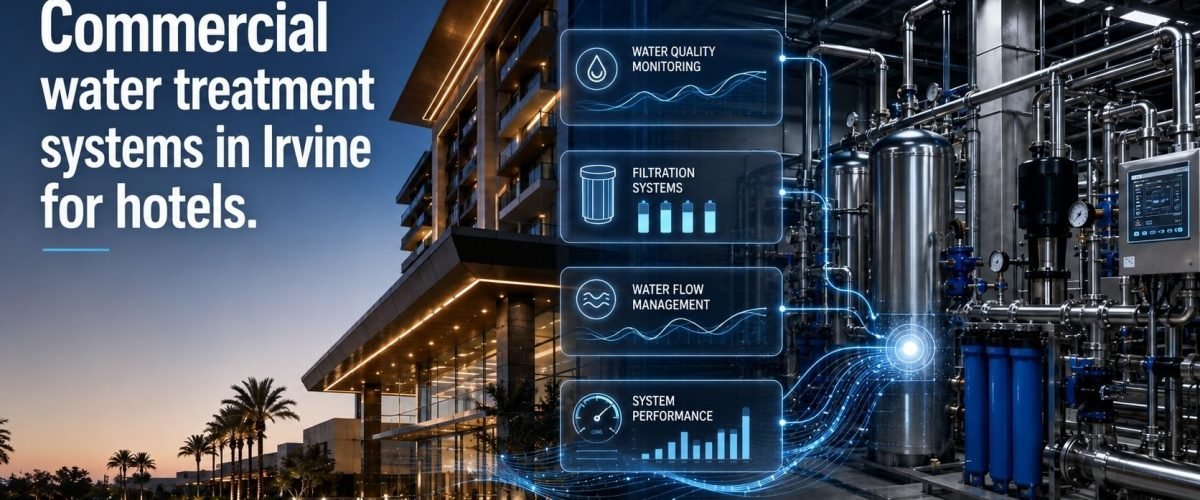
Commercial water treatment systems in Irvine for hotels

High-Capacity Commercial Water Systems for Irvine Hotels

Table of Contents

The best commercial water systems in Irvine are not necessarily the biggest systems or the most expensive. For a hotel, the right solution should be sized around actual water demand, peak flow, water chemistry, equipment needs, available installation space, and maintenance requirements. Custom filtration can make more sense than a standard package when a property’s water use and operating conditions are unique. Start with an on-site evaluation before choosing equipment.


Commercial water treatment systems in Irvine for hotels

Why do hotels need a different approach to commercial water treatment?

Hotels need a treatment approach built around their operating demands, not simply the size of the building.

When comparing commercial water systems in Irvine, a hotel operator should consider several variables at once:

  • Daily water consumption
  • Peak flow requirements
  • Water chemistry
  • Number and type of fixtures
  • Kitchens and food-service areas
  • Laundry operations
  • Guest-room plumbing
  • Existing equipment
  • Installation space
  • Maintenance access

The EPA distinguishes point-of-entry treatment, which treats water as it enters a building, from point-of-use treatment at individual fixtures. That distinction becomes important when deciding whether a hotel needs building-wide treatment, localized treatment, or a combination. (US EPA)

The goal is not simply to filter more water. The goal is to treat the water that needs treatment, at the capacity and location the property requires.


How should hotels evaluate commercial water treatment systems in Irvine?

Hotels should evaluate commercial water treatment systems in Irvine by looking at water quality, peak flow, treatment goals, system capacity, maintenance, and the property’s physical layout.

Start with the water itself. A professional evaluation should help identify the conditions that need attention before equipment is selected. Depending on the property, the discussion may involve hardness, chlorine, sediment, taste, odor, scale, or other water-quality factors.

Then look at demand, a hotel may use substantially more water during certain periods than its daily average suggests. Morning showers, housekeeping activity, laundry, kitchen operations, or other simultaneous uses can create periods of high demand.

That means a system should not be selected only because its daily capacity sounds impressive.


A simple evaluation framework

FactorWhat to askWhy it matters
Water qualityWhat conditions need treatment?Determines treatment technology
Peak flowHow much water may be needed at once?Helps determine system sizing
Daily demandHow much water is used overall?Helps plan capacity
Treatment locationWhole building or selected areas?Determines system configuration
SpaceWhere can equipment be installed?Affects practical design
MaintenanceWho will service the system?Impacts long-term operation
Existing plumbingWhat infrastructure is already available?Can affect installation

This is why commercial water treatment systems in Irvine should be evaluated as part of the property’s overall water-use picture.


Why is peak flow important for hotel water treatment?

Peak flow matters because a system must be capable of handling the property’s highest expected demand, not just its average consumption.

Consider a hotel with many rooms. If several guests shower while housekeeping is working and another part of the property is using water at the same time, the instantaneous demand can be much higher than the property’s average hourly use.

Peak flow sizing for commercial water treatment systems in Irvine

This is one reason commercial water treatment systems in Irvine should be sized from actual operating requirements.

McCowin Water’s published commercial guidance specifically emphasizes sizing systems around peak flow rather than relying only on daily averages. (McCowin Water Solutions)

That approach is practical: the system has to perform when the property needs it most.


What does custom filtration mean for an Irvine hotel?

Custom filtration means designing treatment around the property’s water conditions and operational requirements rather than automatically installing a standard package.

When businesses compare commercial water treatment systems in Irvine, “custom” should mean more than putting different equipment together. The treatment should have a reason behind it.

For example, a property may need to address a particular combination of water-quality concerns, equipment protection goals, flow requirements, and available space. Another property may have a completely different set of needs.

McCowin Water describes its commercial approach as custom-built and based on on-site water evaluation and system sizing. Its commercial filtration information also describes equipment intended for higher demand and continuous use. (McCowin Water Solutions)

The important question is not, “Which package is the biggest?”

It is, “Which treatment configuration fits this property’s actual requirements?”


Should hotels use whole-building filtration or point-of-use treatment?

The answer depends on where the water-quality concern occurs and what the property is trying to accomplish.

Some commercial water treatment systems in Irvine can be installed at the building’s point of entry so treated water is distributed throughout the property. Other treatment can be installed closer to a particular use.

EPA guidance explains that point-of-entry systems treat water entering a building, while point-of-use systems treat water where it is used. (US EPA)

For a hotel, that distinction can help prevent over-treatment. If the goal involves water used throughout guest rooms and operational areas, building-wide treatment may be relevant. If the concern is limited to a specific application, localized treatment may deserve consideration.

There is no reason to treat every gallon the same way if the property’s actual requirements do not call for it.


What water-treatment technologies might a hotel consider?

The appropriate technology depends on the water conditions and the property’s treatment goals.

Potential technologies can include:

  • Carbon filtration: Often considered when chlorine, taste, or odor are treatment concerns.
  • Sediment filtration: Used when suspended particles or sediment need to be addressed.
  • Water softening: Used to address hardness through ion exchange.
  • Reverse osmosis: Used where highly treated water is needed for a specific application.
  • Combination systems: Multiple treatment stages may be appropriate when one technology cannot address all of the identified needs.

The EPA notes that treatment technologies have different capabilities and that system selection should consider what the treatment is intended to accomplish. (US EPA)

That is why the phrase commercial water treatment systems in Irvine should never mean a single standard product. The water determines the treatment. The building determines the capacity.


What are the biggest mistakes when choosing commercial water treatment?

The biggest mistakes are choosing equipment before testing the water, sizing from average demand alone, overlooking maintenance, and assuming the most powerful system is automatically the best choice.

Here are four problems worth avoiding.

1. Choosing the product first.
Start with water conditions and operational goals. Then select technology.

2. Ignoring peak demand.
A system that works during quiet periods may not be appropriate during the property’s busiest water-use periods.

3. Forgetting maintenance access.
Commercial equipment needs routine attention. A system that is difficult to reach can become difficult to maintain.

4. Buying more treatment than necessary.
More equipment does not automatically mean better treatment. The treatment should match the identified water problem.

When evaluating commercial water treatment systems in Irvine, these questions are more useful than simply asking which system has the highest capacity.


How should maintenance factor into the decision?

Maintenance should be considered before installation, not after the system is operating. A hotel cannot treat water as a “set it and forget it” project.

Filters, media, controls, valves, membranes, and other components may require inspection or service depending on the system selected. EPA guidance also emphasizes operation and maintenance when evaluating point-of-entry and point-of-use treatment. (US EPA)

Before choosing commercial water treatment systems in Irvine, ask:

  • What components require routine service?
  • How often should filters or media be changed?
  • Who will perform maintenance?
  • How will staff know when service is required?
  • What happens if the system needs repair?
  • Is the equipment accessible without disrupting hotel operations?

These questions can reveal practical differences between two systems that look similar on a sales sheet.


How can an Irvine hotel choose the right system?

An Irvine hotel should choose its treatment system only after evaluating water quality, peak demand, treatment objectives, plumbing, available space, and ongoing maintenance.

The right commercial water treatment systems in Irvine should solve a defined problem.

A good evaluation should therefore move through a logical sequence: Test → Measure → Design → Size → Install → Maintain

McCowin Water’s published commercial material emphasizes on-site water evaluation and custom system design rather than starting with a standard package. (McCowin Water Solutions)

For a hotel operator, that process can make the decision easier because it connects the equipment to the property’s actual requirements.

And if you are comparing commercial water treatment systems in Irvine, ask for those requirements in writing. Know the treatment objective. Know the expected capacity. Know the maintenance plan. Know what the system is designed to address and what it is not. That is how you compare systems fairly.


The McCowin Promise

At McCowin Water, we believe commercial water treatment should be based on the property’s real water conditions and operating needs—not on pushing the biggest system available. Our goal is to help businesses understand the problem, select an appropriate treatment approach, and know what they are investing in.

“If the system we install doesn’t perform the way we promised… If your water doesn’t taste, feel, or behave the way we said it would… We’ll pull the whole system out. And either replace it or make it right. No fine print. Because your trust is worth more than the sale.”


Areas We Serve

As a trusted local water expert, we understand the unique water conditions across Southern California and provide solutions tailored to every home and business.

Anaheim · Santa Ana · Irvine · Huntington Beach · Costa Mesa · Orange County · Mission Viejo · Tustin · Lake Forest · Newport Beach · Yorba Linda · Laguna Niguel · San Clemente · Aliso Viejo · San Juan Capistrano

Whether you need water filtration, water softening, reverse osmosis, or another water-treatment solution, McCowin Water serves homeowners throughout these communities.


Planning a Commercial Water Treatment Project?

If you are comparing commercial water treatment systems in Irvine for a hotel or another high-demand facility, start with an evaluation instead of starting with equipment.

McCowin Water’s commercial approach is built around understanding the property’s water and operating requirements before recommending a system. (McCowin Water Solutions)

For residential homeowners who also want to understand their home’s water before choosing treatment: Call us at (949) 569-5736 or Schedule a Free, In-Home Water Test

CSLB: C-55 #1022717

  1. Why should commercial water treatment be sized for peak flow?

    Peak flow represents periods when multiple water uses may occur at the same time. Sizing around peak demand helps ensure the treatment system is designed for the property’s busiest expected operating conditions.

  2. Can a hotel use both point-of-entry and point-of-use treatment?

    Yes. Point-of-entry treatment addresses water as it enters a building, while point-of-use treatment addresses water at a specific fixture or application. The appropriate combination depends on the property’s water-quality goals.

  3. What information is needed to design commercial water filtration?

    Important information can include water-quality conditions, peak flow, daily demand, treatment goals, existing plumbing, available installation space, and maintenance requirements.

What You’ll Notice Within
24 Hours
of the Right System